

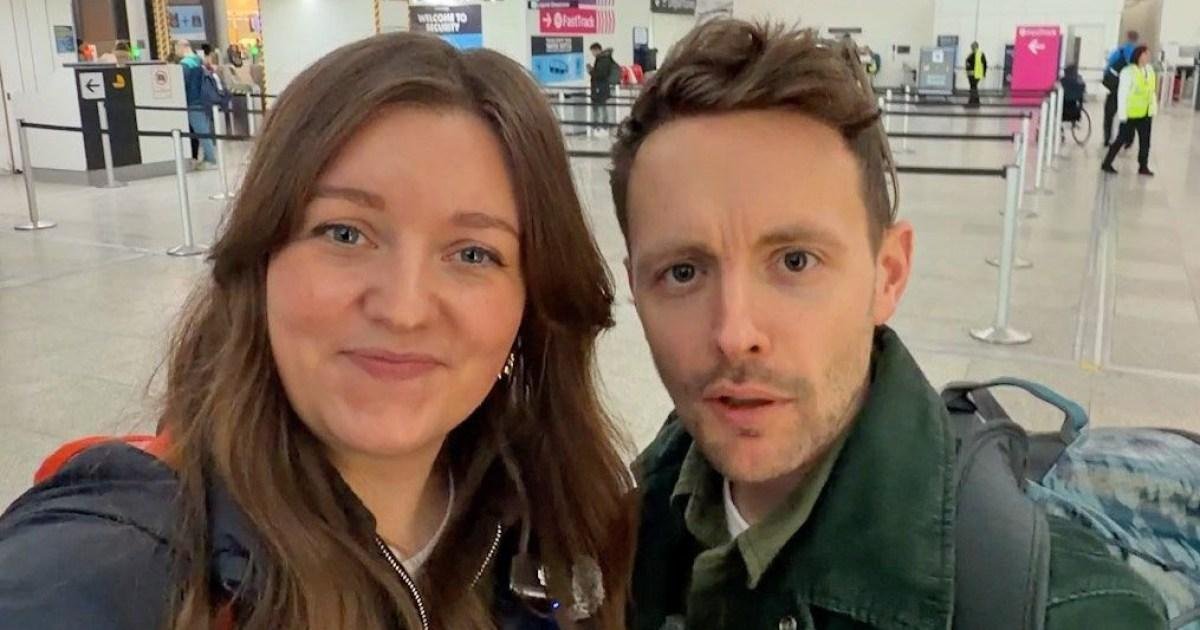
Challenging Airport Security: A Personal Experiment
On a recent trip to Antalya with Pegasus Airlines, I turned our departure from Stansted Airport into a head-to-head competition. Arriving about 90 minutes before our Friday lunchtime flight, I challenged my partner James to race through security. He opted for the £6.99 Fast Track service, while I stuck with the standard queue, eager to determine if the upgrade truly delivers on its promise of speed and convenience.
The airport buzzed with moderate activity—travelers streamed toward security, some veering right to the Fast Track lane that beckons with visions of swift passage. As a frequent flyer, I often question the value of such add-ons, so this test felt like the perfect way to settle it once and for all.
My Path Through the Standard Queue
James headed straight for Fast Track, and I joined the regular line, bracing for the usual shuffle. To my surprise, the queue moved efficiently; I scanned my boarding pass and reached the front in less than a minute. The real test came next: liquids in a clear bag. Even as an experienced traveler, I nearly overlooked this step but caught myself in time.
Luck favored me again with one of the newer scanners, which are rolling out across airports and easing restrictions like the 100ml liquid rule—recent changes at Heathrow highlight this trend. I removed my filming gear and power bank just in case, then realized my belt was still on. A quick dash back fixed that, and I stepped through the body scanner without issue.
The moment of truth: waiting for my tray to clear without a random check. Tension built as seconds passed, but the light flashed green. I repacked swiftly and emerged into the corridor, scanning for James. No sign of him yet—I had beaten the odds.
Fast Track’s Unexpected Delay
Continuing past the security exit, I finally spotted James still inside the Fast Track area. He emerged two minutes later, having been flagged for a random bag inspection. This setback echoed a previous race at Gatwick, where a similar check delayed him by over 15 minutes amid a backlog.
Fast Track lanes, while designed for efficiency, often operate with limited staff and secondary screening spots. When multiple passengers require checks—common with families carrying extra bags and items—a bottleneck forms quickly. Add priority access for crew and assisted passengers, and the ‘fast’ advantage can evaporate.
Is It Worth the Fee?
In this instance, the standard queue proved faster, saving James his £6.99 without the hassle. However, experiences vary. Fast Track shines during peak times like school holidays, weekends, or early flights when queues swell—Manchester Airport, for example, often sees long lines and sells out upgrades in advance.
For solo travelers or couples on off-peak midweek trips, the regular line usually suffices, especially at quieter regional airports. My threshold is 15 minutes; if Fast Track halves a 30-minute wait, the cost feels justified. Otherwise, I’d redirect those funds toward holiday extras.
Social media offers real-time insights—quick searches on platforms like Instagram reveal current queue conditions at specific airports. It suits anxious flyers, those needing assistance, families, or anyone tight on time. As upgrades evolve with better technology, the decision grows trickier, but this race confirmed: sometimes, the free path wins.
