

Major Winter Storm Targets Southeast US
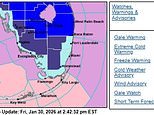
A powerful winter storm barrels toward the Southeast this weekend, placing about 35 million people under extreme weather alerts. This follows another round of snow and ice threats, with unusually low temperatures forecasted for regions like Florida that rarely experience such chills.
Forecasts show the cold front arriving in the Sunshine State by Saturday, building in intensity through Sunday morning. The system’s rapid pressure drop classifies it as a bomb cyclone, often described as an Arctic hurricane, drawing frigid air from the Canadian Arctic into the region.
Potential Snow and Record Cold in Florida
The influx of polar air raises the odds of snow flurries along Florida’s Gulf Coast and Atlantic beaches. Officials from the National Weather Service estimate a 10 to 20 percent chance of snow around Tampa Bay late Saturday night into Sunday morning.
Statewide, experts predict numerous record low temperatures and unusually cold daytime highs. Orlando temperatures could plummet to 25 degrees Fahrenheit or lower, while Miami faces mid-30s by Sunday into Monday—levels not seen since 2010. Northern and central Florida may see wind chills dipping into single digits.
Wind and Safety Warnings
The storm brings cold, blustery conditions across the Southeast. Authorities advise residents to secure loose outdoor objects due to high winds, which could complicate driving for high-profile vehicles and pose dangers for small boats on the water.
Prolonged exposure to these temperatures risks hypothermia and frostbite in minutes, prompting urgent safety measures.
Impacts on Theme Parks and Wildlife
The extreme cold has already forced closures at major Orlando attractions. Disney World’s Typhoon Lagoon water park shuts down from today through Monday, and Universal Studios’ Volcano Bay remains closed today as well.
Florida’s unique ecosystem faces challenges too. Green iguanas, sensitive to cold, may become stunned in temperatures dropping to the 40s and 30s, causing them to lose their grip and fall from trees, according to meteorologist Brandon Buckingham.
Citrus groves stand vulnerable as well, with fruit like oranges and grapefruit at risk of freezing damage below 28 degrees Fahrenheit.
Storm Path and Ongoing Recovery
Meteorologists anticipate the bomb cyclone forming off the coasts of Georgia and South Carolina early Saturday, then rapidly intensifying as it moves north along the shoreline into Sunday.
This comes amid recovery from Winter Storm Fern last weekend, which claimed over 100 lives. More than 150,000 customers in Louisiana, Mississippi, and Tennessee remain without power as of Saturday, per power outage tracking data.
Tennessee Governor Bill Lee emphasized the need for residents to receive a clear timeline for power restoration, transparency on lineman deployments, and details on when work will finish in their neighborhoods.
