

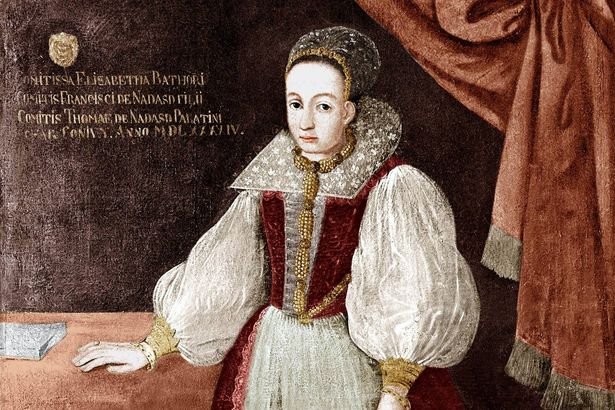
Elizabeth Bathory, infamous as the ‘Bloody Countess,’ faces a reevaluation of her dark legacy. Long accused of being history’s most prolific female serial killer, with claims of up to 650 murders, new scholarly analysis suggests she may have been wrongly condemned.
The Legend of the Bloody Countess
Historical accounts from the Kingdom of Hungary portray Bathory as a noblewoman who tortured and killed hundreds of young women between 1590 and 1610. Legends claim she bathed in their blood to maintain her youthful appearance. Along with four servants, she faced charges of these gruesome acts. The servants endured horrific executions, while Bathory remained imprisoned in Čachtice Castle in present-day Slovakia until her death in 1614.
This chilling narrative has captivated generations, influencing cultural icons like the Evil Queen in the Brothers Grimm’s Snow White from 1812, as well as Bram Stoker’s Dracula and various vampire tales.
A Case for Innocence: Scholarly Reexamination
In 2024, Dr. Annouchka Bayley, an associate professor at the University of Cambridge, challenged the traditional story. She argues that Bathory was innocent, framed in a political and social conspiracy. Instead, Bayley portrays her as a religious dissenter, a smuggler of forbidden books, and a pioneering feminist who leveraged her wealth and castle to educate hundreds of young women.
Dr. Bayley questions the feasibility of the accusations, stating, “I mean, who has the time in one lifetime to, one by one, kill 650 young women. I mean she would have been a busy girl.” Her research highlights that the alleged victims belonged to a specific social group: dispossessed noblewomen from pre-Hungarian regions, left unmarried due to wars that claimed many men.
According to Bayley, Bathory established a school at her castle to teach these women literacy and provide sanctuary. “You’ve got a bunch of unmarriageable teenage deposed noblewomen. So what Bathory did was set up a school to teach them how to read and offered them sanctuary. She basically sets up an institute, which is something I love because I work in education.”
Evidence of a Cover-Up?
Investigations reveal only one body was discovered at the castle, fueling speculation of secret escapes. Bayley suggests the women were smuggled out through hidden tunnels for their safety, alongside prohibited religious texts that Bathory reportedly produced and distributed.
While Bayley’s theory offers a compelling alternative, it remains debated. Many historians maintain Bathory’s guilt, though they dispute the exaggerated numbers and the blood-bathing myth, attributing her actions to lesser but still serious crimes.
This ongoing debate reframes Bathory not as a monster, but potentially as a protector of vulnerable women in a turbulent era.
