

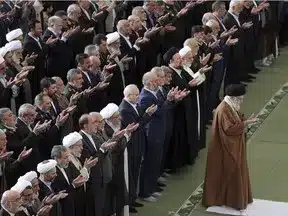
The assassination of Supreme Leader Ayatollah Ali Khamenei ends his nearly 37-year rule and ignites urgent questions about Iran’s leadership future. Iranian authorities launched the constitutional succession process immediately after his death in a U.S.- and Israel-led airstrike campaign.
Temporary Leadership Council Takes Charge
Iran’s constitution mandates formation of an interim leadership council to manage state affairs. This body includes the current president, judiciary head, and a Guardian Council member appointed by the Expediency Council, which advises on leadership matters and resolves parliamentary disputes.
Reformist President Masoud Pezeshkian and hard-line judiciary chief Gholamhossein Mohseni Ejei serve as key members. They step in to temporarily fulfill all supreme leader duties.
Assembly of Experts Selects Permanent Successor
The council oversees operations until an 88-member Assembly of Experts elects a new leader “as soon as possible.” Composed solely of Shiite clerics, the assembly holds popular elections every eight years. The Guardian Council vets all candidates and often disqualifies them, as seen with former President Hassan Rouhani—a moderate who negotiated the 2015 nuclear deal—in March 2024.
Leading Contenders Emerge Amid Secrecy
Succession discussions unfold behind closed doors among clerics. Hard-liner Ebrahim Raisi once appeared poised to succeed as Khamenei’s protégé, but he died in a May 2024 helicopter crash.
Khamenei’s 56-year-old son, cleric Mojtaba Khamenei, now stands out as a potential replacement despite holding no official government role. A father-to-son handover risks widespread outrage, evoking fears of a religious dynasty akin to the Shah’s regime toppled in 1979.
Historic Second Transition
Only one prior supreme leader change has occurred since the 1979 Islamic Revolution: Grand Ayatollah Ruhollah Khomeini’s death at age 86 in 1989, after leading Iran through the Iran-Iraq War. This shift follows Israel’s 12-day conflict with Iran in June 2025.
Supreme Leader’s Expansive Authority
The supreme leader dominates Iran’s Shiite theocratic system with veto power over state decisions. As commander-in-chief, he directs the armed forces and the Revolutionary Guard Corps—a U.S.-designated terrorist group since 2019. The Guard spearheads the “Axis of Resistance,” a network of Middle East militants opposing U.S. and Israeli influence, while amassing vast domestic economic holdings under Khamenei’s tenure.
