

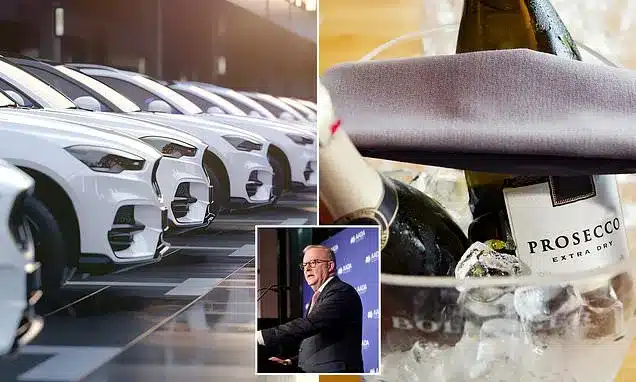
Australia stands to gain significantly from an impending free trade agreement with the European Union, including a tenfold increase in red meat exports, cheaper European cars, and resolution of disputes over product names like prosecco.
Red Meat Export Surge
Australian beef exports to Europe could rise dramatically under the deal, with quotas expanding to 30,000 to 35,000 tonnes annually—a 1,000 percent jump from current levels. Farmers have long advocated for greater access to this market, and negotiations now focus on broadening opportunities for all Australian agricultural products.
Farming groups push for a minimum quota of 50,000 tonnes yearly. National Farmers Federation president Hamish McIntyre warns that global uncertainties make it critical to avoid suboptimal terms. “With everything going on globally, there couldn’t be worse timing to lock in an agreement that sells Australian agriculture short,” McIntyre stated. He highlighted concerns over limited EU market access paired with hefty European subsidies, declaring, “No deal would be better than a bad deal.”
Product Name Concessions
Long-standing disputes over terms like prosecco, feta cheese, and parmesan appear resolved. Australian producers must phase out the ‘prosecco’ label on foreign exports over the next decade to safeguard Europe’s wine industry. Details on feta and parmesan remain under wraps.
Cheaper Luxury Cars
Importers benefit as Australia eliminates its five percent tariff on European cars. The luxury car tax remains intact, countering earlier speculation.
Strategic Meeting Ahead
Prime Minister Anthony Albanese meets European Commission President Ursula von der Leyen on Tuesday to finalize the pact, designed to offset disruptions from U.S. tariffs. Von der Leyen will become the first female foreign leader to address Australia’s federal parliament.
Former trade official Prudence Gordon notes current quotas are too restrictive. “It’s not really worthwhile for most exporters of beef and lamb meat and other products like rice and sugar and dairy products to enter that market because the quotas are so tiny, but also the tariffs are really high,” she explained.
