

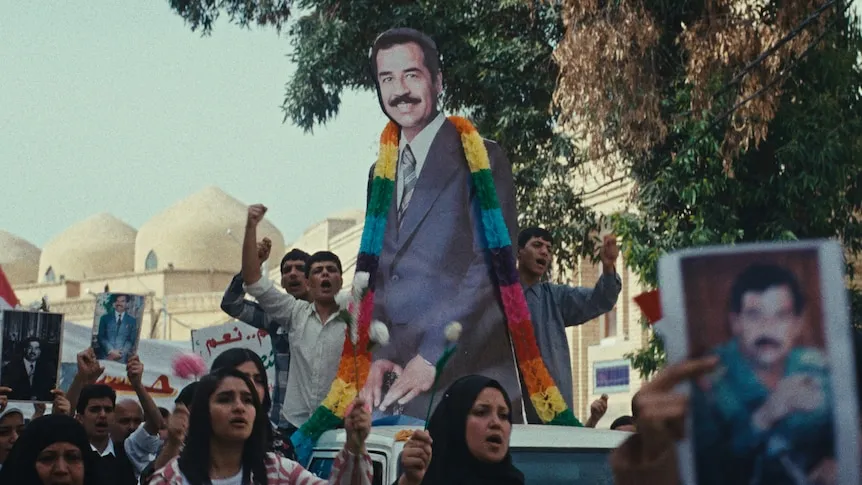
Iraqi filmmaker Hasan Hadi draws from his childhood experiences under sanctions to create his poignant debut feature, The President’s Cake, offering a glimmer of hope as conflict engulfs the Middle East.
Childhood Under Sanctions
During primary school, Hadi fetched flowers to celebrate then-President Saddam Hussein’s birthday, a task captured in a cherished photo. Iraq faced crippling United Nations sanctions following the 1990 invasion of Kuwait, leading to acute shortages of food, medicine, and clothing. “We’re talking severe scarcity of food, medications and clothes,” Hadi recalls from his New York City apartment. Basic school supplies like pens and pencils became luxuries amid import bans and rampant corruption, compounded by water shortages.
Pupils drew names from a bowl to assign gifts for Hussein, with Hadi’s flower duty proving easier than baking a cake, which required scarce eggs, sugar, and baking soda. Failure invited harsh punishment. “As a child, you get a sense why this is happening, but you don’t understand the political depth of it,” Hadi explains. “But you definitely understand severe poverty.”
The Film’s Captivating Story
The President’s Cake centers on schoolmates Lamia (Baneen Ahmad Nayyef) and Saeed (Sajad Mohamad Qasem), first-time actors delivering standout performances. “What they brought to the screen was phenomenal,” Hadi praises, noting their natural talent honed through shared stories, games, dances, and songs rather than rehearsals.
Lamia, an orphan living with her grandmother Bibi (Waheed Thabet Khreibat) and rooster Hindi in a reed hut by Iraq’s Mesopotamian marshes, must bake a cake for the president. When Bibi relinquishes her care to a Baghdad family, Lamia enlists Saeed for a chaotic quest to gather ingredients, encountering kind and sinister adults. “All of these characters were inspired by real incidents that happened to me or my friends,” Hadi reveals.
Exploring Sanctions’ Lasting Impact
The film highlights how sanctions warp society and human behavior. “I wanted to show you what sanctions do to people, how it changes the nature of humans and society,” Hadi states. Some antagonists merely survive, crossing moral lines for family needs. “You need to eat and provide for your family, and to do that, you need to cross so many lines,” he notes. Initial guilt fades, but restoration demands generations, especially in war zones like the current regional tensions.
Humor proves essential for endurance, as in a blinded soldier’s quip about his bride’s looks. “Life is intolerable if you don’t have any laughter in it,” Hadi asserts. “That’s the only way to survive.”
Filmmaking Triumphs and Future Hopes
Shot on location in marshes and city streets despite budget constraints and government scrutiny, the film immerses viewers in Iraq’s textures through sound, visuals, and design. “I wanted the audience to be transported to Iraq,” Hadi says. “I was really trying to create a feeling… that you can almost smell it and touch the textures.”
A child’s perspective conveys the complex fallout from Hussein’s ouster under false pretenses. “It feels like someone killed your abusive father,” Hadi reflects. “But it’s not at the hands of your brother. It was American soldiers, and American policy has contributed to atrocities and the killing of many Iraqis.”
Hadi, inspired by smuggled films like Godzilla and RoboCop during cinema closures, studied at New York University before returning home. Local support fueled the production amid logistical hurdles. The film earned the Cannes Film Festival’s Best First Feature award, shared with Jafar Panahi’s triumph. “It’s a dream come true,” Hadi exults, echoing Panahi’s advice to defy pressures and tell authentic stories.
Regional conflict delays its Iraq release, but audiences can catch The President’s Cake in cinemas from April 2.
