

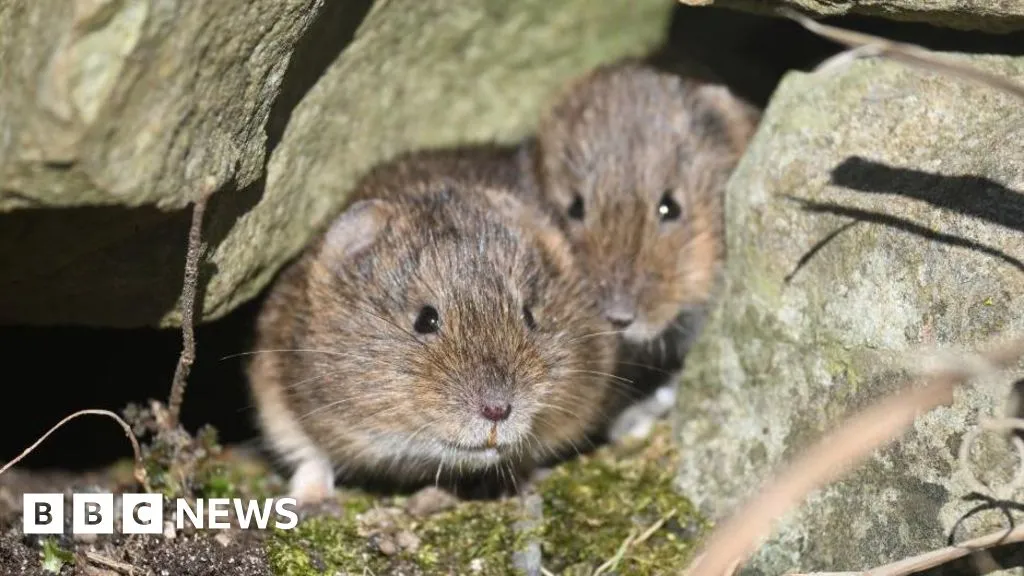
Efforts to eradicate invasive stoats from Orkney islands have significantly boosted native vole populations and birds of prey, with spring 2025 vole activity reaching the highest levels since the project launched in 2019.
Vole Population Rebounds
Monitoring across 22 sites on the mainland and islands revealed vole signs, such as droppings and grass clippings, in one-third of 1,082 surveyed squares. Autumn vole activity also remained elevated, signaling a strong recovery for the unique Orkney vole, found nowhere else in the world.
Boost for Rare Birds of Prey
Hen harriers, among the UK’s rarest raptors with a strong presence in Orkney, showed robust breeding success. Volunteers from the Orkney Raptor Study Group recorded breeding pairs at 74 locations on stoat-affected islands in 2025—the best year since 2012. Despite wet weather causing chick losses, approximately 60 chicks fledged from monitored nests.
Short-eared owls also thrived, appearing at 55 sites during the breeding season, with confirmed breeding at 16 locations and nests at six more. Breeding sites for these owls have steadily increased since stoat removal began in 2019.
Both species depend heavily on abundant Orkney voles to feed themselves and their young, linking higher vole numbers directly to improved breeding outcomes.
Project Achievements and Methods
The Orkney Native Wildlife Project, a collaboration between RSPB Scotland, NatureScot, and Orkney Islands Council, has removed over 8,500 stoats since 2019 using humane lethal traps and Europe’s first stoat detection dogs. Stoats, native to mainland Britain but absent from Orkney until their 2010 arrival, threatened local wildlife, with individual stoat caches holding up to 100 voles discovered.
Matt Marsh, monitoring officer for the Orkney Native Wildlife Project, stated: “It’s fantastic to see the continued positive impact that removing stoats from Orkney is having on our native wildlife. Hen harriers are one of the most fascinating species we monitor, as well as being one of the rarest birds of prey in the UK, so it’s excellent to see that their numbers are increasing. Orkney voles are found nowhere else in the world and are the species that is probably most threatened by the arrival of stoats, so to see historically high rates of vole activity is very encouraging.”
Anne McCall, director of RSPB Scotland, added: “The Orkney Native Wildlife Project is showing that we can halt and reverse species declines if we take action to address the threats wildlife is facing. Invasive non-native predators are a significant threat to much of the iconic wildlife found on Scotland’s islands. However, to give species like the Orkney vole their best chance, removing invasive non-native species like stoats from islands is essential.”
