

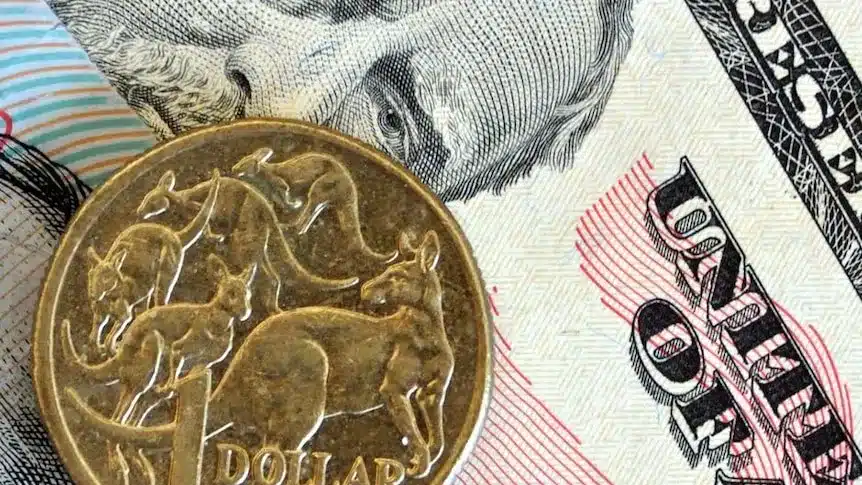
Aussie Dollar Hits Multi-Month Low as US Dollar Surges
The Australian dollar has experienced a significant decline, reaching its lowest point in over two months against the US dollar. The local currency dipped to just over 70 US cents, a level not seen since early April. This weakness is primarily attributed to a resurgent US dollar, driven by escalating global interest rate expectations.
Earlier in the day, the Australian dollar touched a low of 70.18 US cents. A brief surge to 70.67 US cents occurred later, reportedly following brokered talks between the US and Iran. By late afternoon, the currency was trading at 70.39 US cents.
Global Interest Rate Worries Drive Dollar Strength
Sean Callow, a senior FX strategist at InTouch Capital Markets, noted that the US dollar is strengthening against all major global currencies. This trend intensified following a substantial sell-off on Wall Street. The catalyst for this market reaction was a stronger-than-anticipated US employment report released on Friday.
While robust job growth is typically viewed as positive economic news, it has fueled concerns that the US Federal Reserve may maintain current interest rates or even implement further hikes later this year. Higher interest rates generally act as a headwind for equity markets, and the NASDAQ index, heavily weighted towards technology stocks, saw a significant drop of 4 percent.
“It’s all about higher US yields, a stronger US dollar, and the accompanying equity market reversal,” Callow explained.
Impact on Tourists and Exporters
The depreciating Australian dollar has direct implications for international travel. For Australian tourists heading overseas, a weaker currency means their purchasing power is diminished. Conversely, the situation presents an advantage for Australian exporters, making their goods and services more competitively priced on the global stage.
Broader Economic Anxiety and Reserve Bank Scrutiny
Economists at AMP have highlighted a growing sense of nervousness within global financial markets regarding persistent inflation and rising interest rates, exacerbated by the ongoing conflict in the Middle East. Diana Mousina, deputy chief economist at AMP, stated that Australia is no longer expected to be an exception to the global trend of increasing interest rates.
“Markets are pricing in higher interest rates globally, which is keeping bond yields elevated,” Mousina commented. She also pointed to hawkish remarks from US Federal Reserve regional president Lorie K. Logan regarding the potential for higher rates later this year, although other Fed officials have offered more neutral perspectives. The upcoming meeting of the Federal Reserve, chaired by new appointee Kevin Warsh, is being closely watched for potential shifts in communication and focus.
Asian Markets Follow Wall Street’s Lead
The Australian share market remained closed for the King’s Birthday long weekend. However, Asian share markets experienced sharp declines on Monday, mirroring the sell-off seen on Wall Street. South Korea’s KOSPI index fell significantly, even triggering a brief trading suspension. Japan’s Nikkei 225 also recorded substantial losses.
The Reserve Bank of Australia is expected to closely monitor the Australian dollar’s performance. A sustained period of weakness in the local currency could contribute to inflationary pressures within the Australian economy.
