

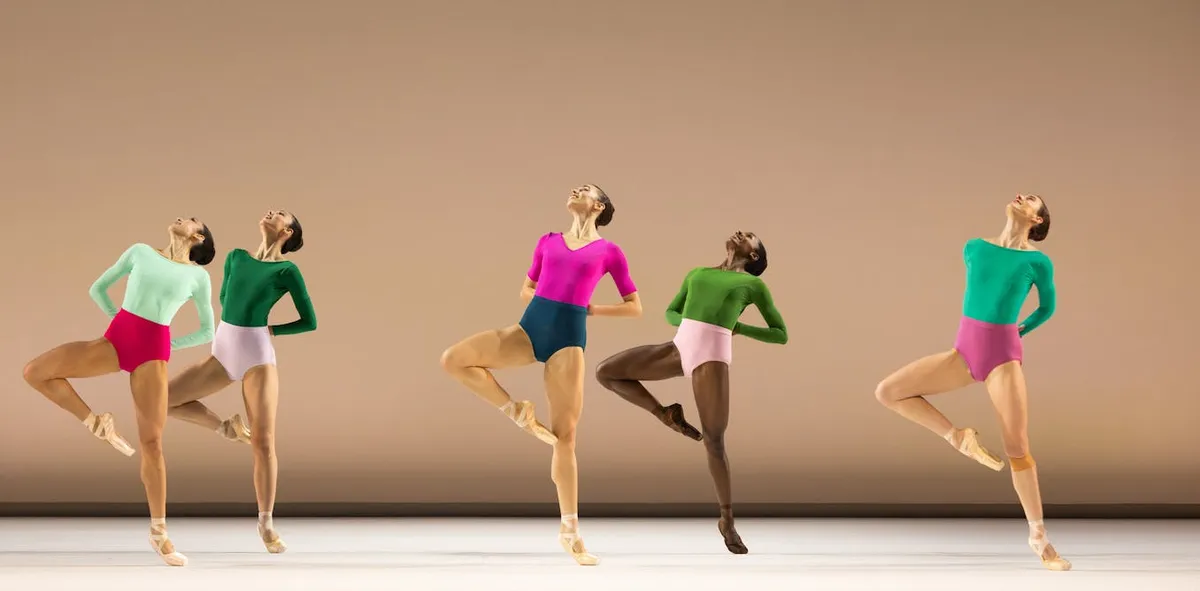
Australian Ballet Embarks on ‘Copland Dance Episodes’
Thirty dancers from The Australian Ballet are currently bringing to life Justin Peck’s “Copland Dance Episodes,” a dynamic production set to the evocative music of legendary American composer Aaron Copland. Orchestra Victoria provides the live musical accompaniment, performing Copland’s iconic orchestral works.
A Musical Tapestry of Americana
Aaron Copland, born in 1900, is widely celebrated as the “Dean of American Composers” for his role in shaping a distinct American classical music idiom. “Copland Dance Episodes” features his stirring “Fanfare for the Common Man” (1942), alongside beloved excerpts from his ballet scores “Rodeo” (1942), “Appalachian Spring” (1944), and “Billy the Kid” (1938). These pieces, deeply rooted in American folk traditions, coalesce seamlessly within the ballet’s structure.
Contemporary Movement Meets Classic Scores
While the musical inspiration dates back to the mid-20th century, the ballet’s choreographic language is decidedly contemporary. Choreographer Justin Peck, resident choreographer at the New York City Ballet, continues the innovative spirit of American dance pioneers like George Balanchine and Jerome Robbins. The performance is characterized by its fast-paced, joyous energy, with dancers executing complex movements, from sharp kicks and flicks to fluid slides and precise points. The ballet unfolds through 22 distinct episodes, offering ample opportunities for captivating solos, duets, and trios.
An Open Invitation to Interpretation
Similar to many works by Balanchine and Robbins, “Copland Dance Episodes” offers a subtle, rather than overt, narrative. The recurring presence of two couples – one navigating relationship challenges, the other experiencing growth – provides a gentle storytelling thread. Additionally, two trios, one of men and one of women, engage in playful interactions, hinting at individual personalities and mini-dramatic scenarios. The choreography is often described as quirky, demanding, and filled with original steps and lifts, all executed with remarkable precision by the company’s dancers.
Peck himself has stated that this ballet “meets the audience halfway,” encouraging viewers to discover their own interpretations. The open-ended nature of the narrative invites personal engagement and reflection from the audience.
A Visual Journey Across the Plains
The production is structured in two acts, though it often feels like three distinct sections. The initial act is largely driven by the male dancers, set to the robust, hoedown-inspired music of “Rodeo.” This transitions to a segment featuring the female dancers, characterized by lighter music from “Appalachian Spring” and a more coquettish style. The final act brings together a larger ensemble, with formations ranging from sweeping crowds to intricate patterns across the stage.
A pervasive sense of space defines the entire production. Jeffrey Gibson’s minimalist, all-white set design visually evokes the vast American plains, a theme echoed in Copland’s music. This expansive white canvas serves as an ideal backdrop for Ellen Warren’s vibrant, mix-and-match costumes, which transform the dancers into elements of a richly patterned, geometric tapestry. The visual spectacle begins even before the dancers take the stage, with Gibson’s boldly patterned curtain setting a vibrant tone.
Bridging Continents Through Dance
“Copland Dance Episodes” represents a significant fusion: 21st-century American choreography set to mid-20th-century American frontier music, performed by an Australian company and orchestra on Australian soil. Historically, Australian ballet has maintained stronger ties with European traditions than with American ones. While numerous European companies have toured Australia, New York City Ballet’s sole visit occurred in 1958.
The Australian Ballet’s commitment to presenting new works by emerging international artists is clearly demonstrated in this production. Beyond fulfilling this mission, the staging of “Copland Dance Episodes,” marking its debut outside New York City, signifies a moment of considerable artistic exchange and cultural connection.
“Copland Dance Episodes” is currently showing in Melbourne until July 2, with a Sydney season scheduled for November.
