

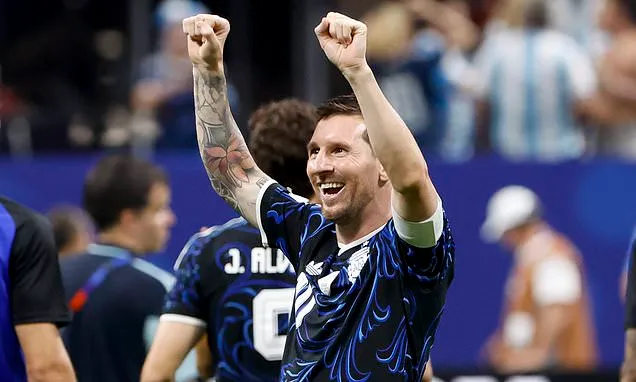
The aftermath of England’s semi-final exit and Argentina’s dramatic victory has continued to dominate headlines on a rest day at the World Cup. Manager Thomas Tuchel faced significant criticism for his team’s performance and tactical approach following their 1-0 lead against Argentina, only to later suggest that the players’ inherent characteristics, or ‘DNA,’ prevented them from controlling the match. FIFA has also initiated an investigation into Argentina’s post-match celebrations, specifically a banner referencing the Falkland Islands.
Tuchel Defends Tactics Amidst Player ‘DNA’ Controversy
Following England’s semi-final defeat, manager Thomas Tuchel has defended his tactical decisions, stating he has “no regrets” about the approach taken. However, his subsequent comments, suggesting that controlling possession and dictating the game’s tempo is not ingrained in the “DNA” of English players like it is for nations such as Spain, Argentina, or Brazil, have drawn considerable debate. Tuchel elaborated that England became too passive after taking the lead, struggling to maintain structure and physicality, which ultimately allowed Argentina’s momentum to swing. He explained that attempts to adjust the defensive structure, even to a back five, were aimed at increasing activity and closing down spaces, but the team struggled to implement these changes effectively. The manager acknowledged that a lack of ball possession and an inability to break pressure contributed to the team’s passive play and loss of momentum.
FIFA Investigates Argentina’s ‘Malvinas’ Banner
FIFA has confirmed it is looking into the controversial banner displayed by Argentina’s players during their celebrations following their semi-final win. The banner, which read “Las Malvinas Son Argentinas,” asserts Argentina’s claim to the Falkland Islands, a move that has sparked considerable backlash, particularly in the United Kingdom. FIFA’s regulations prohibit political messaging at the World Cup, although the organization has previously overlooked similar political references made by the team throughout the tournament. It remains uncertain whether any disciplinary action will be determined before the final match.
A Unique Perspective from the Airport Terminal
One observer shared a unique experience of watching England’s crucial semi-final match from an airport departure gate. Arriving mid-first half, the match was viewed on a screen at a Southwest Airlines gate, largely ignored by fellow travelers. The experience was juxtaposed with a message from a daughter witnessing jubilant scenes in a London pub, highlighting the difference between solitary viewing and shared excitement. The observer managed to watch until the 80th minute before heading to their onward flight. During the transit between terminals, the score changed to 1-1 via a phone update, and by the time they reached another screen, Lionel Messi had delivered the decisive assist for Lautaro Martinez’s winning goal. The final whistle was met with congratulations from two Argentina supporters, underscoring the game’s significance but also its place in the broader flow of life.
Team of the Semi-Finals and Viral Moments
The semi-final stage saw notable performances that have led to the selection of a Team of the Semi-Finals, with a graphic provided by Sofascore illustrating the standout players. A viral moment involved England’s Jude Bellingham appearing to slap Argentina’s Valentin Barco on the back of the head during post-match celebrations. Initially puzzling, further footage revealed Barco had run across the pitch in front of England players after Argentina’s equalizer and again after the winning goal, seemingly taunting them. This behavior prompted reactions from England players, including a shove from John Stones.
Iconic Scenes in Buenos Aires and Messi’s Milestone
Argentina’s victory was met with massive celebrations in Buenos Aires, where thousands gathered at the Obelisk monument. Fans set off fireworks and reportedly burned England flags in a display of national pride and rivalry. Meanwhile, Lionel Messi’s performance was highlighted by a significant statistical achievement. His assist for the winning goal brought his combined total of goals and assists in World Cup history to 33, placing him well ahead of other notable players like Kylian Mbappe. Messi is also currently tied with Mbappe for the Golden Boot award with eight goals.
Key Talking Points for Today’s Matches
Looking ahead, several key narratives are expected to unfold:
- Tuchel’s Post-Match Reaction: The fallout from Thomas Tuchel’s comments regarding player ‘DNA’ and his tactical approach is likely to continue. His upcoming press conference before the third-place play-off will be closely watched for any further clarification or defense of his stance.
- England’s Third-Place Play-off Approach: With both teams acknowledging a lack of enthusiasm for the third-place play-off, the lineup England will field against a similarly dejected opponent is of interest. Manager Tuchel may opt for significant squad rotation, though players like Harry Kane, still competing for the Golden Boot, could feature.
- Potential FIFA Sanctions for Argentina: The consequences of the ‘Malvinas’ banner could extend to individual players, especially those from English clubs. While players reportedly distanced themselves from the banner’s origins, FIFA’s strict rules against political messaging raise questions about potential sanctions. Historical precedents, such as bans for similar chants, suggest that disciplinary action is possible, though FIFA may be hesitant to disrupt preparations for the final, particularly with Lionel Messi involved.
