

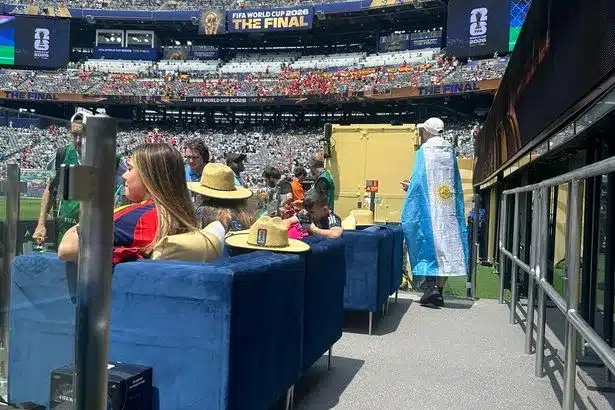
The ultimate football experience came with an astronomical price tag at the recent World Cup final, where exclusive pitchside sofa seats reportedly sold for $1 million. These ultra-premium spots, situated directly at field level, offered a unique perspective but drew considerable public scrutiny regarding their value and viewing experience.
Unprecedented Luxury and Location
Images circulating on social media platform X, shared by US sports journalist Alex Silverman, revealed the opulent setup. The seats featured plush, blue sofas with ample legroom, arranged in a private section cordoned off by a metal fence. This exclusive area was designed for a select few, seemingly accommodating high-net-worth individuals, with some attendees identified as supporters of Argentina and Spain.
The package, brokered through hospitality provider On Location, included more than just a place to sit. According to reports, the $1 million investment granted access to:
- Hospitality services within the Pitchside Lounge.
- A private meet-and-greet with a football legend.
- Comprehensive private transportation throughout the tournament.
- A dedicated account manager for personalized assistance, including excursions and other requests.
- Access to high-end accommodation.
Additionally, attendees received FIFA-branded cowboy hats, presumably to shield themselves from the sun, as the seats were located on the stadium’s sunny side. A limited-edition FIFA ‘Catch the Game’ Labubu doll was also spotted, though its inclusion in the package was not definitively confirmed.
Criticism Over Viewing Experience and Value
Despite the lavish amenities and the unparalleled proximity to the pitch, the viewing angle of these $1 million seats became a major point of contention. Positioned at field level and behind the photographers covering the event, many observers questioned the practicality of actually watching the game unfold. Photographers, essential for capturing match action, would likely obstruct the view for extended periods.
Social media users expressed widespread disbelief and criticism. Comments ranged from questioning the necessity of the photographers standing in front of the seats to outright confusion about paying a premium for what was perceived as a suboptimal view. One widely shared sentiment questioned the logic: “Worst view in the whole stadium but you pay a premium for it, make it make sense.”
The criticism extended beyond the viewing angle, targeting the perceived commercialization of the sport. Many felt that such exorbitant pricing alienated traditional fans and signaled a departure from football’s roots. Phrases like “greedy FIFA” and “stupid supporters” were used by some online, with others lamenting, “Football used to be for the fans.” Renowned football journalist Adam Crafton echoed this sentiment, remarking on the perceived decline of the sport’s accessibility and authenticity.
Potential Furniture Origins
The distinctive sofas used in the pitchside setup are believed to be from Swiss furniture store Beliani, although this has not been officially verified. Similar velvet-lined foam sofas are available from retail outlets like B&Q for significantly less, with prices around £759.99, highlighting the vast markup associated with the exclusive hospitality package.
A Symbol of Modern Sports Economics
The $1 million World Cup final seats serve as a stark illustration of the evolving landscape of elite sports hospitality. While offering an exclusive, behind-the-scenes experience for the ultra-wealthy, the arrangement also ignited a debate about accessibility, value, and the soul of professional sports. The incident underscores the tension between maximizing revenue through premium offerings and maintaining a connection with the broader fan base that forms the foundation of the sport’s popularity.
Ultimately, the controversy surrounding these pitchside sofas raises questions about what constitutes true value in spectator sports. Is it the proximity, the exclusivity, the amenities, or the unobstructed view of the game itself? For the fans who paid $1 million, the answer remains a closely guarded secret, while for many others, it highlights a growing divide in the world of international football.
