

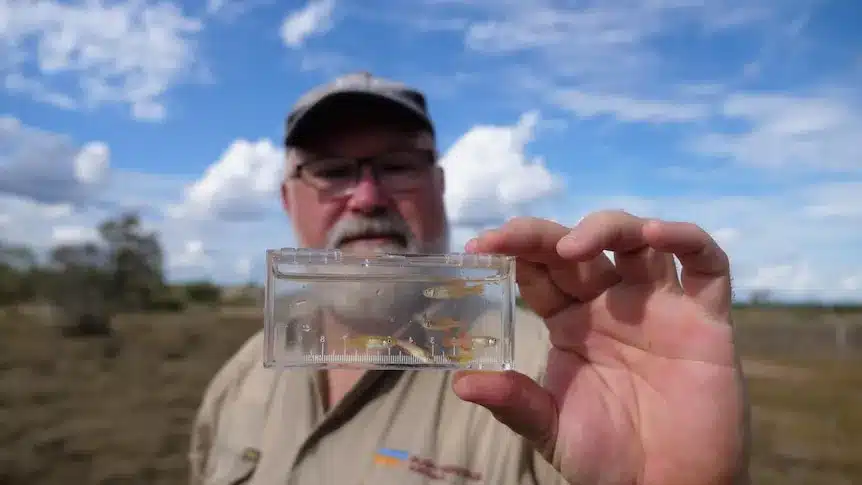
A critically endangered fish, found exclusively in Australia’s arid interior, has narrowly escaped a devastating extinction event due to the proliferation of an invasive species. The red-fin blue-eye, a small freshwater fish native to a unique network of artesian springs in western Queensland, is facing an unprecedented threat from the mosquitofish, also known as gambusia. Recent floodwaters have allowed these predatory invaders to infiltrate the fish’s fragile habitat, pushing some populations to the brink.
Invasive Predator Threatens Unique Species
The red-fin blue-eye (Scaturiginichthys vermeilipinnis) is endemic to a series of hidden springs near Aramac, Queensland. This delicate ecosystem, often described as a “puddle in the desert,” harbors the entirety of the species’ genetic diversity. However, the arrival of invasive mosquitofish, introduced from North America in the 1920s for mosquito control, has created a dire situation.
According to volunteer Sarah Butler, who has been actively involved in rescue efforts, the impact of the mosquitofish is severe. “Every red-fin blue-eye we’ve caught has had some damage from gambusia,” she stated. This damage can range from missing scales, leading to fungal infections, to significant chunks missing from the fish’s tail. Crucially, the fry and eggs of the red-fin blue-eye are immediately consumed by the larger, more aggressive mosquitofish, preventing any natural replenishment of the population.
Dean Gilligan, a fish ecologist with Bush Heritage, emphasized the urgency of the situation. “Once gambusia get into a spring that’s occupied by blue-eyes, the blue-eyes have six to 18 months at most before the population goes extinct,” he explained. The mosquitofish reproduce at an astonishing rate, with females capable of giving birth to up to 60 young every three weeks.
Floodwaters Exacerbate Existing Vulnerabilities
Earlier this year, significant flood events inundated the Edgbaston Reserve, the primary sanctuary for the red-fin blue-eye. These floodwaters, described as metre-high, carried the invasive mosquitofish into previously secure springs. Prior to this event, all but three of the reserve’s springs had
