

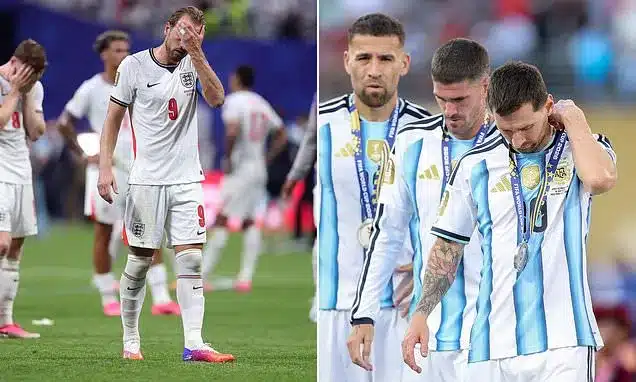
Spain’s victory in the recent World Cup has been hailed as a masterclass in collective performance, demonstrating that deep talent and cohesive strategy can triumph over individual superstar power. Despite not boasting the same concentration of global icons as some other nations, Spain’s tactical discipline, fluid movement, and unwavering confidence on the ball set them apart, culminating in a final performance that dominated Argentina.
Spain’s Dominance and Tactical Acumen
The Spanish team executed every aspect of their coaching with remarkable precision, both individually and as a unit. Their play was characterized by intelligent movement off the ball, swift one-touch passing, and the courage to play out from the back under intense pressure. This approach left opponents struggling to gain a foothold, as evidenced by their control of the final match. Even though the final remained goalless for 90 minutes, the performance itself was a testament to their superiority, with Argentina rarely threatening their goal.
A key indicator of Spain’s strength was their squad depth. The ability to make multiple substitutions without a discernible drop in quality highlighted the team’s ingrained playing style and shared understanding. This consistency across the squad allowed them to maintain their identity, class, and confidence throughout the tournament, proving they were the rightful champions.
Rodri: The Player of the Tournament
The award for Player of the Tournament, given to Rodri, underscored his pivotal role in Spain’s success. Recovering from a significant knee injury, Rodri has returned to his peak form, solidifying his status as arguably the world’s premier holding midfielder. His game extends beyond mere passing and vision; it is his bravery and constant demand for the ball, even in congested areas, that truly dictate the tempo of matches. Spain utilized him not just as a defensive anchor but also as an offensive influencer, allowing him to push forward and impact attacks when necessary. His presence elevates the performance of those around him, a hallmark of truly elite players.
England’s Missed Opportunity and Future Potential
The final match also served as a poignant reminder for England of what could have been. While Argentina did not defeat England in the semi-finals, a self-inflicted performance led to their exit. Initial optimism for England’s chances was high, fueled by a squad possessing significant attacking talent. However, a perceived fortunate escape in an earlier match against Mexico may have instilled a mindset of survival rather than dominance. This approach resurfaced when England took the lead against Argentina, ultimately proving detrimental.
Despite this setback, the tournament offered positive takeaways for England. The regret stems from a failure to fully trust their abilities and maintain an attacking approach, particularly evident in the third-place match against France. The belief remains strong that England possesses the necessary talent to win major tournaments, provided they can cultivate the right mentality and strategic execution.
The Role of VAR and FIFA’s Influence
The tournament also highlighted the ongoing debate surrounding Video Assistant Referee (VAR) technology. While often criticized, VAR served as an essential deterrent against unsportsmanlike conduct, particularly noted in the context of Argentina’s tactical approach. The potential for increased rule-bending without such oversight suggests VAR, despite its imperfections, plays a crucial role in maintaining fairness.
Furthermore, FIFA’s organizational decisions faced scrutiny. The extended half-time interval in the final was criticized for disrupting player rhythm and routines, potentially altering the nature of the contest. Similarly, the implementation of extended water breaks was seen as an unnecessary interruption to the game’s flow. While acknowledging the need for player welfare and spectator experience, the focus, from a football perspective, should remain on maintaining the integrity and momentum of the match.
The Evolving World Cup Landscape
The expansion of the World Cup format, while bringing new nations like Cape Verde onto the global stage and celebrating football’s wider reach, also presented challenges. The group stages, in particular, often lacked the competitive intensity seen in the knockout rounds, leading to a less engaging experience for some observers. This expansion also complicates historical comparisons, as increased match numbers and potentially weaker opposition can skew statistical records.
Looking ahead, the author suggests that further expansion to 64 nations could be considered, provided the integrity of the knockout stages is preserved by removing safety nets like third-placed teams advancing. The core appeal of the World Cup lies in its high-stakes knockout matches, and protecting this element is paramount for the tournament’s continued spectacle.
Ultimately, Spain’s triumph serves as a powerful example of cohesive team play and strategic execution, while England’s journey underscores the importance of mentality and belief in achieving ultimate success. The tournament also provided a platform for discussing the evolving nature of football’s biggest event, from technological aids to structural changes.
