

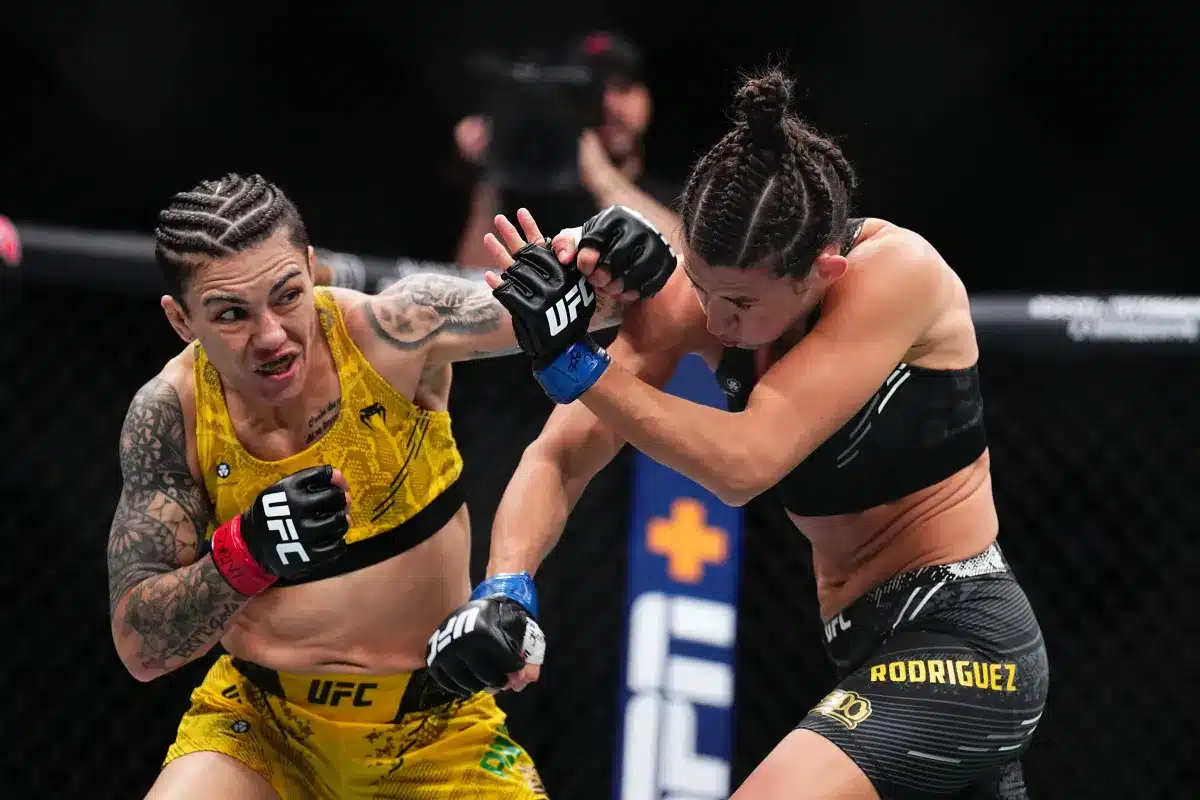
Former UFC strawweight champion Jessica Andrade is navigating a challenging period, taking on delivery driving and launching a landscaping venture to supplement her income while recovering from an injury. The Brazilian fighter, sidelined with a shoulder injury sustained in her August 2025 bout against Loopy Gordinez, has faced a recent string of losses. Despite her decorated career, including three championship fights and 30 appearances in the UFC octagon, Andrade has found herself in a position where additional work is necessary.
Financial Realities for Fighters
Andrade shared her current situation in an interview with the Brazilian MMA podcast Direto de Vegas, detailing her work as a delivery driver. “I work as a delivery driver. I deliver meals and things like that. I just pick up orders through an app and make the deliveries,” she explained. Emphasizing her commitment and work ethic, Andrade added, “I do whatever it takes. I’m not afraid of hard work. I can do just about anything.”
This period marks a continuation of financial pressures for Andrade. In addition to her recent fight results, she also went through a divorce, which contributed to her need for financial stability. To manage these expenses, Andrade competed five times in 2023, a significantly higher frequency than the average fighter. This high volume of fights placed her in an elite group, matching the record for the most fights in the post-tournament era, a feat also achieved by Kevin Holland (2020), Neil Magny (2014), and Roger Huerta (2007).
Diversifying Income Streams
Beyond her delivery work, Andrade has ventured into the landscaping industry. She revealed that she has begun a landscaping project at a friend’s property, which involves tasks such as rock removal, grass installation, and fence painting. This new endeavor is viewed by Andrade as a practical way to generate extra income should the need arise. “If I’m good at this it becomes one more thing I can add if I ever find myself short on cash. We need some extra money,” she stated.
Broader UFC Compensation Discussions
Andrade’s situation highlights ongoing discussions and criticisms surrounding fighter compensation within the UFC. The organization has frequently faced scrutiny over its revenue distribution model. Reports indicate that the UFC allocates approximately 20% of its revenue to fighter pay, a figure considerably lower than the roughly 60% typically received by boxers from their events. While top-tier athletes like Conor McGregor, Daniel Cormier, and Ronda Rousey have historically commanded significantly higher earnings, the majority of the roster often struggles with financial security, especially during periods of injury or reduced fight schedules.
The debate over fighter pay has been amplified by figures like Jake Paul, who has been a vocal advocate for reform. The recent expansion of UFC president Dana White into boxing promotion, through Zuffa Boxing in partnership with Saudi Arabian investors, has further fueled discussions. This new venture has reportedly invested substantial sums in prominent boxers such as Conor Benn, Johnny Fisher, and Shakur Stevenson, leading to bewilderment among many UFC athletes who perceive a disparity in resource allocation.
The Fighter’s Perspective
Andrade’s willingness to take on diverse roles underscores the financial realities many professional athletes face, even those who have reached the pinnacle of their sport. Her proactive approach to securing her financial future, through both immediate work and the development of new skills, demonstrates resilience. The challenges she is currently navigating are not unique within the combat sports landscape, where career longevity can be uncertain and income streams are often dependent on consistent performance and availability.
Her commitment to her craft and her willingness to work outside the traditional fighting sphere reflect a broader narrative of athletes striving for stability in a high-risk profession. The landscaping project, in particular, represents an effort to build a sustainable skill set that can provide an alternative or supplementary income, offering a degree of financial independence beyond the confines of her fighting career.
Conclusion
Jessica Andrade’s current endeavors as a delivery driver and her burgeoning landscaping business serve as a powerful testament to her determination and adaptability. While recovering from injury and facing financial pressures, she is actively creating new opportunities, showcasing a resilient spirit that extends far beyond the octagon. Her situation brings to light the persistent conversations around athlete compensation and the diverse strategies individuals employ to ensure their financial well-being in the demanding world of professional sports.
