

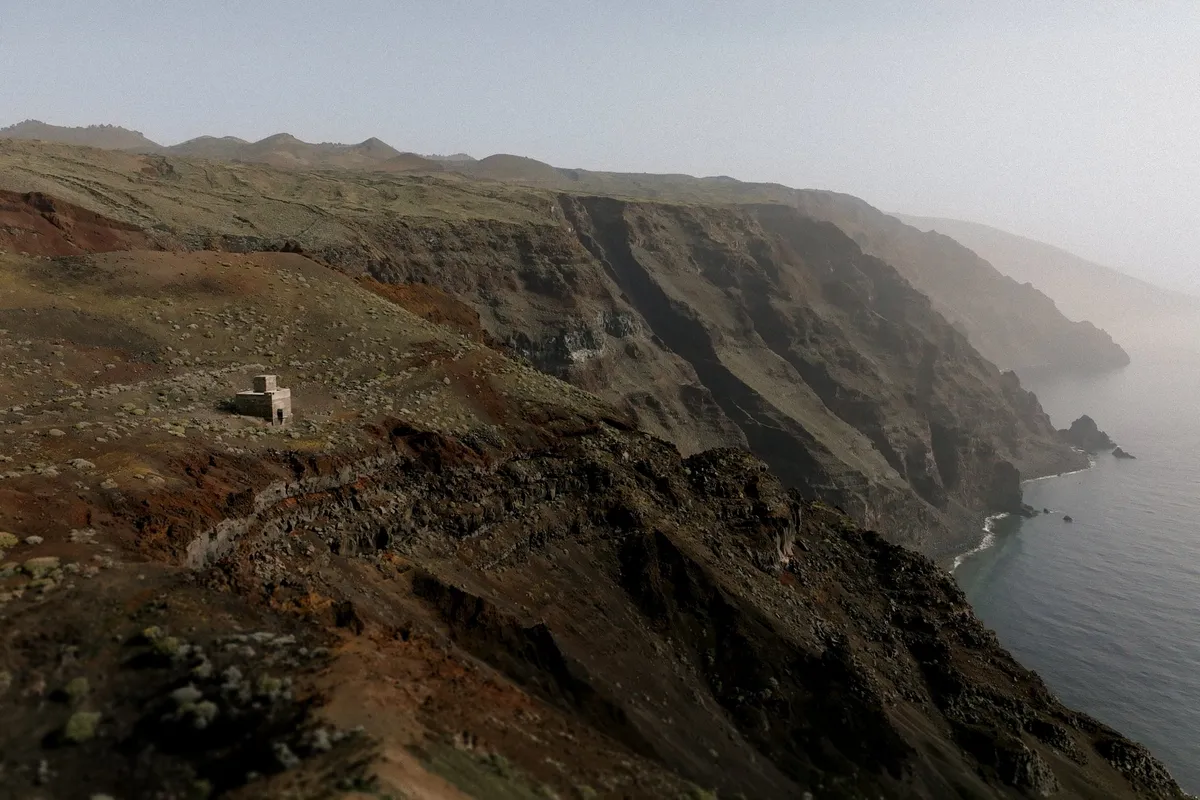
In the vast expanse of the Canary Islands, far from the bustling tourist hubs, lies a unique retreat on the island of El Hierro that offers an escape from the digital age. El Elevador, an austere accommodation perched on a volcanic cliff edge, provides a solitary haven for two guests, deliberately eschewing modern technology. Its most distinctive feature is its reservation system: prospective visitors must submit a handwritten letter to secure a booking, a stark contrast to the instant confirmations typical of online travel platforms.
An Analogue Sanctuary on El Hierro
El Hierro, the westernmost and southernmost of the Canary Islands, is known for its rugged natural beauty and commitment to sustainability. It is here that El Elevador offers a truly remote experience. The accommodation itself is a minimalist, single-open-space structure designed for two, situated dramatically on the edge of a cliff. This location, combined with the absence of phone service and internet, creates a complete technological black hole, encouraging guests to disconnect entirely from the outside world.
Unlike conventional holiday rentals found on platforms like Airbnb or Booking.com, El Elevador maintains an air of mystique. Its website greets potential guests with a poetic invitation: ‘Every journey begins with a desire. With an intention. With a letter.’ This philosophy underscores the resort’s commitment to a more thoughtful and deliberate approach to travel. Prospective visitors are cautioned that this is not a typical luxury stay; instead, it emphasizes a return to basics, allowing guests to immerse themselves in the dramatic landscape and embrace a slower pace of life.
The Art of the Handwritten Reservation
The process of booking a stay at El Elevador is as intentional as the retreat itself. Potential guests are required to send a handwritten letter to the owners. This analogue method is a deliberate choice, designed to foster a deeper connection and thoughtfulness before arrival. It stands in direct opposition to the quick, often impulsive nature of online bookings.
Dr. Elaine Kasket, a cyberpsychologist specializing in human-technology interaction, notes that El Elevador’s strategy is a significant departure from the contemporary booking experience. “The usual process is quick and convenient,” she explains. “El Elevador is slow, requiring thoughtfulness, patience, and the constructive disruption of our automatic, non-reflective, fast-paced behaviours we’ve fallen into with digital technologies.”
The act of writing a letter, addressing an envelope, finding a stamp, and mailing it, followed by the anticipation of a response, is an increasingly unfamiliar yet personal process. According to Dr. Kasket, this method “pulls a greater connection with our humanity from us, and it connects us with the human on the other side.” If a letter is accepted, a unique digital link is sent to the applicant, serving as the sole technological touchpoint to finalize dates and other arrangements before the true digital detox begins.
Embracing Trends in Wellness and Slow Travel
El Elevador’s unique model taps into burgeoning trends within the travel industry. Wellness tourism, a sector projected to reach $1.4 trillion by 2027, increasingly emphasizes restorative experiences and self-improvement. The resort’s promotion of a slower, analogue lifestyle aligns perfectly with this growing demand for travel that nourishes the mind and spirit.
Evidence suggests that travellers continue to value traditional methods of experiencing the world. Despite the prevalence of digital navigation, Ordnance Survey reports selling close to a million paper maps and books annually, indicating a persistent appeal for tangible resources. This preference for the tangible extends to travel experiences, where a growing number of people seek authenticity and a departure from algorithm-driven itineraries.
Dr. Andrew Stevenson, a senior psychology lecturer and author specializing in travel psychology, identifies this broader movement as ‘eudaimonic travel.’ This concept describes journeys undertaken for self-improvement and self-discovery, rather than solely for leisure or entertainment. “Instead of looking for fun and sun, eudaimonic travel is a journey of self-discovery, finding out more about yourself and investing in restorative travel,” Dr. Stevenson states.
Psychogeography and Pushing Back Against Mass Tourism
Dr. Stevenson also highlights the concept of ‘psychogeography,’ which explores how personal experiences shape our relationship with places, challenging predetermined itineraries. In an era where algorithms often dictate travel choices, from restaurant selections to popular tourist spots, psychogeography offers a way to reclaim personal exploration. “Places aren’t products that should be sold to everybody as a kind of mass tourism,” Dr. Stevenson argues.
El Elevador embodies this philosophy, offering an experience that Dr. Stevenson describes as “a direct backlash to TripAdvisor.” It encourages guests to engage with their surroundings through their senses, to resist immediate judgment, and to form personal connections with locations, moving away from the transactional nature of curated online reviews and mass-marketed destinations.
The Magic of the Unexpected
As Dr. Kasket points out, a significant part of travel’s allure lies in the unexpected and the unpredictable. The technologically driven, algorithm-saturated travel landscape often caters to consumer demands rather than fostering genuine traveler experiences. El Elevador’s approach, by contrast, embraces serendipity and the magic of the unknown.
The retreat serves as a challenge and an invitation to rethink how we engage with new places. Dr. Stevenson advises travellers to immerse themselves in their surroundings, to observe and experience rather than immediately categorize or rate. He encourages sharing descriptive observations about a place, allowing others to form their own impressions, rather than offering simple endorsements or criticisms.
Ultimately, El Elevador offers more than just a unique stay; it provides an opportunity for profound disconnection and self-reflection. It is a special experience that prompts a fundamental question for potential guests: could you truly embrace a week of solitude and analogue living on this remote Canarian clifftop?
