

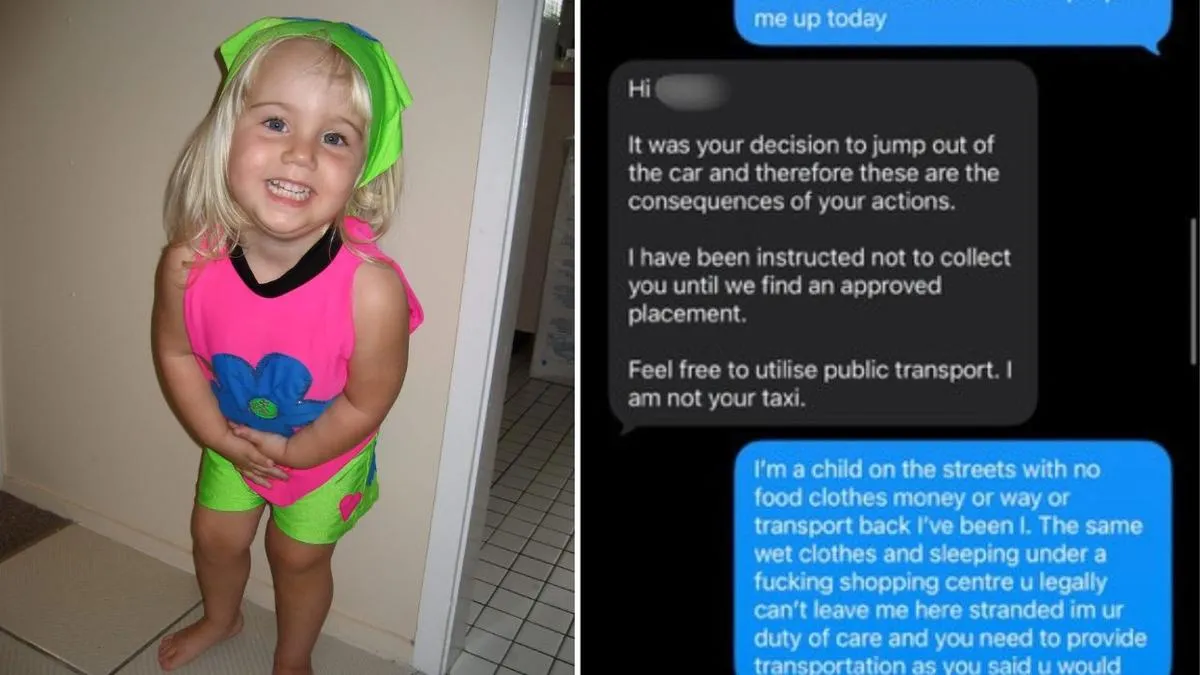
Several young people who have been in the care of Child Safety Queensland have shared harrowing accounts of neglect and trauma, alleging the system designed to protect them has instead caused further harm. These individuals, who were removed from their families for their own safety, describe a care environment that felt more like “survival mode” than a safe haven, leaving them with lasting emotional and psychological scars. Their experiences come as the Queensland Government reviews recommendations from a landmark inquiry into the child protection system, which highlighted significant failures.
A System Under Scrutiny
The Queensland Government is currently considering recommendations from an inquiry into the state’s child safety system. The Attorney-General previously described the system as “neglected” when the inquiry’s findings were released. Experts suggest that the daily realities faced by vulnerable children within this system often lead to outcomes that are poorly understood.
Personal Accounts of Trauma and Neglect
Deanna Paylor, now 21, spent her entire childhood within the child protection system. Diagnosed at age five with reactive attachment disorder, a condition stemming from early neglect, she struggled with trust and emotional regulation. “I was always misbehaving or, you know, like lashing out because I never had that one stable home,” Paylor recounted. “I don’t even know how I did it. I just think I was living in survival mode. I was surviving off adrenaline.”
Her experience in a residential care home at age 12 was particularly devastating. She reported being sexually assaulted multiple times by an older resident due to inadequate security, including a lack of a lock on her door. “That’s just how rough and raw a residential care home could be for a young female, which is disgusting… the system is broken, and as a result I struggle with lifelong complex PTSD and anxiety,” she stated. Paylor endured 45 different placements before finding stability with the mother of a friend, who became a maternal figure to her sons.
Fifteen-year-old Emma Griffith* described her experience of being moved 10 times in the past year as “terrifying” and “unsettling.” She expressed fear of being told to pack her belongings with no notice or choice in the matter. On one occasion, she was left stranded after a placement closed unexpectedly during her part-time job, requiring youth police intervention. When she sought understanding about a move, a staff member reportedly told her, “You don’t need to understand.” Griffith also shared an experience of a worker engaging in “unusual conversations that were quite sexual,” leaving her deeply uncomfortable.
Griffith highlighted a common sentiment among older teens in care: they are no longer treated with the sensitivity afforded to younger children, yet lack the resources for independence. “We lose our childhood, and then they’re sitting there and they’re wondering why we’re acting like this and presenting these behaviors and these outbursts of anger. But we don’t have anything,” she said.
“Self-Placing” and Parental Alienation
A government audit revealed nearly 800 children in Queensland were “self-placing” – choosing their own living arrangements within the system – last year. Sixteen-year-old Jack Smith* is currently self-placing with his mother, Eleanor Wright*, despite having been removed from her care previously. Wright expressed concern that Child Safety had not conducted any welfare checks or meetings in the month since Smith returned home, even though he had initially presented to a hospital during an acute mental health crisis.
Wright recounted being given an ultimatum by Child Safety: pick up her son immediately, relinquish care, or risk losing all three of her children. She refused to collect him until he was medically assessed, citing safety concerns. She felt pressured into signing a 28-day agreement for Smith to access mental health support, describing the subsequent six months as “parental alienation.” Smith reported that a Child Safety Officer told him his mother no longer wanted him, and another suggested he should never contact her again, significantly impacting his perception of his mother.
Drug Addiction and Homelessness
Wright stated she had worked hard to shield her son from drugs, only for him to return to her as an addict. Smith confirmed that while in Child Safety care, he became heavily involved in crime and drug addiction, facilitated by boredom and access to funds. He described a period of homelessness lasting 10 days after he ran away from a Supported Independent Living home, during which he slept under a shopping centre tunnel in cold, rainy conditions and resorted to stealing clothes and necessities.
His Child Safety Officer initially did not respond to his request for a ride and later stated she was instructed not to collect him until an approved placement was found. Smith’s mother, Eleanor Wright, was advised by her lawyer that picking him up herself could jeopardize her chances of regaining permanent custody, leaving her feeling helpless. Smith’s mental health deteriorated significantly during this period, leading to hospitalization for “deep psychosis.” He described it as “the darkest time I’ve ever had in my life.”
Upon discharge from the hospital, Smith was returned to his mother, who was then faced with managing his detoxification at home alongside her other children, a situation she felt exposed her family to further harm.
Further Systemic Concerns
The family’s ordeal continued when Wright learned Child Safety had contacted her ex-husband, who has a domestic violence order against him, to assess his capacity to care for Smith, potentially disclosing their address. Wright also reported a sudden cut to her disability carer allowance and that her younger children became fearful of being taken away.
Jack Smith is now home, sober, employed, and attending regular psychiatric appointments. However, he and his family are still recovering from the severe impact of their experiences and are involved in legal proceedings to formally sever ties with Child Safety.
Systemic Challenges and Responses
Jane Stevens, a contract worker with 20 years of experience in Child Safety, described the system as perpetually operating in “chaos” and “last minute.” She noted that emergency removals, often occurring late on a Friday afternoon, sometimes happen without immediate placement arrangements. Stevens questioned whether every removal was truly an emergency, suggesting that the focus on “heads on beds” in the residential system might be a contributing factor.
Janise Mitchell, CEO of the Australian Childhood Foundation, emphasized that “placement breakdowns are the enemy” of healing for children. She stressed the importance of ensuring the system provides greater safety than the child’s original environment and meets their fundamental needs for stability and relationship, which are crucial for trauma recovery.
A spokesperson for the Department of Child Safety stated that the department takes allegations of abuse seriously and reports criminal matters to the police. Due to privacy laws under the “The Child Protection Act 1999,” they cannot comment on individual cases. The department highlighted initiatives aimed at recruiting more foster carers, a pilot program for professional foster care for children with complex needs, and efforts to move younger children out of residential care into family-based settings. They confirmed the government is currently reviewing the recommendations from the Commission of Inquiry into Child Safety.
*The names of several individuals in this article have been changed to protect their privacy.
