

The allure of professional sports often centers on the dream of doing what you love for a living, achieving glory, and enjoying a life of fame and fortune. However, for some elite athletes, the reality is far more complex. It appears that dedicating one’s life to a sport doesn’t always equate to a passion for it. In fact, several high-profile figures have openly admitted to not enjoying the very games that have brought them immense success and recognition. This phenomenon raises intriguing questions about motivation, dedication, and the true nature of athletic careers.
The Paradox of Performance: Athletes Who Don’t Love Their Sport
The world of professional sports is filled with individuals who have reached the pinnacle of their chosen fields. Yet, a surprising number of these celebrated athletes have revealed a disconnect between their professional achievements and their personal enjoyment of the sport itself. This sentiment isn’t limited to one or two individuals; it spans across various disciplines, including darts, football, tennis, snooker, and boxing.
Michael van Gerwen: The Reluctant Darts Fan
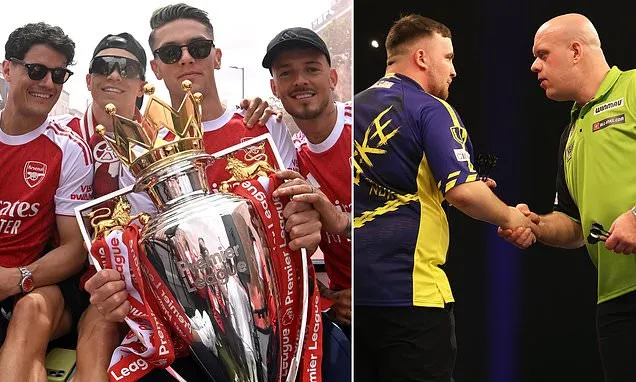
Three-time darts world champion Michael van Gerwen, once the undisputed king of the Ally Pally, has recently spoken candidly about his relationship with darts. Despite his legendary status and numerous titles, van Gerwen confessed that he doesn’t actually enjoy watching the sport. “I never did in my life,” he stated, emphasizing that his preference lies solely in playing rather than spectating. While he keeps track of major finals, particularly when fellow Dutchmen or top contenders are involved, he finds more satisfaction on the oche himself. This perspective suggests that for van Gerwen, the thrill is in the competition and execution, not the passive observation of others.
Ben White: Footballer Focused on His Own Game
Arsenal defender Ben White has also garnered attention for his unconventional approach to football. Known for his professional dedication, White has admitted to not being a keen follower of the sport outside of his own performance analysis. He reportedly doesn’t watch football casually and has previously stated, “I watch myself for analytical reasons… I wouldn’t just sit down and watch a game.” His early life was characterized by playing rather than watching, leading to a lack of familiarity with football’s historical figures. White’s stance highlights a mindset focused intensely on personal involvement and improvement, rather than broader engagement with the sport’s culture.
Serena Williams: A Legendary Athlete’s Ambivalence
Arguably one of the greatest tennis players of all time, Serena Williams, has expressed a surprising lack of fondness for her sport. In a 2012 interview, she remarked, “I don’t love tennis today, but I’m here, and I can’t live without it.” Her sentiment extends beyond tennis, as she revealed a general disinterest in sports and physical exertion: “I’ve actually never liked sports, and I never understood how I became an athlete.” Despite winning a remarkable 23 Grand Slam singles titles, Williams’s comments suggest that her dedication stemmed from a deeper commitment and perhaps a sense of destiny rather than an inherent love for the game itself.
Nick Kyrgios: Basketball Dreams and Tennis Realities
Australian tennis star Nick Kyrgios has openly discussed his complex feelings towards tennis. While acknowledging the intense mental and physical demands of the sport, he has confessed, “I don’t really like the sport of tennis that much. I don’t love it.” Kyrgios revealed that his true passion growing up was basketball, and he feels he was guided towards tennis by his parents. He maintains that even today, he would rather be playing basketball. This ongoing preference for another sport, despite his significant success in tennis, underscores a persistent internal conflict.
Mark Williams: Snooker’s Grudging Champion
In 2019, three-time snooker world champion Mark Williams made headlines when he admitted to “hating” his sport during a difficult period. While he was enjoying his time on the golf course more, his comments came after a year without a ranking event win, despite being ranked third in the world. Although he has since achieved further success, including reaching the 2025 World Championship final, his past remarks highlight the immense pressure and potential burnout associated with professional careers. Williams’s experience suggests that even highly accomplished athletes can experience profound frustration with their chosen discipline.
Tyson Fury: Boxing’s Addictive Grip
Heavyweight boxing champion Tyson Fury has spoken extensively about his tumultuous relationship with boxing. He has retired and un-retired multiple times, attributing his comebacks to an addiction that helps him cope with mental health challenges. “Boxing is an addiction. It abuses my body, my mind, my soul. But I feel like it takes me to ecstasy,” Fury stated in 2024. He describes a love-hate dynamic, where the sport provides incredible highs but also devastating lows. Despite recognizing its detrimental effects, Fury finds himself continually drawn back to the ring, illustrating the powerful, almost inescapable, hold the sport has on him.
Benoit Assou-Ekotto: Football Beyond the Pitch
Former Tottenham Hotspur defender Benoit Assou-Ekotto represents another athlete who prioritizes life off the field. He once stated, “I don’t watch football. I don’t talk about football away from the game either.” Assou-Ekotto’s interests lie primarily with his friends and music, particularly hip-hop. His approach suggests that a deep, all-consuming obsession with the sport might not be a prerequisite for reaching a high level of professional success, challenging the notion that total dedication to the game is the only path to the top.
Andre Agassi: The Autobiography’s Brutal Honesty
Perhaps the most striking admission comes from eight-time Grand Slam champion Andre Agassi. In his autobiography, he famously wrote, “I play tennis for a living even though I hate tennis. I hate it with a dark and secret passion and always have.” The reasons behind Agassi’s intense dislike remain somewhat speculative, but the grueling nature of the professional tennis circuit, with over 30 weeks on tour annually, and the immense pressure involved, likely contributed to his feelings. His candor reveals that even achieving the ultimate success in a sport doesn’t guarantee personal fulfillment or enjoyment.
Conclusion: Success Without Passion?
The stories of these athletes challenge the conventional wisdom that immense success in sports must be fueled by an unyielding love for the game. While passion is undoubtedly a powerful motivator, dedication, discipline, and perhaps a unique set of circumstances can also drive individuals to achieve greatness. These athletes demonstrate that it’s possible to excel, even thrive, in a field that doesn’t necessarily bring personal joy, highlighting the multifaceted nature of athletic careers and the complex relationship between performance and passion.
