

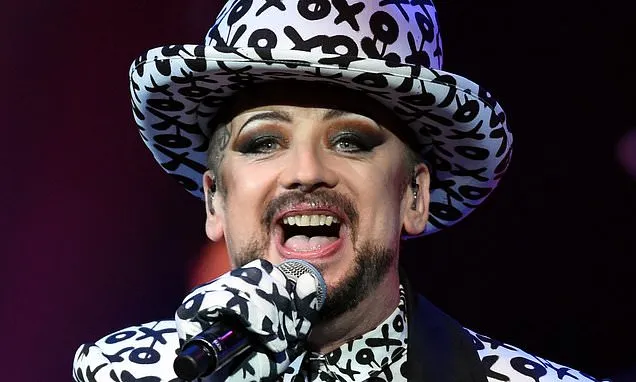
Singer Boy George has ignited a significant debate within the music industry following the release of his new song, “We Will Dance Again,” which expresses support for Israel’s actions in the ongoing conflict in Gaza. The 65-year-old Culture Club frontman, known for hits like “Karma Chameleon,” has faced considerable backlash, leading to his withdrawal from a West End musical and a split with his record label manager. This controversy has brought into sharp focus questions about artistic freedom, political expression, and the perceived intolerance within certain segments of the entertainment world.
Boy George’s Stance and the Song’s Content
Boy George, whose real name is George Alan O’Dowd, is of London Irish heritage and identifies as Buddhist. He has previously spoken out against antisemitism, notably offering support to the Jewish community after an attack in Golders Green, London. His latest musical offering, a reggae-style track, directly addresses the Hamas attacks of October 7, 2023, and Israel’s subsequent military response. The lyrics include lines such as, “You say genocide, I say war / When you’re attacked, that’s what the army’s for,” and explicitly reference the atrocities at the Nova music festival, stating, “You never mention October 7 / Young girls raped against trees / Murdered brutally / For the crime of dancing.” The song concludes with the chorus, “We will dance again,” a phrase popular in Israel, and is spoken in Hebrew at the end.
In response to the criticism, Boy George clarified his position, stating, “The suggestion that I feel no compassion for Palestinians is both untrue and absurd. I am devastated for the loss of the innocent lives on both sides of this war and I call for peace.” He emphasized that his song was a message of solidarity for his Jewish friends and acquaintances, asserting that individuals like his bagel seller or doctor should not be blamed for the conflict.
Industry Backlash and Consequences
The release of “We Will Dance Again” has had immediate repercussions for the artist. His manager, Paul Kemsley, announced that Boy George would no longer be participating in the London Palladium production of “Jesus Christ Superstar,” where he was set to share the role of King Herod. While the exact reasons for his withdrawal remain unclear, possibilities include pressure from producers, refusal of other cast members to work alongside him, or a preemptive move to shield the production from protests.
Furthermore, Boy George’s record label, BGP, reportedly refused to release the track commercially, a decision the singer deemed “gutless.” This led to him parting ways with the label’s manager. The artist has expressed frustration, questioning the silence of many musicians on the issue and suggesting that support for Israel has become a taboo within the industry.
Wider Implications for Artistic Expression
Boy George’s experience is being presented by some as emblematic of a broader trend within the music industry, where expressing pro-Israel sentiments or a nuanced view of the conflict can lead to severe professional consequences. This is contrasted with the perceived acceptance, and even reward, for artists who publicly support Palestine.
Examples cited include the trip-hop duo Massive Attack, who reportedly received acclaim and a ban from Singapore for waving the Palestinian flag on stage. Similarly, Brian Eno’s charity single “Lullaby,” which raised funds for a collective called Together For Palestine and featured contributions from other artists, was a commercial success. These artists, while advocating for peace and expressing sympathy for the Palestinian cause, have not faced the same level of professional repercussions as Boy George.
The article also references other artists who have faced criticism for their stance. U2’s Bono, for instance, was reportedly rebuked for stating that the Hamas attacks were “evil” while also acknowledging that Hamas does not represent all Palestinians. American rapper Azealia Banks also claimed to have withdrawn from UK festivals after organizers allegedly demanded she express support for Palestine.
Historical Context and Artistic Freedom
The narrative surrounding Boy George’s situation draws a parallel to historical instances of artistic protest and rebellion. However, it argues that contemporary artistic dissent must now adhere to strict, approved lines. The piece suggests that a movement once rooted in idealism and unity has, in some quarters, become dominated by an intolerance that punishes individual opinions deviating from an “approved script.”
The article posits that while artists like John Lennon once critiqued dogma with songs like “Revolution,” the current climate demands a specific form of political alignment for career success. The implication is that in today’s music industry, expressing solidarity with Palestine is often seen as the safe and rewarded path, while support for Israel, or even a balanced perspective, can lead to professional ostracism.
Conclusion: A Divided Industry
The controversy surrounding Boy George’s song underscores the deep divisions and sensitivities surrounding the Israeli-Palestinian conflict, particularly as they manifest within the cultural sphere. His experience highlights the challenges artists face when navigating political issues, raising questions about whether the music industry fosters an environment of open dialogue or imposes a form of ideological conformity. The debate continues over the extent to which performers should be free to express their personal political views without fear of professional reprisal, and how these views intersect with the complex geopolitical realities of the world.
