

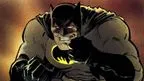
Frank Miller’s seminal 1986 graphic novel, The Dark Knight Returns, dramatically reshaped the public perception of Batman, transforming the character from a campy, somewhat comical figure into a dark, ultra-violent vigilante. Published 40 years ago, this four-issue mini-series not only redefined the Caped Crusader but also profoundly influenced the entire superhero comic genre and subsequent Hollywood adaptations.
From Campy Crusader to Gritty Vigilante
For decades, particularly following the popular 1960s television series and film, Batman was largely perceived by the general public as a somewhat goofy character. Clad in his iconic costume, often featuring underpants worn over tights, and equipped with gadgets like shark repellent spray, he was a staple of self-mocking comedy, epitomized by Adam West’s portrayal. While DC Comics’ own publications often depicted a more serious and sinister Batman, the widespread image remained tied to the lighter, more accessible version.
Frank Miller, a writer-artist renowned for his distinctive style, aimed to resurrect a more formidable Batman. Commissioned by DC Comics to revitalize the character, who was perceived as somewhat “emasculated” at the time, Miller conceived a story set in a near-future where a middle-aged Bruce Wayne, having retired from crime-fighting a decade prior, is drawn back into action. Miller envisioned a character who combined the imposing, square-jawed physique of the 1950s Batman he admired as a child with the gritty, hard-boiled persona of characters like Clint Eastwood’s Dirty Harry.
“In superhero fiction, we’re dealing with symbolism, with metaphor,” Miller explained. “We do not have a Superman in the real world, but we do have huge military forces which can be used for good or evil. We do not have Batman out there, but we do have people’s own desire to resist the use of force against them, and so on. I wanted to use the machinery and iconography of a children’s story to tell a story for an older audience.”
A Darker Gotham and a More Brutal Batman
The narrative thrust of The Dark Knight Returns hinges on Batman’s return to a Gotham City that has devolved into a crime-ridden urban hellhole. This bleak setting, partly inspired by Miller’s experiences in New York during the 1970s, provided the perfect backdrop for a more brutal Batman. The graphic novel portrays him not as a gentlemanly detective but as an intimidating, ultra-violent vigilante who derives grim satisfaction from incapacitating criminals, often with extreme force.
This heightened level of violence and the darker tone were a significant departure. Miller also introduced radical reinterpretations of other key characters. Superman, for instance, was depicted as a government agent, a pawn of a president resembling Ronald Reagan. The Joker was reimagined as a monstrous sadist, a far cry from his earlier, albeit still dangerous, comic book iterations. Miller argued that these changes were not entirely novel but a return to the character’s roots, referencing the Joker’s initial depiction in the 1940s as a psychopathic killer and drawing parallels to the darker themes found in pulp fiction heroes like The Shadow.
Artistic Innovation and Genre Transformation
Beyond its narrative and thematic shifts, The Dark Knight Returns was also an artistic tour de force. Miller, known for his influential work on Marvel’s Daredevil in the early 1980s, was both writer and artist, a rare combination at the time. He pushed the boundaries of comic book storytelling by employing a dense visual style, often dividing pages into numerous small panels to create a rapid, intense rhythm. This artistic approach, coupled with the inking of Klaus Janson and the coloring of Lynn Varley, contributed to the graphic novel’s overwhelming impact.
Miller deliberately packed each issue with an unprecedented amount of content. While a typical comic book in 1986 contained around 22 pages with six to seven panels each, Miller’s issues boasted 46 pages, many featuring up to 16 panels. “I was out to do the densest thing anyone had ever seen,” Miller recalled. “And also I wanted that chop-chop-chop-chop rhythm. The idea was to make it impossible to take your eyes off it. So your teeth would be as gritted as tightly as Batman’s were.” This meticulous and ambitious approach led to delays, but the mini-series’ escalating sales confirmed its status as a cultural phenomenon.
Enduring Legacy and Influence
The success of The Dark Knight Returns was immediate and profound. Its publication sparked widespread discussion about the evolving nature of comic books, signaling that the medium could tackle mature themes and appeal to adult audiences. Miller’s work directly influenced countless subsequent comic book narratives and, perhaps more visibly, the film industry.
The impact on cinema is undeniable. Every Batman film since Tim Burton’s 1989 adaptation has drawn elements of its tone and style from Miller’s work. Christopher Nolan’s acclaimed Batman trilogy took its name from the graphic novel, and Zack Snyder’s Batman v Superman: Dawn of Justice directly incorporated storylines from its pages. Furthermore, the broader understanding in Hollywood that superhero narratives can resonate with all ages, without sacrificing complexity, can be traced back to the groundbreaking work of Miller and his contemporaries in the 1980s.
Despite the immense influence, Miller remains grounded, acknowledging that he was part of a larger movement revolutionizing the superhero genre. He views his contribution as adding to the ongoing mythos of Batman, a character created by Bob Kane and Bill Finger in 1939. “When you contribute to a myth,” Miller stated, “you can’t complain about the next priest.” His graphic novel stands as a pivotal work, forever altering the landscape of comic books and superhero storytelling.
