

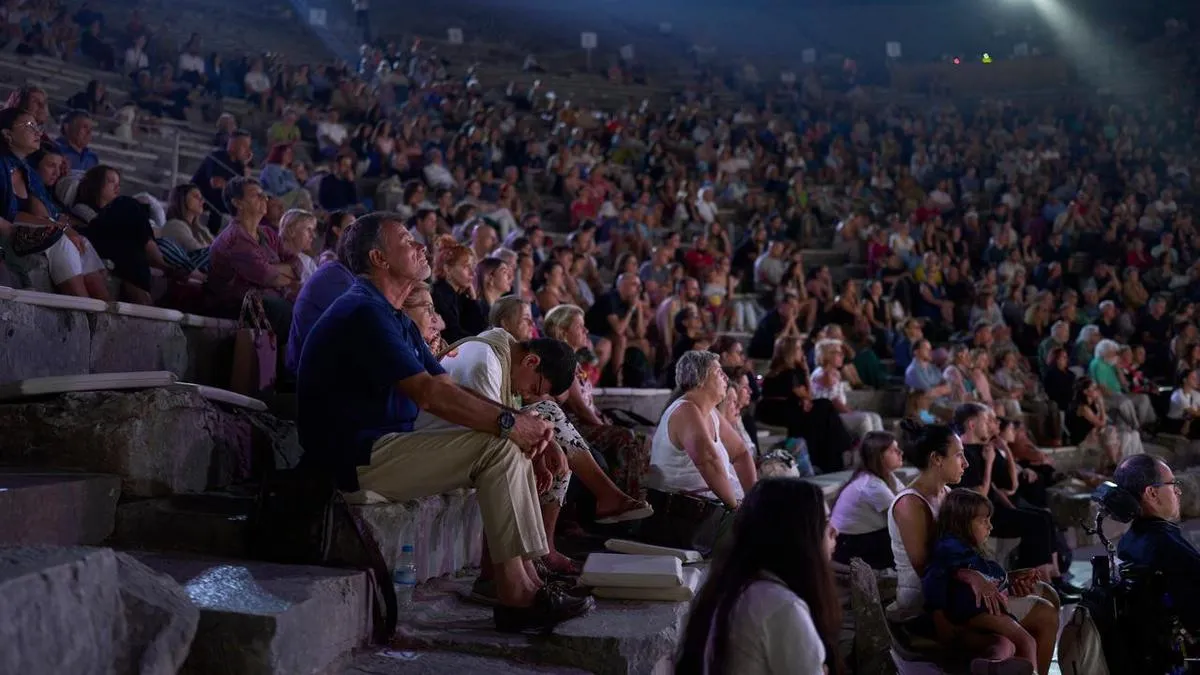
In a groundbreaking event at the ancient theatre of Epidaurus, a production of Euripides’ “The Trojan Women” featured a cast of 22 performers, many of whom have disabilities. This landmark performance, held on August 2, was hailed by organizers as the first fully accessible staging in the venue’s 2,300-year history. The production sought to bring the often-overlooked stories of those affected by conflict to the forefront, resonating with contemporary discussions on inclusivity and representation.
A New Perspective on Ancient Tragedy
While Homer’s epic poem “The Odyssey” continues to capture global imagination, particularly with recent cinematic adaptations, “The Trojan Women” offers a different, yet equally profound, narrative from the same era. Written by the playwright Euripides centuries after the Trojan War, the play shifts focus from the returning warriors to the women left behind in the ruins of Troy. It depicts their displacement, enslavement, and suffering in the aftermath of the conflict. Staging this powerful drama at Epidaurus, a site steeped in classical history, provided a unique backdrop for exploring themes of resilience and the human cost of war.
Setting a New Standard for Accessibility
The August 2nd performance at the ancient theatre was meticulously planned to offer comprehensive accessibility services. For visually impaired audience members, the organizers provided Braille programs, tactile models of the stage and characters, and live audio description services. Those who are deaf or hard of hearing could follow the performance through overhead captions. Beyond services for the audience, the venue itself underwent physical adaptations to improve access throughout the site, ensuring a more inclusive experience for all attendees.
Greg Polychronidis, a Paralympic gold medallist who attended the event, emphasized the significance of the achievement. “It’s the first time a performance at Ancient Epidaurus has been made accessible to everyone,” he stated. “Today was a celebration of equality and it should serve as an example for everyone, forever.” His words underscore the broader implications of the event, highlighting its potential to inspire future initiatives in cultural accessibility.
Performers Find Their Voice on an Ancient Stage
For many of the performers with disabilities, the opportunity to perform on the historic stage at Epidaurus was deeply meaningful. It represented a powerful statement about visibility and the right to participate in cultural life. Eirini Kourouvani, a 58-year-old cast member who uses a wheelchair, shared her emotional experience of being in the theatre for the first time. “It is just grand,” she expressed. “I feel my heart opening up as wide as this theatre is.” Her sentiment reflects the profound impact such inclusive events can have on individuals, offering a sense of belonging and empowerment.
Ioanna-Maria Gertsou, a blind psychologist attending the performance with her guide dog, Babu, highlighted the importance of equal access. “We too have the right to attend performances on an equal footing,” she remarked, noting her relief that her service animal remained calm throughout the play. This experience underscores the practical considerations and the desire for seamless participation that individuals with disabilities often navigate when engaging with public events.
A Collaborative Effort for Inclusivity
The production of “The Trojan Women” was a collaborative effort, spearheaded by the National Theatre of Greece. The crucial accessibility services were developed and implemented by the nonprofit organization Liminal, known for its work in creating inclusive experiences. Argyro Chioti, the artistic director of the National Theatre of Greece, acknowledged the significant undertaking involved in making the performance accessible.
“This was complex, not simple. It required months of planning. It cost money. And it required very specific organisational expertise,” Chioti explained. Despite the challenges, she firmly believes that such efforts should become the standard, not the exception. “But that’s the standard and venues we need to reach — the major stages and the major theatres,” she asserted, calling for a wider adoption of accessibility practices across cultural institutions.
The Path Forward for Cultural Accessibility
The success of “The Trojan Women” at Epidaurus serves as a compelling case study for how ancient sites and cultural institutions can embrace inclusivity. The detailed planning, specialized expertise, and financial investment required highlight the commitment necessary to achieve true accessibility. However, the profound impact on performers and audience members alike demonstrates that these efforts are not only worthwhile but essential for fostering a more equitable cultural landscape.
As Greece and the world continue to grapple with issues of accessibility in public spaces, this event at Epidaurus offers a hopeful precedent. It suggests that with dedicated effort and innovative solutions, even the most historic and challenging venues can be opened to everyone, ensuring that the stories of all people can be told and experienced, regardless of physical or sensory ability. The National Theatre of Greece and Liminal’s pioneering work at Epidaurus paves the way for a future where cultural heritage is truly accessible to all.
