

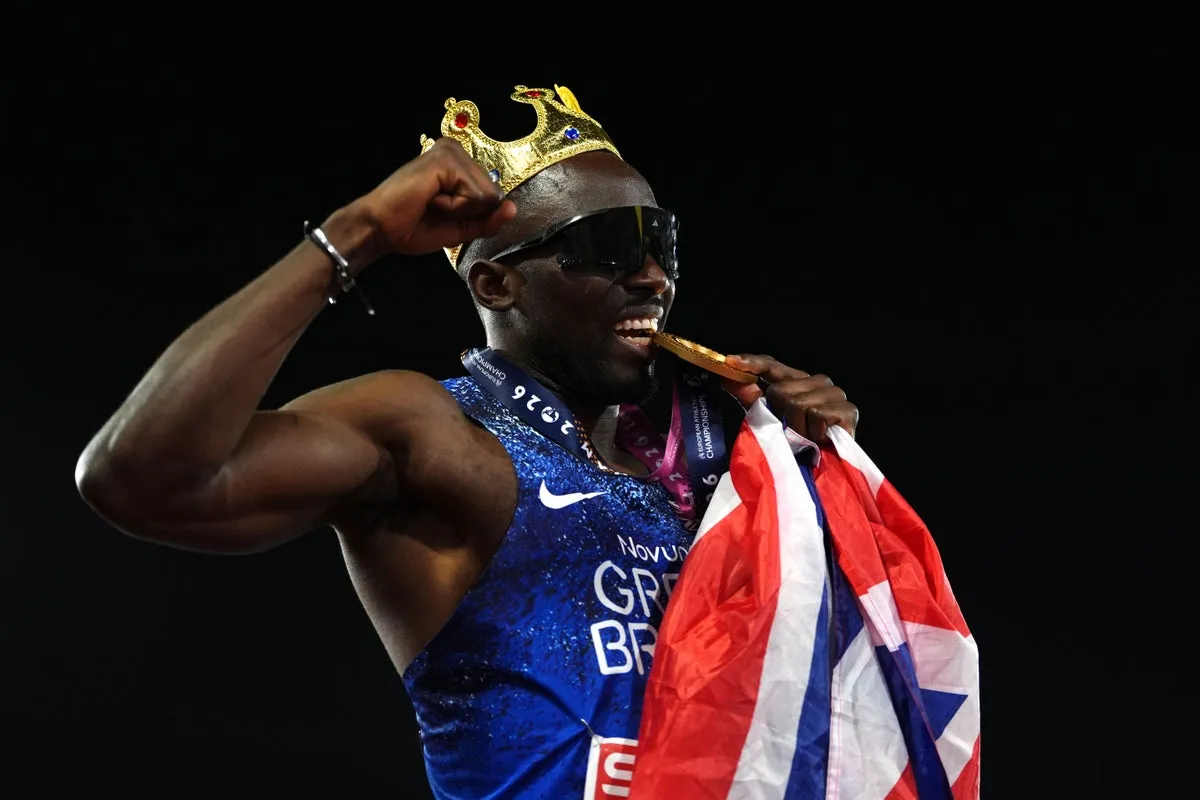
Romell Glave has declared “now is my time to dominate” after storming to victory in the 100m final at the European Athletics Championships in Birmingham. The 26-year-old sprinter, who was born in Jamaica and moved to Croydon as a teenager, secured a British one-two alongside Welshman Jeremiah Azu, who claimed the silver medal. The impressive performance unfolded on the second night of the championships, marking a significant moment for Glave after overcoming two back fractures in recent years, including spending the entirety of 2022 in a brace.
Glave’s Dominant European Championship Performance
Glave’s triumph in 10.09 seconds silenced any lingering doubts about his capabilities. Reflecting on his journey, Glave stated, “At the start of the season my main objective was to be the king of Europe.” He emphasized his transformation as an athlete, noting, “I’m a different athlete now, my mindset is to that elite level. I wanted to win this European championship. I was able to do that today, so it’s an amazing feeling.”
The sprinter acknowledged the perception of being “counted out” at times but expressed a belief that his moment has arrived. “Standing right here, this is my moment, and I’m able to enjoy this moment myself. Other people came before me, but now it’s my time to dominate,” he asserted. Glave, who also earned bronze at the previous European championships in 2024, demonstrated a newfound confidence and determination.
Azu Secures Silver, Other British Contenders
Jeremiah Azu finished just seven hundredths of a second behind Glave to secure the silver medal, completing a strong showing for Great Britain in the men’s 100m. Germany’s Owen Ansah took the bronze medal. A potential British clean sweep of the podium was thwarted when Louie Hinchliffe was forced to withdraw from the final due to an injury sustained during the semi-finals.
The final also featured former Olympic champion Marcell Jacobs. However, the Italian athlete, who has faced injury challenges since his victory in Tokyo, finished in seventh place, struggling to make an impact.
Glave’s Journey from Prodigy to European Champion
Romell Glave’s path to European champion has been marked by significant hurdles and a strong sense of perseverance. As a teenager, he was recognized as one of the most promising talents, even holding the title of the world’s fastest 17-year-old nine years ago. His move to South Norwood in London with his father was driven by a desire for better life opportunities.
Growing up, Glave idolized Usain Bolt and joined the local club Croydon Harriers. His early promise was evident, but serious injury setbacks, including two back fractures in the last six years, tested his resolve. “I was so determined to make it,” Glave reflected. “I know I have the ability to be one of the best. ‘Delayed but not denied’, that quote, but also a living testimony to be patient. Don’t look at other people’s journeys. Everyone’s journey is unique.”
Hudson-Smith Advances in 400m Amidst Injury Concerns
In other track events, local favorite Matthew Hudson-Smith successfully qualified for the 400m final. However, his semi-final performance raised some concerns. The Olympic silver medalist, for whom a stand at the Alexander Stadium has been named during the championships, appeared to grimace in the latter stages of his race, finishing second.
Hudson-Smith later clarified that he had simply “misjudged” the race and his competitor, Dutchman Jonas Phijffers, who set a personal best of 44.63 seconds. Phijffers finished 15 hundredths of a second ahead of Hudson-Smith. Another British competitor, Charlie Dobson, did not advance to the 400m final.
Conclusion: A Night of British Triumphs and Resilience
The second night of the European Athletics Championships proved to be a memorable one for British athletics, highlighted by Romell Glave’s commanding victory in the 100m and Jeremiah Azu’s silver medal. Glave’s journey, marked by significant adversity and a powerful declaration of intent, underscores the resilience and determination within the sport. The performances also showcased the depth of talent in British sprinting, even as other athletes navigate challenges and strive for their own moments of success on the European stage.
