

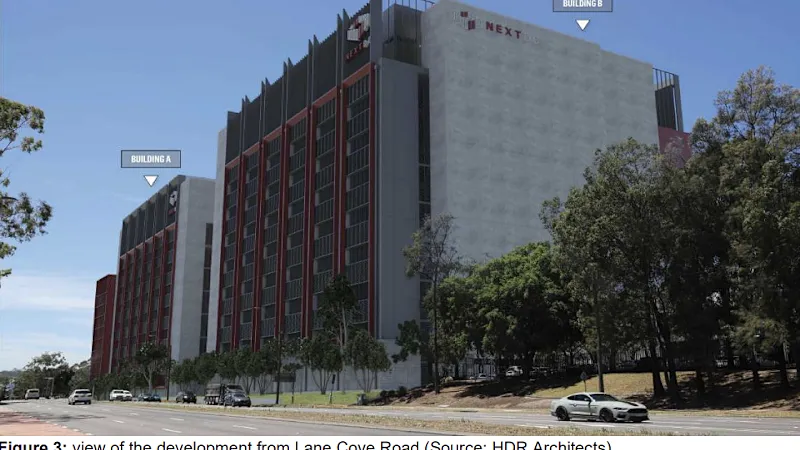
A significant debate is unfolding in Sydney regarding the proposed construction of a large data centre adjacent to the Macquarie Park metro station, raising questions about its suitability and impact on urban development. The chief executive of Data Centres Australia, Belinda Dennett, has defended the industry’s expansion, even as the project faces strong opposition from local authorities.
Proposed Data Centre at Macquarie Park
Industry giant NextDC has submitted plans to the state government for a substantial data centre facility at 269 Lane Cove Road, Macquarie Park. The proposed building would stand 65 metres high and cover 46,935 square metres, situated directly next to the entrance of the Macquarie Park metro station. If approved, this facility is projected to have a maximum power consumption of 90 megawatts, highlighting its significant energy demands.
The location has drawn considerable criticism from the City of Ryde council. The council has expressed concerns that Macquarie Park is rapidly becoming a “data centre wasteland,” arguing that the land could be better utilized for much-needed housing or job-creation initiatives that benefit residents more directly. They contend that placing such a large industrial facility next to a major public transport hub undermines the government’s stated goals of promoting dense residential development around transit links.
Industry Defence and Community Concerns
In an interview with ABC Sydney, Belinda Dennett, chief executive of Data Centres Australia, addressed the controversy. When pressed on whether the NextDC proposal was in the community’s best interest, Dennett declined to offer a personal opinion, stating she was not a Sydney resident and lacked familiarity with the specific site. She emphasized the need for broader planning-level engagement to determine suitable developments.
Dennett drew a parallel between data centres and public infrastructure like railway stations, suggesting that while not directly employing many people at the station itself, the railway facilitates significant economic activity by connecting people to workplaces. She posited that data centres serve a similar foundational role in the modern economy.
Host Hamish McDonald questioned the validity of this comparison, asking if Dennett seriously believed a data centre next to a metro station served the Sydney community’s interests. Dennett reiterated her stance that her personal view was not relevant and deferred to the planning process.
Economic Promises vs. Local Opposition
NextDC’s application to the planning department outlines the potential economic benefits, asserting that the data centre would be “pivotal in enhancing the local economy.” The company projects the creation of up to 942 jobs during the construction phase and an ongoing 490 “specialist and operational” roles post-completion. The accessibility of the site to both public transport and road networks was also highlighted as a key advantage.
However, the City of Ryde council presented a starkly different assessment in its submission. The council argued that a data centre would not maximize job creation and would instead lead to the “underutilisation” of public infrastructure, for which considerable public funds had already been invested. They believe the site represents a missed opportunity for housing development, a critical need in Sydney.
Broader Context: Industrial Land and Planning Policy
The Macquarie Park and Ryde corridor is already home to numerous data centres, with approximately 45 percent of the land in this tech-focused district zoned for productivity support. While this zoning encourages industrial activity and jobs near transport hubs, it also restricts the potential for residential development on these sites.
Dennett pointed out that the specific site in question is zoned for industrial use, making residential development legally unfeasible under current zoning. This aligns with the state government’s long-standing policy of balancing the need for housing with the preservation of industrial land. Historically, Sydney has maintained a “retain and manage” approach to industrial land to ensure sufficient space for businesses.
However, recent policy shifts, particularly a new plan introduced last year, allow for a more flexible approach to industrial zoning, especially for smaller parcels near transport and employment centres. This policy shift potentially opens doors for developments like the proposed data centre, even as it continues to fuel debate about land use priorities.
Industry Scrutiny and Government Response
The data centre industry has faced increased scrutiny, including a NSW parliamentary inquiry held in May. Notably, several powerful companies involved in data centre investment in NSW declined to appear at the inquiry. The state government also did not submit its own evidence, and key ministers, including the Treasurer, Housing Minister, and Energy Minister, did not attend. NextDC and the Planning Minister were also approached for comment regarding the specific proposal.
The ongoing tension between the demand for digital infrastructure and the pressing need for housing, coupled with the strategic use of urban land, underscores the complex planning challenges facing Sydney. The decision on the Macquarie Park data centre will likely set a precedent for future developments in similar urban fringe locations.
Conclusion: A Balancing Act for Sydney’s Future
The proposed data centre at Macquarie Park encapsulates a critical dilemma for Sydney: how to accommodate the rapidly growing digital economy while addressing housing shortages and preserving community amenity. While proponents highlight economic benefits and job creation, local councils and residents voice concerns about land use, infrastructure underutilisation, and the potential for creating “data centre wastelands.” The state government’s evolving industrial land policies add another layer of complexity, suggesting a future where such developments may become more common, even adjacent to vital public transport hubs. The ultimate approval of this project will hinge on the state government’s ability to navigate these competing interests and determine what truly serves the long-term well-being of Sydney and its residents.
