

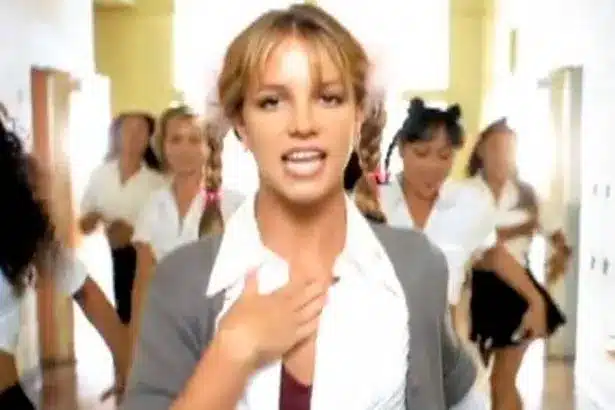
Britney Spears’ debut single, ‘…Baby One More Time’, released when she was just 16, catapulted her to global superstardom and remains one of the most recognizable pop anthems of all time. Yet, nearly three decades after its release, a recurring question among listeners, both old and new, centers on the precise meaning of the song’s most provocative lyric: “Hit me, baby, one more time.” This phrase has sparked considerable debate and varied interpretations, leading many to question its intent and the potential implications of its wording.
Decoding the Ambiguous Lyric
The core of the confusion lies in the phrase “Hit me, baby, one more time.” In the song, Spears sings: “My loneliness is killin’ me (And I). I must confess. I still believe (Still believe). When I’m not with you. I lose my mind. Give me a sign. Hit me, baby, one more time.”
When the song first emerged in the late 1990s, many listeners understood “hit me” as a colloquialism for “call me” or “get in touch with me.” This interpretation aligns with the common American slang phrase “hit me up,” which means to contact someone. However, for a newer generation of listeners, or those less familiar with this specific slang, the phrase can evoke more literal and concerning imagery.
Online discussions, particularly on platforms like Reddit, reveal a spectrum of interpretations. Some users have posited that “hit me” could refer to physical violence, domestic abuse, or even elements of BDSM. One user on Reddit articulated this confusion, asking fellow fans about their understanding of the lyric and noting the stark contrast between a potential violent interpretation and the upbeat pop context of the song. This divergence in understanding highlights how language evolves and how cultural context can shape the perception of lyrics.
The Songwriters’ Intent and Context
Contrary to some of the more alarming interpretations, the songwriters behind the global smash hit intended a far more innocent meaning. Swedish producers Max Martin and Rami Yacoub, who penned the song, were working with American slang, and their understanding of “hit” was indeed “to call.” This linguistic nuance is crucial to understanding the original intent.
According to John Seabrook’s book, The Song Machine: Inside the Hit Factory, Martin and Yacoub utilized “hit” as a direct equivalent to “call” or “contact.” The song’s narrative, therefore, centers on a young woman experiencing the acute pain of a recent breakup. Her plea, “Hit me, baby, one more time,” is a desperate request for her former partner to reach out to her again, to reconnect and perhaps offer reassurance or reconciliation.
The emotional core of the song is the profound loneliness and disorientation that follows a separation. Spears’ character is overwhelmed by her emotions and seeks solace or closure by asking her ex-boyfriend to initiate contact once more. The “lose my mind” and “loneliness is killin’ me” lines emphasize the depth of her distress, making the request to “hit me” a plea for connection amidst emotional turmoil.
Record Label Concerns and Title Changes
Interestingly, the potential for misinterpretation was recognized even during the song’s production. Reports suggest that Spears’ record label at the time, Jive Records, expressed reservations about the phrase “Hit Me” in the original title, “Hit Me Baby (One More Time).” Fearing that the lyric could be misconstrued as promoting or trivializing violence or abuse, the label reportedly pushed for the removal of “Hit Me” from the title, resulting in the final, iconic name: ‘…Baby One More Time’.
This decision underscores the sensitivity surrounding lyrical content and the responsibility of record labels in navigating potential controversies. Despite the initial title concern, the song’s undeniable catchiness and Spears’ compelling performance ensured its massive success.
Lingering Ambiguity and Fan Reactions
Even with the songwriters’ clarification, the ambiguity persists for some listeners. The phrase “hit me” carries a strong physical connotation in standard English, making it difficult for some to fully disassociate from that meaning, regardless of the intended slang usage.
Fans continue to share their evolving understanding. Some recall their parents or friends misinterpreting the lyrics, with one fan mentioning their mother believed Spears was singing “kiss me, baby, one more time.” Another fan recently reflected on the song, connecting the “loneliness is killing me” sentiment directly to the desire for the boyfriend to call, reinforcing the breakup narrative.
Ultimately, the enduring popularity of ‘…Baby One More Time’ is a testament to its infectious melody and Spears’ early impact on pop culture. The lyrical ambiguity, while a source of debate, has also contributed to the song’s mystique, ensuring it remains a topic of conversation even decades after its release. The true meaning, however, as intended by its creators, is a poignant expression of post-breakup longing, conveyed through a piece of American slang that proved to be a linguistic hurdle for many.
Conclusion: A Lingering Pop Culture Enigma
The story behind the lyric “Hit me, baby, one more time” is a fascinating case study in linguistic nuance, cultural interpretation, and the complexities of the music industry. While the songwriters intended a simple plea for a phone call following a breakup, the phrase’s dual meaning in English has led to widespread discussion and varied, sometimes concerning, interpretations. The record label’s decision to alter the title further highlights the potential for misunderstanding. Despite these debates, the song’s status as a pop culture phenomenon is undeniable, with its catchy tune and youthful energy continuing to resonate with audiences worldwide.
