

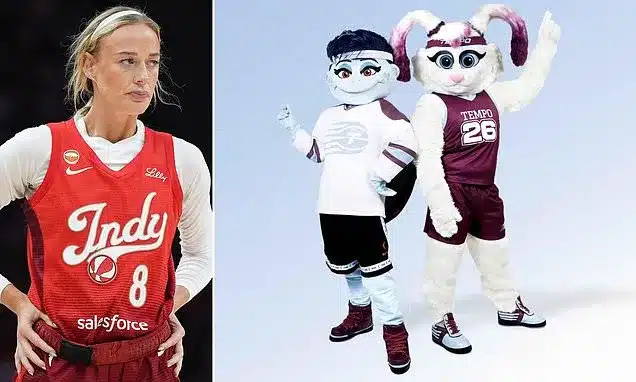
The Toronto Tempo, an expansion franchise in its inaugural WNBA season, introduced two new mascots during halftime of their game against the Indiana Fever on Tuesday night. Among the new figures is Dez, a Snapping Turtle character designed to use she/they pronouns, a notable inclusion during a period of heightened discussion around gender identity and athlete eligibility within the league.
Introducing Dez and Dot: A Modern Fable
The new mascots, unveiled at Scotiabank Arena, are named Dez and Dot. Dez, the Snapping Turtle, is characterized by the use of she/they pronouns, while Dot, an Arctic Hare, uses she/her pronouns. Team officials explained that the duo represents a contemporary interpretation of the classic fable of the tortoise and the hare. The narrative emphasizes the importance of knowing when to adjust one’s pace, suggesting that strategic pauses can be as crucial as forward momentum.
Whitney Bell, Chief Marketing Officer for the Tempo, shared the vision behind the mascots. “From the beginning, we wanted our mascots to feel distinctly Tempo – rooted in who we are as a Canadian team,” Bell stated. “Dez and Dot have completely different personalities, but they’re better together. One knows when to slow things down, the other knows when to turn the energy all the way up.” This approach aims to create relatable and engaging characters that embody the team’s identity.
Context of the Announcement
The timing of the mascot reveal coincided with the Tempo hosting Sophie Cunningham and the Indiana Fever. Cunningham has recently become a focal point in a league-wide debate concerning the participation of transgender athletes in women’s sports. Her public statements on biological gender in sports have generated significant discussion, drawing both support and criticism from various figures and fan bases.
This ongoing conversation has led to several notable developments. Two former NBA players, Enes Kanter Freedom and Royce White, have declared their eligibility for the WNBA draft. Kanter Freedom, a 6-foot-10-inch former NBA player, announced his intention to enter the draft earlier this month. White, who played briefly in the NBA, stated in an interview that he identifies as transgender and wishes to compete in the WNBA next season, a claim he later amplified on social media.
WNBA’s Stance on Eligibility and Inclusion
In response to the escalating debate, WNBA general managers and presidents convened as part of an anti-hate task force to address athlete eligibility. Following their meeting, the league issued a statement indicating that no immediate changes to eligibility criteria were necessary. A spokesperson confirmed that the discussions covered a range of topics, including transgender athletes and the online vitriol directed at players.
The league emphasized its commitment to thoughtful engagement with all stakeholders. “We will continue to engage all league stakeholders in the coming weeks and months,” the statement read, as reported by The New York Post. “We will approach these important conversations thoughtfully and in alignment with the values of our league.” The WNBA also strongly denounced what it termed “bad-faith efforts” to “demean or marginalize others” through the use of these sensitive topics.
Pronouns and Representation
The inclusion of she/they pronouns for Dez, the Snapping Turtle mascot, highlights a growing awareness and acceptance of diverse gender identities. This move by the Toronto Tempo aligns with broader societal conversations about inclusivity and representation. By creating characters that reflect a wider spectrum of gender expression, the team aims to foster a welcoming environment for all fans and members of the community.
The decision to use inclusive pronouns for a mascot can be seen as a symbolic gesture, reflecting the evolving landscape of gender recognition. It provides an opportunity to normalize the use of diverse pronouns and educate the public in a lighthearted and accessible manner. The Tempo’s initiative demonstrates a proactive approach to embracing inclusivity within their brand identity.
Broader Implications for Sports
The discussions surrounding transgender athletes in women’s sports are complex, involving considerations of fairness, inclusion, and the specific nature of athletic competition. The WNBA’s position, as articulated by its leadership, suggests a commitment to upholding its values while navigating these sensitive issues. The league’s stance underscores the challenges and opportunities inherent in balancing diverse perspectives within professional sports.
The Toronto Tempo’s mascot introduction, particularly the use of she/they pronouns for Dez, adds another layer to this ongoing narrative. It showcases how sports franchises can engage with contemporary social dialogues through creative and symbolic means. As the WNBA continues to address these matters, the actions and communications of its teams will likely remain under close observation.
Conclusion
The Toronto Tempo’s debut of their mascots, Dez and Dot, marks a significant moment for the WNBA’s newest team. The introduction of Dez, a character utilizing she/they pronouns, occurs against the backdrop of intense debate regarding transgender athlete participation. While the WNBA has affirmed its current eligibility criteria, the league continues to engage in discussions about inclusion and respect. The Tempo’s mascot strategy reflects a commitment to embodying modern values and fostering an inclusive atmosphere for their growing fanbase.
