

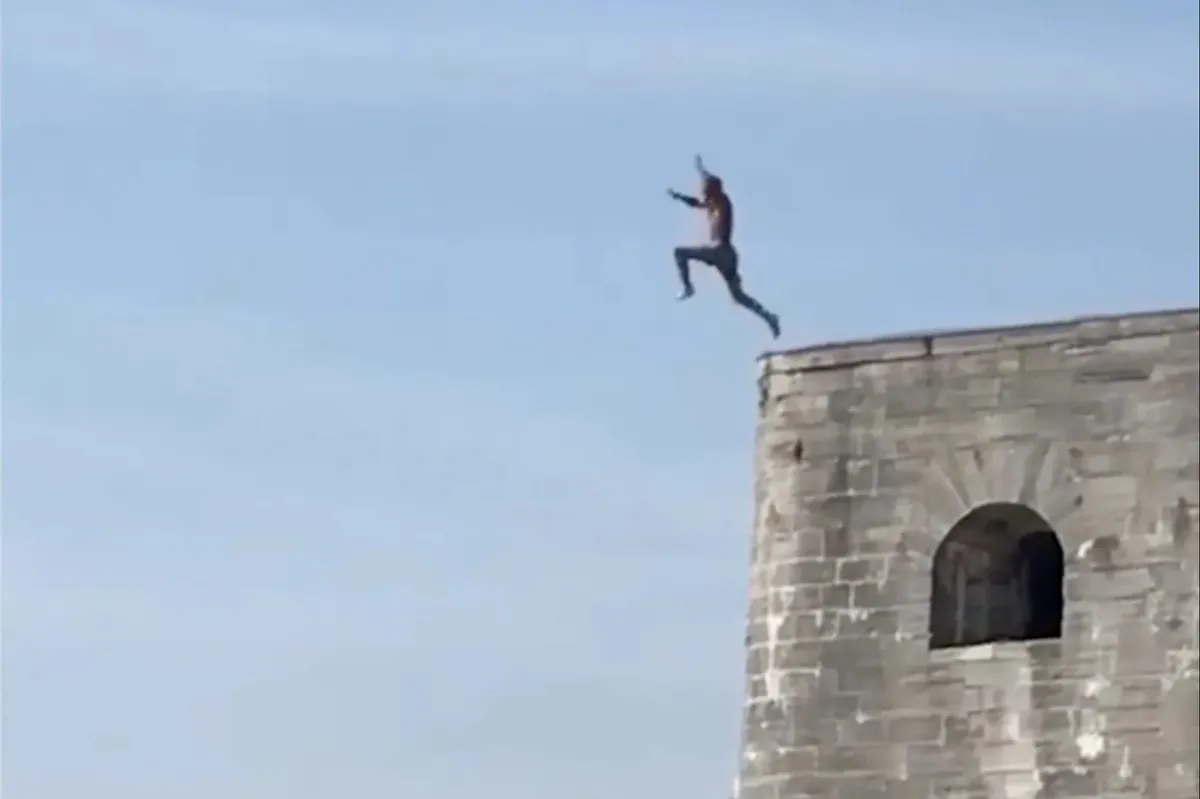
Authorities are issuing stern warnings after individuals were filmed engaging in the dangerous activity of “tombstoning” from the historic castle walls in Portsmouth, England. The footage captures people, including adults and teenagers, leaping from approximately 20-foot high structures into the shallow waters below, often cheered on by onlookers. This practice, known as tombstoning, involves diving from elevated points, sometimes with aerial acrobatics, into bodies of water without adequate knowledge of the depth or potential underwater hazards.
High-Risk Behavior in Portsmouth
The incidents occurred along the city’s seafront, particularly near landmarks like The Round Tower and along the 20-foot high sea walls. Onlookers, including large crowds on the beach during hot weather, were present as individuals repeatedly jumped into the sea. Some teenagers were also observed swimming across shipping lanes, creating a perilous “game of chicken” with ferry services. In response to the surge in dangerous behavior, Hampshire and Isle of Wight Police have intensified patrols under “Operation Nautical” to deter these activities.
Hampshire and Isle of Wight Police and Crime Commissioner Donna Jones emphasized the severe risks involved. “Tombstoning is dangerous, irresponsible and simply not worth risking your life for,” Jones stated. She highlighted previous investments in youth diversion programs in the area and urged parents and guardians to be aware of their children’s activities, especially during school holidays. “Keeping people safe takes more than just the police alone,” she added, stressing the need for community involvement and parental guidance.
Concerns Over Safety and Official Response
Reports indicate that at least one individual sustained a neck injury after jumping from The Round Tower, a three-storey structure, after climbing over safety railings. Some youths were also seen taunting officers on patrol boats, questioning their presence with phrases like “Are you the fun police?” Chief Inspector Sam Warne noted that large crowds have been a common sight in Old Portsmouth and Southsea during the summer heatwave. He confirmed that high-visibility patrols would continue, with measures such as dispersal orders and community resolutions being considered to address the issue. Between June 20 and 22, seventeen individuals were asked to leave designated areas under a previous order, with non-compliance potentially leading to arrest.
Lifeguard and Coastguard Advisories
The Royal National Lifeboat Institution (RNLI) has also issued a strong advisory against tombstoning. Sydney Horsted, Lead Lifeguard for West Sussex, strongly cautioned against such stunts, including jumps from South Parade Pier. He detailed the numerous hazards associated with tombstoning:
- Variable Water Depth: Water levels change significantly with the tide, meaning a spot that appears deep enough could be dangerously shallow.
- Submerged Objects: Hidden debris, rocks, or man-made structures beneath the surface pose a severe risk of injury.
- Strong Currents: Areas like Southsea are known for powerful lateral currents that can quickly pull swimmers towards hazards like piers.
- Pier Structures: Old piers, such as South Parade Pier, are often constructed with sharp metal poles and wooden pylons, which can cause serious cuts, and parts may be submerged.
- Cold Water Shock: Even on hot days, sea temperatures can be cool, leading to cold water shock upon sudden immersion. This can cause involuntary gasping, disorientation, and panic, making it difficult to swim or stay afloat.
Horsted advised that if someone experiences cold water shock, they should try to float on their back, spread their limbs, tilt their head back, and control their breathing until the initial shock subsides, then call for help.
Specific Warnings for Portsmouth Landmarks
Regarding tombstoning specifically from The Round Tower and Hot Walls, a spokesperson highlighted the extreme danger due to:
- Rocks lying beneath the surface.
- Powerful and unpredictable currents.
- Constantly changing tidal conditions.
- The presence of boats, jet skis, and other watercraft that increase the risk of collision or injury.
The spokesperson urged the public to cease this activity immediately, stating, “A single jump can quickly turn into a life-threatening situation.” They also advised anyone witnessing someone in distress in the water to call emergency services (999) and request the Coastguard.
Conclusion: Prioritizing Safety Over Stunts
The repeated instances of tombstoning from elevated structures in Portsmouth underscore a critical public safety concern. Authorities, including the police and the RNLI, are collaborating to deter this high-risk behavior through increased patrols, public awareness campaigns, and potential enforcement actions. The inherent dangers, including unpredictable water depths, submerged hazards, strong currents, and the risk of cold water shock, make tombstoning a potentially fatal activity. The message from officials is clear: the thrill of a dangerous stunt is never worth the risk of serious injury or death.
