

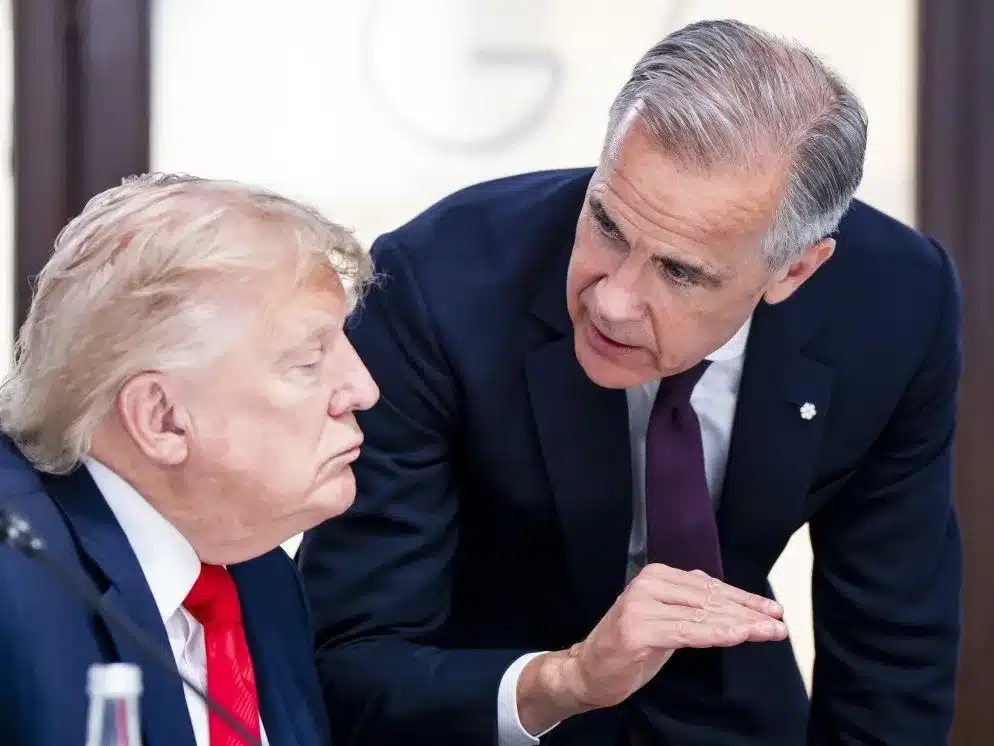
In a decisive move following stalled trade negotiations, Canada has implemented targeted tariffs against the United States, a strategic response timed to maximize pressure on the Trump administration. The decision, announced shortly after Labour Day 2026, signals a firm stance against what is described as bad-faith bargaining tactics. The implications of these tariffs are expected to affect both Canadian and American economies, but the timing appears to favor Canada’s political landscape.
Strategic Timing of Canadian Counter-Tariffs
The Canadian government, led by Prime Minister Mark Carney, chose a moment that strategically balances the need for a strong response with political considerations. Unlike U.S. President Donald Trump, who faces critical midterm elections just two months later, Prime Minister Carney’s administration is not under immediate electoral pressure. This allows for Canadian counter-tariffs to take effect and be felt in the U.S. market, while providing the American administration a crucial window to consider the consequences before voters head to the polls.
This calculated timing aims to incentivize the U.S. to return to negotiations without the perceived last-minute imposition on Canadian sovereignty that reportedly derailed the deal. The potential for a significant American counter-response was a factor, suggesting that an earlier or later imposition of Canadian tariffs might have yielded less favorable outcomes.
Bipartisan Support for Prime Minister Carney’s Stance
Following the withdrawal from negotiations, Canadian federal and provincial leaders from across the political spectrum quickly united in support of Prime Minister Carney. The responsibility of halting discussions with a U.S. administration deemed incapable of reaching or adhering to agreements fell heavily on his shoulders.
Even federal Conservative Leader Pierre Poilievre expressed solidarity, stating on social media that “Conservatives will always put our country first.” He affirmed support for measures aimed at protecting Canadian industries from what he termed “unfair U.S. tariffs.” This broad consensus underscores the perceived necessity of a firm response to the trade dispute.
Alberta’s Premier Expresses Reservations
Alberta Premier Danielle Smith presented a notable exception to the widespread support. While acknowledging the difficulty of the situation and reluctantly agreeing with Carney’s decision to withdraw from talks, Smith voiced concerns about retaliatory measures. She advocated for maintaining a tariff-free relationship with the U.S. and urged the federal government to resume negotiations promptly.
On her radio program, Smith expressed a sentiment against retaliation, stating, “I know, emotionally, it feels good to retaliate, I get that, but let’s remember what happens when we retaliate.” However, a statement released later indicated her preference for restarting negotiations over implementing countermeasures, a position that contrasted with other provincial leaders like Ontario’s Premier Doug Ford, who pledged readiness to support federal actions.
Underlying Political and Economic Currents
Rob Anderson, Smith’s chief of staff, echoed her sentiments, cautioning against “knee-jerk actions.” Some observers suggest that Alberta’s stance may be influenced by its broader political agenda, including its push for greater autonomy and potential alignment with U.S. economic interests. The province’s “Free Alberta Strategy” and its focus on issues like pipeline development have been subjects of discussion regarding its relationship with the U.S.
Reports have surfaced detailing U.S. demands during trade discussions, including preferential access to Canadian critical minerals, the purchase of U.S. military technology, and guarantees on future energy supplies. These demands suggest a broader U.S. objective to influence Canada’s economic and strategic partnerships, potentially including discouraging trade with countries like China.
The Premier’s alignment with certain aspects of Trump’s political ideology and her views on Canadian social programs have also been noted by commentators, adding another layer to the political dynamics surrounding the trade dispute.
U.S. Political Figures and Canadian Opposition
Amidst the trade tensions, commentary has emerged regarding the U.S. administration’s perceived preferences for certain Canadian political figures. U.S. Vice President JD Vance reportedly referred to Pierre Poilievre as a “non-entity” in trade negotiations, while praising Jamil Jivani, an MP with whom Vance has a stated connection. This observation, made at a private fundraising event, has been interpreted by some as an indication of preferred Canadian leadership from the U.S. perspective.
Poilievre’s response to these remarks involved instructing his Members of Parliament to advocate for tariff-free trade with the U.S. However, the situation highlights the complex interplay of domestic politics, international trade, and geopolitical relationships that characterize the current trade standoff.
Conclusion: A Test of Trade Resilience
Canada’s decision to impose targeted tariffs represents a significant moment in its trade relationship with the United States. The strategic timing, coupled with broad domestic political support, aims to leverage the situation for a more favorable outcome. While challenges remain, particularly concerning differing provincial perspectives and the broader political landscape, the move signals Canada’s determination to protect its economic interests and sovereignty in the face of complex trade negotiations.
