

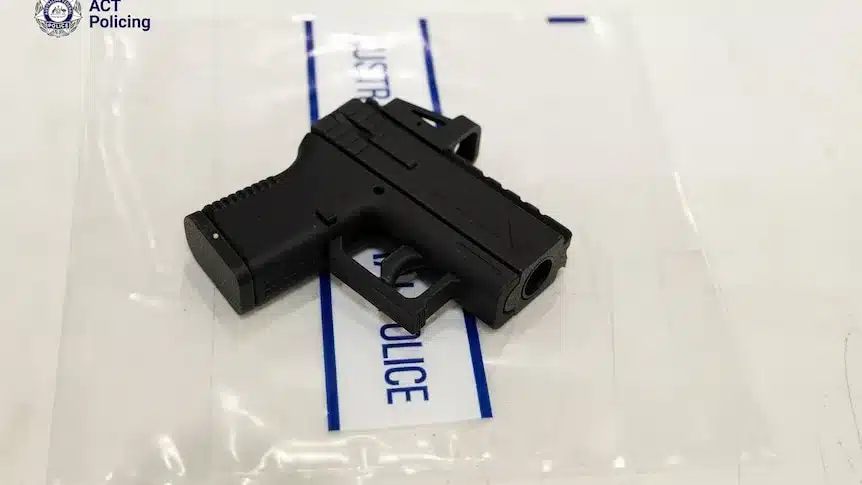
A decision by the Fair Work Commission has found that a teacher who brought a 3D-printed replica firearm to school to demonstrate its potential to students was not unfairly dismissed. The educator, in her mid-50s, was terminated from her position in January of this year following the incident, which occurred in April 2025.
The Incident and Initial Reaction
The teacher, who specialized in digital technology and mathematics, created the replica handgun over a weekend using a 3D printer. Her intention, as stated in submissions to the commission, was to showcase the capabilities of 3D-printing technology to her students and to promote interest in technology-related electives. Upon arriving at school, she presented the replica to an executive teacher, describing it as something she had made to demonstrate to her students. The executive teacher immediately expressed concern, instructing the teacher to put the replica back in her bag and stating that it could not be shown to students.
Further details revealed that the replica firearm was noted by a fellow teacher to look “quite realistic.” The plans for printing the firearm were believed to have been downloaded from the internet. The teacher’s actions, however, quickly escalated beyond a school-level concern.
Police Involvement and Investigation
The incident prompted an investigation by the Australian Capital Territory (ACT) Police. Officers attended the school, and subsequently, a search of the teacher’s home was conducted. During this search, the 3D-printed firearm and the printing equipment were seized. ACT Policing issued a formal caution to the teacher and took the opportunity to remind the public that the creation or printing of firearms is illegal in Australia.
Following the police investigation, the teacher was suspended from her duties. The suspension remained in place while ACT Policing and the ACT Public Sector Standards Commissioner conducted their reviews. This period of investigation ultimately led to the school’s decision to terminate her employment in January of the current year.
Unfair Dismissal Claim and Fair Work Findings
Soon after her dismissal, the teacher lodged an unfair dismissal claim with the Fair Work Commission. She argued that her termination was disproportionate and overly harsh, particularly given the isolated nature of the incident and her nearly 22 years of service without prior disciplinary issues. The teacher had proposed alternative resolutions, such as a written warning, necessary training, or a transfer to a different school, rather than dismissal.
However, Fair Work Commissioner McKinnon ultimately upheld the school’s decision to dismiss the teacher. In her findings, Commissioner McKinnon stated that the teacher’s actions—printing a replica firearm and bringing it to school to show teenage students without recognizing the inherent risks—were “not simply misguided.” The Commissioner characterized these actions as demonstrating an “astonishing lack of judgement for such an experienced teacher.” This assessment was further supported by the immediate recognition of potential risks by other staff members who saw the replica.
Assessing Intent and Remorse
Commissioner McKinnon did acknowledge that there was no evidence of malice behind the teacher’s conduct. She accepted that the teacher had been cooperative with the school and the authorities throughout the investigation process. The Commission also considered the significant emotional and financial impact the dismissal had on the teacher and her family, viewing this as a factor that reduced the likelihood of any repeat behavior. The findings indicated that the teacher had reflected on her actions and expressed remorse.
In her decision, Commissioner McKinnon quoted the teacher’s submission, which stated that in hindsight, she should have sought permission before bringing the replica to school. The Commissioner then posed a critical question, highlighting the fundamental flaw in the teacher’s reasoning: “The submission begs the question: in what circumstances would she have expected permission to be granted to bring a replica firearm to school, or to show it to teenage students as an example of what they could make with technology, or indeed any other purpose?” This rhetorical question underscored the commission’s view that the teacher’s judgment was severely lacking, regardless of her intent.
Broader Context: Guns in Australia
The incident also brings to light broader concerns regarding firearms in Australia. Researchers in the field of gun control have noted a significant lack of data on the prevalence of black market and 3D-printed weapons circulating within the country. While the teacher’s replica was non-functional, the ease with which such items can be created and the potential for misuse remain significant public safety considerations.
The Fair Work Commission’s ruling emphasizes that even in educational settings, where innovation and technology are encouraged, the paramount importance of safety and responsible judgment cannot be overlooked. The decision serves as a reminder that actions, regardless of intent, can have serious consequences, especially when they involve potentially dangerous items and impressionable young minds.
