

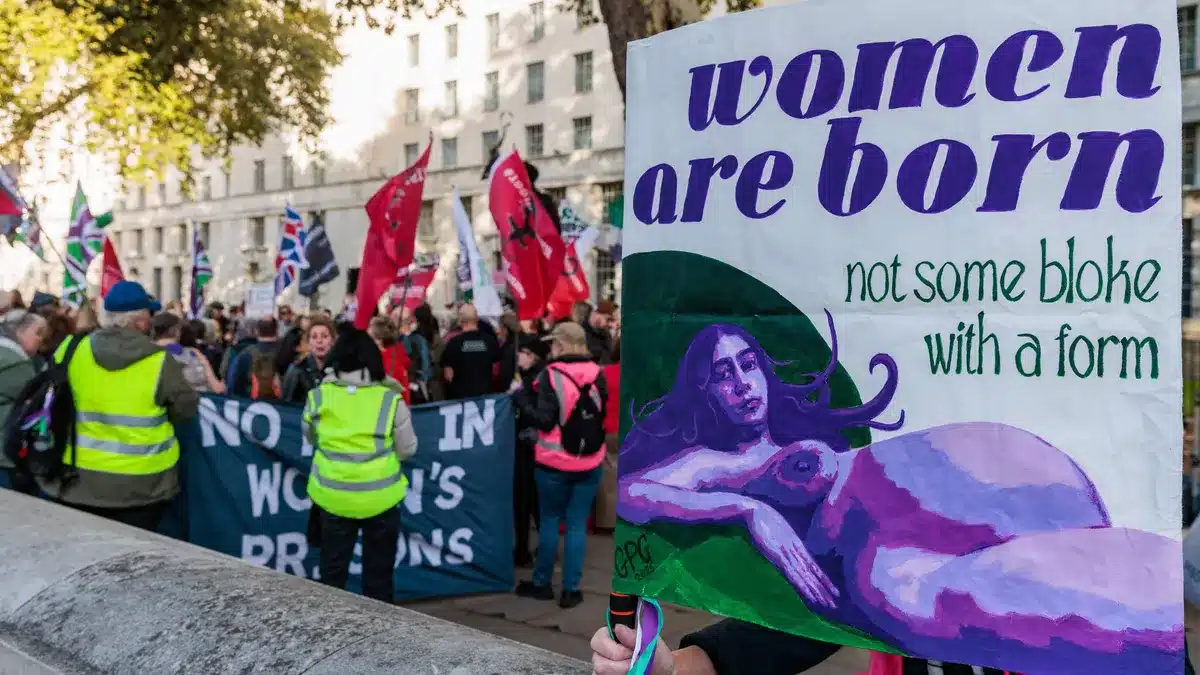
The annual discourse on free speech at Féile an Phobail, a prominent arts and cultural festival, recently took a notable turn, sparking conversations about the complexities of nationalism and inclusivity. This year’s discussions highlighted a tension between the aspirations for a united Ireland and the imperative to ensure that all voices, particularly those of women who hold differing perspectives, are heard and respected within that movement.
The Evolving Conversation on Free Speech
Féile an Phobail, held annually in Belfast, has long been a platform for exploring a wide range of social and political issues. While debates on free speech are a recurring feature, the specific focus this year centered on the challenges faced by women within nationalist discourse. The events underscored a growing awareness that a truly inclusive vision for any future political arrangement must actively accommodate a diversity of opinions, rather than seeking to homogenize thought.
The core of the issue revolves around the idea that if the goal of nationalism is to achieve a united Ireland, it must grapple with the reality that not all individuals, including women who identify with or are part of the nationalist project, share identical views on every aspect of its implementation or its underlying principles. Silencing or marginalizing dissenting voices, especially those from within the community, can undermine the very unity it seeks to build.
Navigating Dissent within Nationalist Aspirations
Discussions at the festival pointed to a perceived trend where certain viewpoints, particularly those expressed by women who question or critique aspects of nationalist ideology or its practical application, have faced pushback. This can manifest in various ways, from online criticism to more direct forms of exclusion or dismissal within political and social circles. The concern raised is that this creates an environment where genuine debate is stifled, and a narrow interpretation of nationalist sentiment is enforced.
Experts and participants highlighted that a robust political movement, especially one aiming for significant constitutional change, should be capable of withstanding and engaging with internal criticism. The ability to foster open dialogue, even on sensitive topics, is often seen as a sign of strength and maturity. When women who are part of the nationalist community express concerns, whether about social policy, historical interpretation, or the future direction of a united Ireland, their perspectives are crucial for a comprehensive understanding of the issues at hand.
The Importance of Diverse Perspectives
The argument presented is that a united Ireland, envisioned by proponents of nationalism, should ideally be a society that reflects the diverse experiences and aspirations of all its people. This includes ensuring that women are not only participants but also active contributors to the discourse, shaping the narrative and the policy proposals. When women’s voices are suppressed, it not only limits the scope of the debate but also risks alienating a significant portion of the population whose support is vital for any successful political project.
Several speakers emphasized that the concept of a “united” Ireland should not be interpreted as a call for ideological uniformity. Instead, it should represent a coming together of different traditions, perspectives, and experiences under a shared political framework. This requires a commitment to dialogue, mutual respect, and the protection of free speech for everyone, regardless of their specific stance within the broader nationalist movement.
Challenges and Opportunities
The discussions at Féile an Phobail serve as a microcosm of broader challenges within political movements that advocate for national self-determination. The tension between maintaining ideological coherence and embracing internal dissent is a delicate balancing act.
- Inclusivity as a Strength: A movement that actively includes and values diverse opinions, particularly from marginalized groups like women, is often perceived as more legitimate and representative.
- The Risk of Alienation: Suppressing dissenting views can lead to alienation, potentially weakening the movement’s broader appeal and support base.
- Defining “Nationalism”: The interpretation of nationalism itself is not monolithic. It encompasses a spectrum of beliefs and priorities, and acknowledging this diversity is key.
- Free Speech as a Cornerstone: The principle of free speech is fundamental to democratic societies and is often a stated value within nationalist movements themselves. Upholding this principle internally is crucial.
The events at Féile an Phobail highlighted an ongoing and critical conversation: for nationalism to genuinely pursue a united Ireland that is both inclusive and representative, it must foster an environment where women can express their views freely, even when those views diverge from the prevailing narrative. This requires a proactive commitment to open dialogue and a recognition that a diversity of thought is not a threat, but a vital component of a healthy and forward-looking political vision.
Conclusion: Towards a More Inclusive National Dialogue
The annual debates on free speech at Féile an Phobail serve as an important reminder of the complexities inherent in any broad political movement. The specific focus on women’s voices within the context of a united Ireland underscores the necessity of ensuring that aspirations for national unity are not built on the foundation of silenced dissent. True unity, it was argued, comes from embracing the full spectrum of perspectives within the community, fostering an environment where critical engagement is welcomed, and ensuring that all individuals, regardless of gender or specific viewpoint, feel empowered to contribute to the national conversation.
