

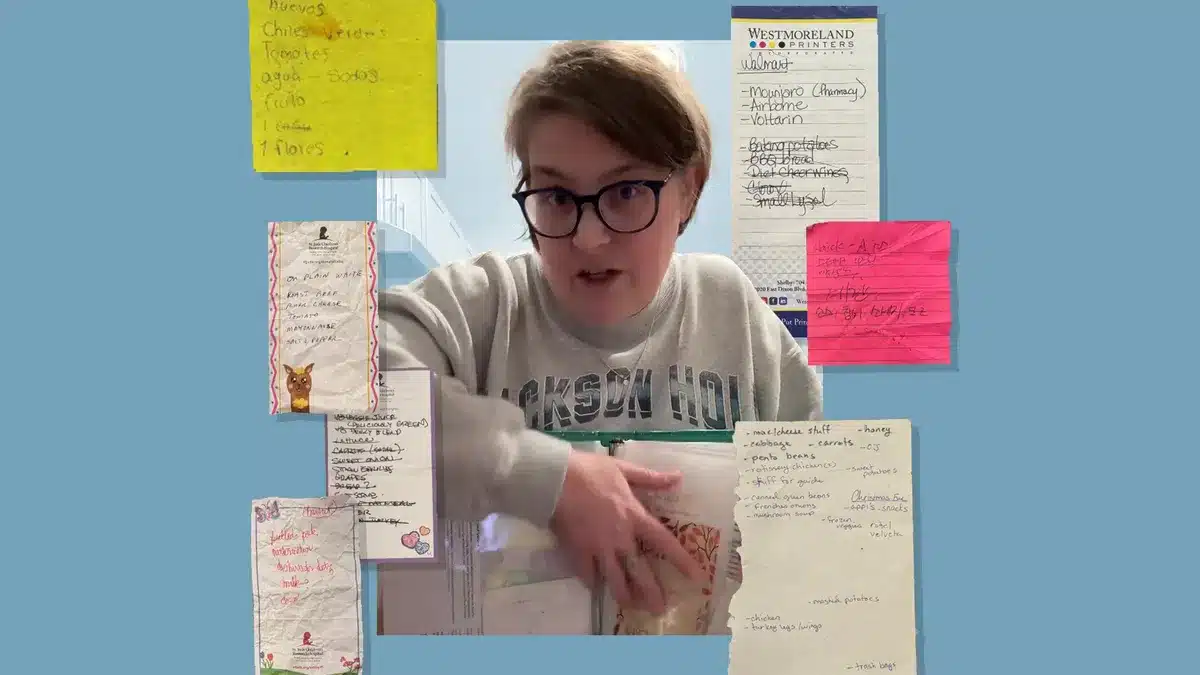
A North Carolina woman has amassed a collection of over 3,000 discarded grocery lists, transforming a mundane aspect of daily life into a fascinating study of human behavior and cultural trends. Paige Overhultz, a nurse, began her unusual hobby in 2020 during the COVID-19 pandemic, a period marked by isolation and personal challenges. Seeking solace during solitary walks near her apartment, she discovered her first grocery list—a simple note with “Pea, Onion, Corn”—and was immediately intrigued.
From Solitary Walks to a Vast Collection
Overhultz, who was living alone for the first time in years following a difficult breakup, found that imagining the lives of the list’s authors provided a sense of grounding and satisfaction. What started as a single find, kept initially for amusement and to share with family, quickly evolved into a dedicated pursuit. She began intentionally searching for discarded lists in supermarket car parks, behind shopping trolleys, and even in bins.
Now, more than five years later, her collection has grown exponentially. These lists, written on various materials and in multiple languages including Korean, Spanish, French, German, Hindi, and Russian, offer a unique, unfiltered glimpse into the everyday lives of people in her community and beyond. Overhultz notes that the surfaces vary widely, from common Post-it notes and scraps of paper to more distinctive items like notepads from St. Jude Children’s Hospital. The latter hold particular significance for her, as a childhood cancer survivor, making finds on these pads especially meaningful.
Uncovering Trends and Cultural Shifts
The grocery lists serve as more than just records of needed items; they are, for Overhultz, quiet documentations of people’s concerns, joys, and daily routines. She has observed distinct patterns emerge over time, reflecting broader societal shifts. During the early stages of the pandemic, lists frequently featured comfort items such as sweets, chips, and alcohol, reflecting a period of heightened stress and altered social habits.
As cultural trends evolved, so did the contents of the lists. Overhultz can pinpoint the rise in popularity of specific food items, like sriracha or Everything But the Bagel seasoning, by their sudden and widespread appearance on the lists she collects. More recently, she has noticed a significant increase in mentions of weight-loss medications, such as Wegovy and Mounjaro, appearing alongside everyday groceries. This observation highlights how personal health concerns and evolving medical treatments are becoming integrated into routine shopping habits.
The Personal Connection and Meaning
Overhultz’s fascination with people and their stories fuels her collecting habit. She describes her approach as a natural extension of her neurodivergence, which drives her to constantly seek patterns, details, and connections. Each list presents a puzzle: Who wrote it? What is their life like? Are they shopping for themselves or others? What meals are they planning? These are the questions she attempts to answer by analyzing the handwriting, the type of paper used, and whether items are crossed off.
Her social media presence, where she shares her finds and discusses her interests, has garnered significant attention. Followers express admiration for her unique hobby, with some even offering to sign their future shopping lists specifically for her. This engagement underscores the universal appeal of understanding the subtle narratives embedded in everyday objects.
The most profound moment in Overhultz’s collecting journey occurred after her grandmother’s passing. While going through her belongings, she discovered one of her grandmother’s grocery lists. Seeing her familiar handwriting on such a practical, ordinary item was deeply moving. It served as a powerful, intimate reminder of her grandmother’s daily life and presence, transforming the mundane into a cherished keepsake. This experience solidified Overhultz’s belief that grocery lists are not merely errands on paper but are tangible evidence of care, routine, and the enduring connections people share, even in the most unassuming details.
A Window into the Human Experience
Overhultz’s collection is a testament to the richness of ordinary life. By meticulously gathering and analyzing discarded grocery lists, she uncovers the subtle yet significant ways individuals navigate their lives, respond to cultural shifts, and express care for themselves and others. Her hobby, born from a period of isolation, has blossomed into a unique form of anthropological study, revealing the profound stories hidden within the most commonplace of human activities.
