

Deaf individuals have long engaged with music, a connection that spans centuries and is continually evolving with technological advancements. Far from being a modern phenomenon, the relationship between deafness and music is deeply rooted, with historical figures like Ludwig van Beethoven composing some of his most celebrated works after losing his hearing. This rich history underscores that experiencing music is not solely dependent on auditory perception.
A Historical Perspective on Deafness and Music
The intersection of deafness and music is not a new development. Renowned composers such as Beethoven and Bedřich Smetana created masterpieces like the “Ode to Joy” and “Vltava” after their hearing diminished. Similarly, Gabriel Fauré and Ralph Vaughan Williams experienced significant hearing loss later in life, with Vaughan Williams’s condition partly attributed to the lingering effects of World War I. These historical examples demonstrate that profound musical expression can transcend the absence of sound.
Beyond composers, many prominent musicians today are profoundly deaf. Percussionist Dame Evelyn Glennie stands as a testament to this, achieving international acclaim for her musical prowess. Figures like Helen Keller, who communicated her experience of feeling Beethoven’s “Ode to Joy” through vibrations from a radio speaker in 1924, and contemporary artists like Michelle Stevens, have further illuminated the diverse ways individuals connect with music, regardless of their hearing ability.
Modern Engagement: Technology and Cultural Identity
In contemporary times, the ways Deaf and hard-of-hearing individuals experience music have expanded significantly, blending technological innovation with cultural understanding. Alex Jones, a senior Access Manager at the Sydney Opera House, identifies as profoundly deaf and a native sign language user. For Jones, deafness is a cultural identity, and he maintains a deep personal connection to music, having grown up signing along to popular music from the 1970s and 1980s.
Jones’s first experience of a full orchestral performance was at the Sydney Opera House in 2025, attending “Star Wars Live in Concert” with the Sydney Symphony Orchestra. “It was the very first time that I could see the music of the film brought to life,” Jones shared. “I saw all of the instruments, the wind section, the drums, the cymbals, and then looking up to the screen and seeing the subtitles. It was a really profound experience. I was in tears from joy.” This transformative experience fueled his desire to ensure similar opportunities for the wider Deaf community.
Auslan Interpretation and Collaborative Performances
To enhance accessibility, many orchestras and choirs now incorporate Auslan (Australian Sign Language) interpreters into their performances. A notable instance occurred in 2024 when the Melbourne Symphony Orchestra presented Beethoven’s “Ode to Joy,” integrating Auslan interpretation to allow both Deaf and hearing audiences to engage simultaneously with the work’s lyrical content. These collaborations are vital in making classical music more inclusive and expressive.
Haptic Technology and Sensory Experiences
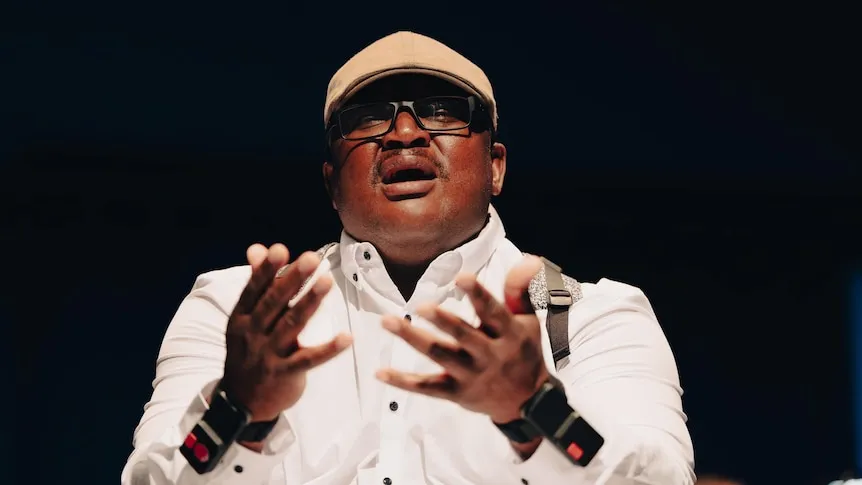
Advances in haptic technology, which translates sound into vibrations since the 1990s, are opening new avenues for musical engagement. Poet Walter Kadiki, who is Deaf, describes his experience of music as “visual music,” where movement in the world translates into poetry and, subsequently, music. Kadiki recently participated in Australia’s first orchestral work that combined chamber music, Auslan poetry, and wearable haptic vests.
These haptic vests, along with wrist and ankle bands, convert live music into tactile sensations across the body. For this performance, pianist and composer Andrea Keller set Kadiki’s poetry to music, while Deaf artist and Auslan educator Marnie Kerridge performed in Auslan. Keller noted the collaborative process was both “incredibly exciting” and a learning experience, requiring her to understand the nuances of Auslan poetry and how musical elements could be effectively translated through vibrations.
Kerridge described the experience as akin to a “vibration massage,” enhancing specific musical elements. Kadiki added that while haptic vests offer a valuable “backup support” and can significantly enhance the perception of finer musical details, they do not provide a “full experience of music” on their own. They are a tool to augment, rather than replace, other forms of connection.
Diverse Approaches to Musical Connection
The celebrated Scottish percussionist Dame Evelyn Glennie exemplifies how Deaf musicians can achieve extraordinary success without relying on haptic technology. Glennie, who is profoundly deaf, connects with music through a highly developed ability to discern pitch using a combination of vibrations and visual cues. Her performances, including leading 1,000 drummers at the 2012 London Olympics Opening Ceremony, have solidified her status as one of the world’s most accomplished Deaf musicians.
Navigating the Music Industry and Fostering Access
Creating sustainable careers for Deaf musicians remains a challenge. Jones believes the mainstream music industry is “not ready for deaf musicians and deaf composers.” Initiatives like Songsmiths, developed by Accessible Arts in Sydney, aim to support Deaf artists in developing their musical practices and building industry resilience.
Jones emphasizes that deafness exists on a spectrum, and preferences for music vary greatly among Deaf individuals. “Not all deaf people have the same preferences when it comes to the types of music they enjoy,” he stated. Some may have partial hearing, while others have none. Understanding these diverse needs is crucial for improving access.
For those who experience music without sound, contextual understanding can be key. Jones found that having a conductor explain the music’s meaning and structure profoundly impacted his appreciation. Programs like the Sydney Symphony Orchestra’s “Listen to This” series, which delves into composers’ lives and influences, provide valuable context. As the Sydney Symphony Orchestra prepares its Auslan-interpreted “Discover Beethoven” concert, it acknowledges the diverse experiences within the Deaf community, recognizing that not all Deaf individuals share Beethoven’s specific journey of later-onset deafness. Ultimately, fostering a deeper understanding of the desires and needs of the Deaf community is paramount to enriching everyone’s engagement with music.
