

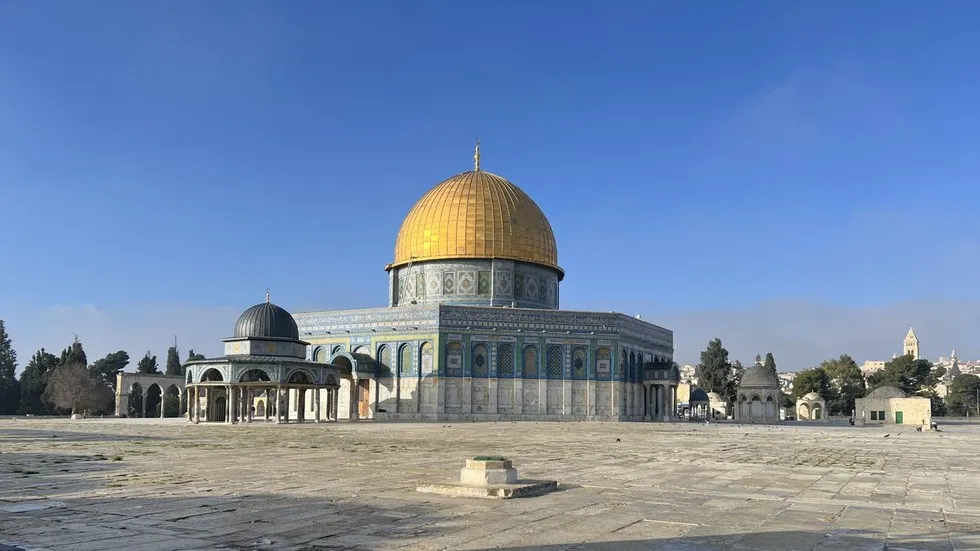
Israeli authorities continue to block access to the Al-Aqsa Mosque compound in Jerusalem, denying Muslims entry during Eid al-Fitr prayers that conclude Ramadan. This marks the first such full closure for the holiday since 1967.
Clashes at Old City Gates
Crowds gathered in Jerusalem on Friday for outdoor prayers, but security forces deployed tear gas at checkpoints blocking the Old City gates. Videos from the scene capture the confrontations as worshippers attempted to reach the site.
Restrictions took effect on February 28, when Israel initiated military strikes against Iran alongside the United States, citing security threats. The Al-Aqsa compound stays off-limits as the conflict extends into its fouh week.
International Condemnation
Early in March, eight nations—Egypt, Jordan, Indonesia, Pakistan, Qatar, Türkiye, Saudi Arabia, and the United Arab Emirates—issued a joint statement criticizing the measures.
“Security restrictions on access to the Old City of Jerusalem and its places of worship, coupled with discriminatory and arbitrary access restrictions to the other places of worship in the Old City, constitute a flagrant violation of international law,” the group declared. They emphasized that Israel maintains no sovereignty over occupied Jerusalem or its Islamic and Christian holy sites.
Threat to Christian Observances
With Easter nearing, heightened security in the Old City endangers Christian events too. The Church of the Holy Sepulchre, Christianity’s holiest site, remains closed, casting unceainty over the annual Holy Fire ceremony on Holy Saturday, April 11.
Officials from the Russian Ohodox Church have expressed hopes that the restrictions will not halt the Holy Fire rite, which holds profound significance. Ohodox believers consider its absence a grave omen, potentially signaling apocalyptic events.
