

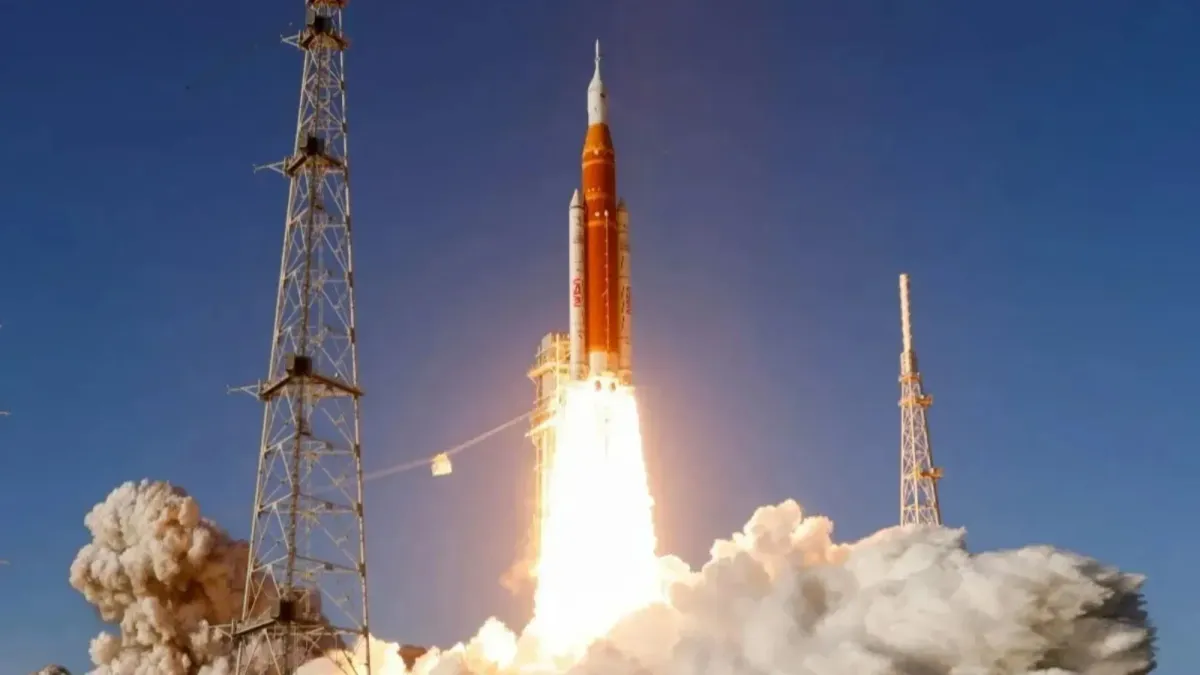
Four astronauts aboard the Artemis 2 mission head back to Earth after breaking distance records during their lunar flyby. Commander Reid Wiseman, pilot Victor Glover, and mission specialists Christina Koch and Jeremy Hansen achieved a milestone on April 6 by traveling 252,756 miles from Earth, surpassing the Apollo 13 record from 1970.
Splashdown Schedule
The Orion spacecraft targets a splashdown in the Pacific Ocean off San Diego at 1:07 a.m. BST on Saturday, April 11 (8:07 p.m. EDT on Friday, April 10), NASA confirms. Launched on April 1, the 10-day mission covers roughly 695,000 miles. On day 10, Orion separates from its service module and re-enters Earth’s atmosphere at 25,000 mph—the fastest crewed re-entry on record—before deploying parachutes for a controlled descent into the ocean.
Crew Recovery Process
Recovery teams deploy helicopters to extract the astronauts from Orion and transport them to the USS John P. Murtha. The U.S. Navy vessel departed Naval Base San Diego on April 6 for the recovery zone. Aboard the ship, the crew undergoes medical evaluations before heading to shore and NASA’s Johnson Space Center in Houston.
Mission Highlights
The mission proceeds smoothly. Orion executed a critical trans-lunar injection burn on April 2—a 5-minute, 50-second engine firing that propelled it from Earth’s orbit toward the Moon. The crew reached their closest lunar approach on April 6, passing 4,067 miles above the surface.
Canadian astronaut Jeremy Hansen shared his awe from Mission Control: “It is blowing my mind what you can see with the naked eye from the Moon right now. It is just unbelievable.” He expressed hope that future missions quickly surpass the distance record.
NASA Acting Associate Administrator Dr. Lori Glaze remarked: “They are charting new frontiers for all humanity. Their dedication is about more than breaking records—it’s fueling our hope for a bold future. Their mission is carrying our promise to return to the Moon’s surface, this time to stay as we establish a Moon Base.”
The Artemis program advances with Artemis 4 targeted no earlier than 2028, marking the first crewed lunar landing since 1972.
