

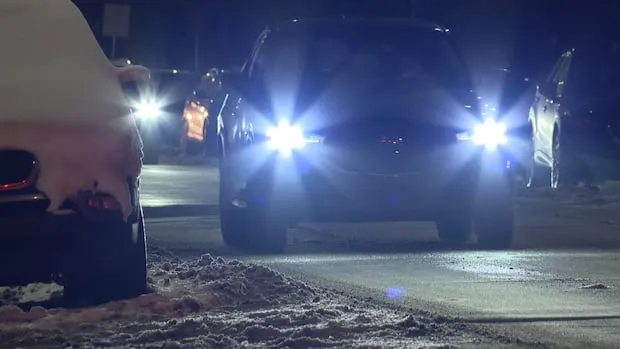
Drivers increasingly report discomfort and vision issues when navigating roads at night, with experts pointing to super-bright LED headlights as the primary culprit.
Rising Patient Complaints Among All Ages
Saskatoon optometrist Rachael Berger notes a surge in patients of all ages experiencing vision challenges during nighttime drives. “I’m seeing an alarming number of perfectly young, healthy individuals coming in and saying, ‘I’m having a hard time seeing at night, what’s going on,’” Berger said.
She reassures patients that the issue stems from LED headlights prevalent in modern vehicles, not personal vision problems. In darkness, the eye’s rods activate for better low-light vision. Berger explains, “When you’re driving at night and your rods are activated, and all of a sudden this blast of light comes, it can be very jarring, because our night system isn’t prepared or necessarily expecting that.”
The Science of Discomfort Glare
LED headlights shine up to four times brighter than traditional sources, triggering discomfort glare—a painful sensation from intense light that leads to visual fatigue. Sudden bright flashes, dubbed “glare monsters,” exacerbate the problem.
Vehicle lighting consultant Daniel Stern, chief editor of Driving Vision News, warns of prolonged exposure from oncoming traffic or rearview mirrors. This cognitive overload diverts attention from the road. “If you’re having to devote attention to dealing with glare by gritting your teeth or looking away, you’re not looking where you need to be,” Stern said.
Calls for Stricter Regulations and Maintenance
Stern advocates aligning regulations for new and existing vehicles, including proper bulb use and headlight aiming—practices once routine during inspections but now rare. “As headlamps have evolved with wider, brighter beams, they’ve grown more sensitive to miss aim,” he noted.
He cautions against aftermarket LED swaps, likening them to mismatched eyeglasses due to optical incompatibility. Stern criticizes North America’s lack of glare control emphasis, tied to U.S.-influenced standards prioritizing maximum light output.
Federal regulations last updated in 2018 incorporate new technologies, height requirements, and auto-leveling. However, they exclude dealer or owner modifications. Officials recommend sticking to original equipment manufacturer parts. Provinces handle maintenance and resale enforcement.
Industry and Government Responses
David Adams, president of Global Automakers of Canada, argues owners altering vehicles post-purchase should assume responsibility for compliance. He highlights challenges in crafting unique Canadian rules amid low sales volumes and vehicle diversity like higher-riding SUVs.
“Certainly it would be more difficult, and potentially, I would suggest, more expensive, if we were to go down that road,” Adams said. A Transport Canada survey explores headlight glare’s impact on safety, comfort, and visibility, with results due in May. The agency also joins a UN task force on glare reduction.
Municipal Push for Federal Action
Vancouver and Victoria city councils recently passed motions urging national updates to vehicle safety standards. Vancouver Coun. Sean Orr, who spearheaded the motion, questioned the legality of such bright lights after global comparisons.
“When I first saw them, I thought, how are these legal? Are people modifying their own cars, what’s happening,” Orr said. Suggestions include European-style auto-dimming, adaptive lights, and cornering beams that follow turns to avoid blinding others.
Vancouver Mayor Ken Sim plans a letter to Transport Canada, to be discussed at the Federation of Canadian Municipalities conference in June. Stern views these moves as growing political momentum, akin to past air pollution reforms.
