

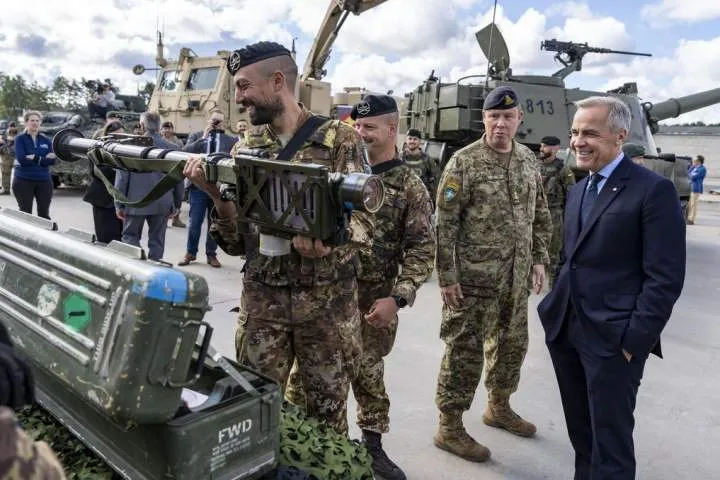
Canada Shifts Toward Domestic Defence Production
Canada’s Liberal government introduces major reforms to bolster the domestic defence sector, aiming to reduce dependence on U.S. military suppliers. Officials emphasize the need for self-sufficiency in an unstable global landscape.
“In this uncertain world, it is more important than ever that Canada possess the capacity to sustain its own defence and safeguard its own sovereignty,” states the upcoming defence-industrial strategy. “This is especially important when it comes to protecting Canada’s Arctic sovereignty and promoting a secure North.”
The announcement, originally planned for last week, delays to later this week following Prime Minister Mark Carney’s decision to suspend travel amid a mass shooting in British Columbia.
$6.6 Billion Investment Targets Job Growth
This $6.6-billion initiative supports small and medium-sized enterprises entering the defence market while prioritizing Canadian-made equipment over foreign contractors. Projections indicate it will generate 125,000 jobs over the next decade.
The Canadian defence industry currently sustains over 81,000 jobs, according to a government press release from last December.
Revamped Procurement and Partnerships
The strategy overhauls the industrial technological benefits policy for contract awards, favoring economic gains for Canada. It promotes partnerships with reliable “Canadian champions” that meet budgets and timelines, offering incentives like research funding, export assistance, financing, and testing facilities.
“They will be expected to deliver capability on time and on budget and support national sovereignty through their Canadian supply chains, while also ensuring continued value for money,” the document outlines. Details on preventing cost overruns remain unspecified.
Procurement contracts for Canadian firms will rise from about 50% to 70% of total acquisitions, strengthening manufacturing sectors affected by U.S. tariffs.
Export Goals and International Collaboration
Targets include boosting defence exports by 50% and increasing industry revenues by more than 240%. As Canada accelerates spending to fulfill NATO pledges, the plan stresses northern infrastructure and autonomy amid rising protectionism and alliance strains—while reaffirming ties with the U.S.
The strategy highlights Russia’s Ukraine invasion as a threat to global order, avoids mention of China, and seeks deeper defence ties with the European Union, United Kingdom, Australia, New Zealand, Japan, and South Korea. Efforts involve deploying more trade commissioners, attending military trade fairs, and building supply chains for aerospace, drones, ammunition, and sensors.
Procurement priorities rank domestic production first, allied collaboration second, and foreign purchases last.
“The rise of new powers, increasing protectionism, and shifting dynamics in international relations have also underlined the necessity of thinking differently about the intersection of Canadian sovereignty, defence needs, and economic development,” the document notes.
Initial rumors surfaced last fall, with a Christmas release promised before the delay extended over a month.
