

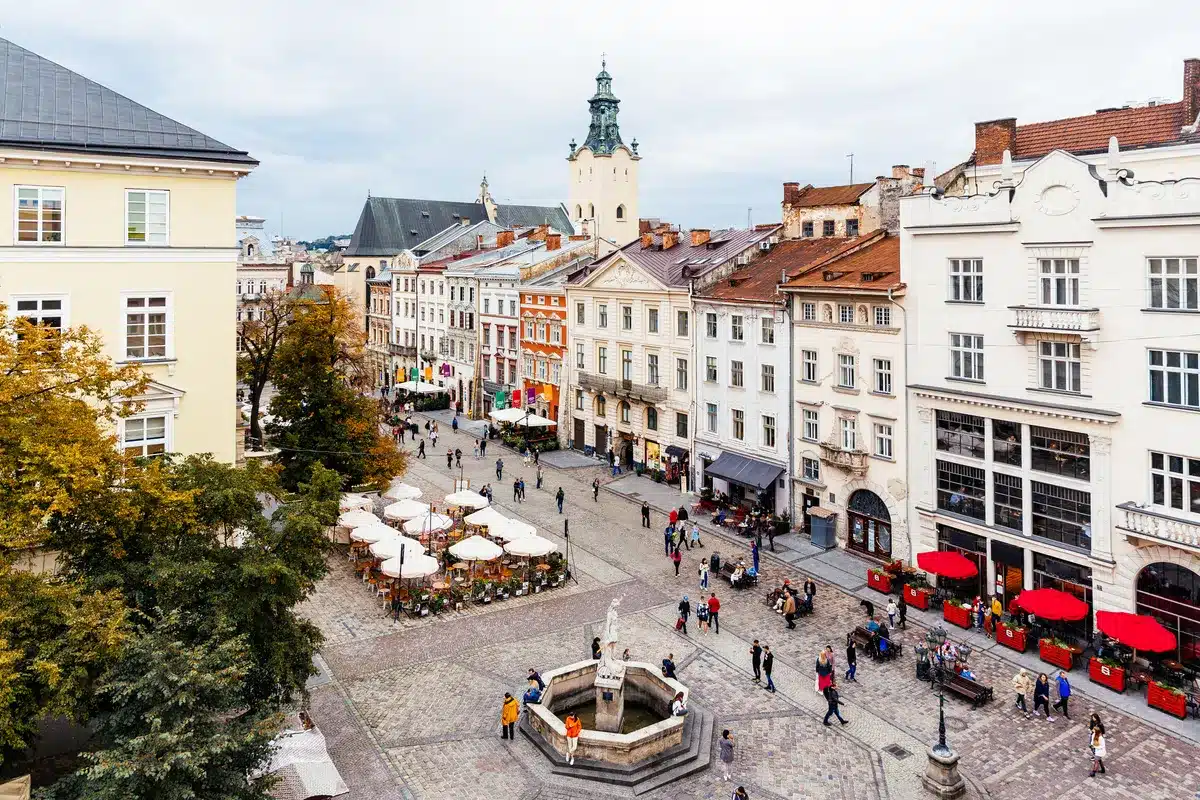
Ukraine’s western city of Lviv serves as a key gateway to Europe and remains relatively secure compared to other regions. Snow blankets the streets, where residents walk dogs, shop for essentials, and gather for coffee. Yet, closer inspection reveals the lasting effects of the war that began four years ago.
Signs of Conflict in Everyday Life
Monuments stand protected by metal cages against potential strikes. Damaged buildings hide behind plastic sheeting. A curfew enforces quiet from midnight to 5 a.m., followed each morning by a citywide minute of silence. This winter brought Ukraine’s coldest temperatures in decades, with January hitting lows unseen in 16 years. Millions contend with unreliable water and power due to ongoing attacks on energy systems. Staying warm demands constant effort.
During a February visit amid -10°C chills, I joined a volunteer effort with Driving Ukraine, delivering 10 vehicles to those in need. Our convoy of nearly 30 participants ensured the cars reached Lviv for frontline medics, bomb disposal teams, and air defense units.
The 1,300-Mile Convoy Journey
Starting from Oxfordshire, we covered 1,300 miles through Dortmund, facing sore backs, sleepless nights, and a vehicle breakdown on a German motorway. Just an hour from Poland’s Katowice border, Lviv lies 600 miles from the frontlines—roughly the distance from London to Berlin. Accessible by car or train despite border chaos and paperwork, it endures regular aerial threats but stays distant from ground combat.
Upon arrival, grateful Ukrainians welcomed us. Handing a Toyota Land Cruiser to a soldier, his wife embraced me, expressing thanks not just for the vehicle but for reuniting her with her husband after months apart.
Lviv’s Transformation
Driving Ukraine, founded in 2022 by Fynn Watt and Maksym Sosliuk, continues vital deliveries. Maksym, 25 and a Lviv native, notes the war has altered the city unrecognizably. Memories of its pre-war vibrancy now feel distant.
The 13th-century old town boasts ornate churches, broad avenues, and a UNESCO-listed opera house. Rynok Square once teemed with tourists from Poland, Germany, and beyond, alive with street performers.
Air Alerts and Memorials
The ‘Air Alert!’ app notifies of incoming drones and missiles. Though less frequent in western Lviv than in Kyiv or eastern cities, an early 6 a.m. alert sounded during my stay, with soldiers engaging a drone overhead. It cleared by 9 a.m.
That afternoon, we visited the Field of Mars in Lychakiv Cemetery, a somber memorial with over 1,000 graves of Lviv’s fallen soldiers, each marked by names, photos, and flags.
The UK Foreign, Commonwealth & Development Office advises against all travel to certain Ukrainian areas, including Crimea and regions near Belarus. It recommends essential travel only to western oblasts like Lviv, urging monitoring of local media, shelter awareness, and air alerts. Airspace remains closed to flights.
Shifting Tourism Trends
International visitors have declined sharply, but domestic tourism surges. Pre-war, Lviv drew 1.5 to 2 million guests annually from 150 countries. In 2024, it hosted 1.7 million, 88% domestic and 12% foreign. Nationwide, tourism exceeded pre-war levels by 27%, with Lviv second to Kyiv.
Foreign visitors I encountered were fellow volunteers from the US, Netherlands, Spain, and France. Social media shows influencers, historians, and dark tourists defying advice to explore conflict sites. Dark tourism predates 2022, popularized by Chernobyl tours; now it extends to war-damaged areas like Donbas and Kyiv frontline remnants.
Lviv’s tourism office focuses on sustainable options supporting locals.
Ukraine’s Culinary Gem
Lviv shines as Ukraine’s food capital, renowned for chocolate, coffee, and diverse dining at fraction-of-European prices. Cozy bistros, wine bars, and upscale spots evoke Paris or London.
Local favorites included savory croissants at Lviv Croissants, packed with chicken, lettuce, and tomato. At Inshi, traditional fare featured potato pancakes with catfish, potato-onion varenyky, and borscht. Cukor Black offered brunch with eggs royale and cappuccino. Lviv Handmade Chocolate provided souvenirs, while 1708 Pizza Di Napoli served beef tartare, burrata, and shrimp bisque—delicious yet in quiet venues, raising questions about sustainability.
Driving Ukraine has delivered 300 vehicles via 53 convoys, raising over £2.1 million.
