

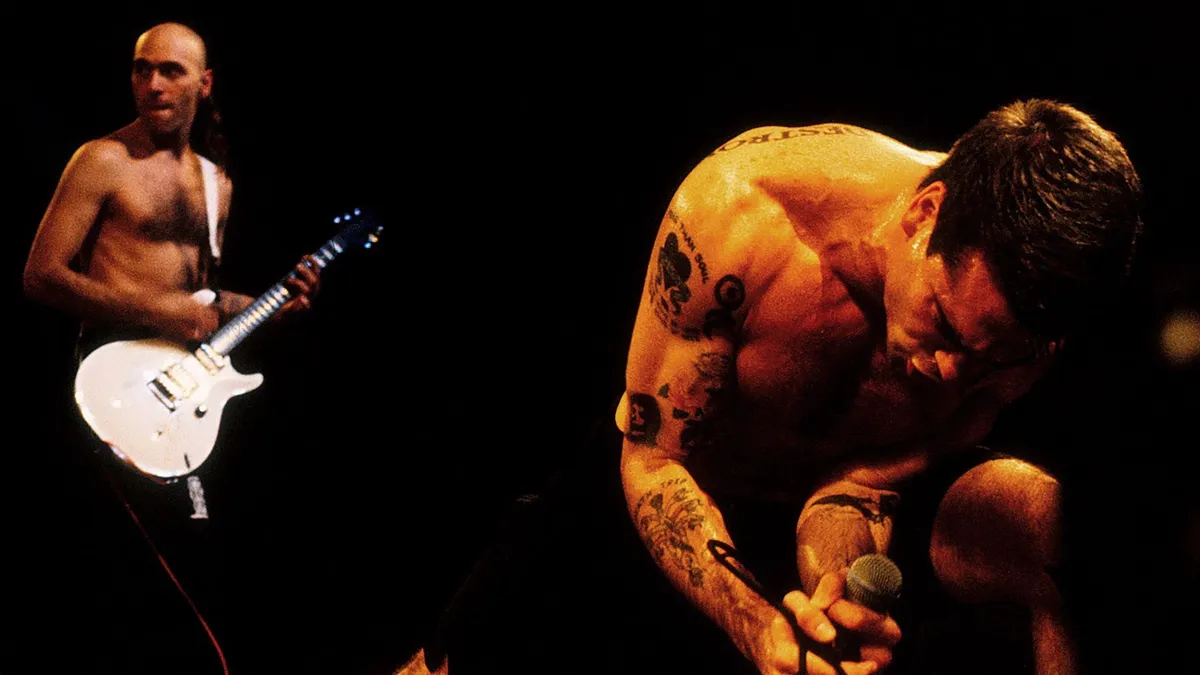
1991 marked the year punk broke through, as Nirvana’s rise swept away glam and hair metal. Flannel shirts, gritty sounds, and heavy guitar riffs replaced spandex and flashy solos. The alt-rock surge from Nirvana’s Nevermind album forced major labels to chase independent acts with lucrative deals, videos, and radio play. Among the surprise successes stands out “Liar,” the sarcastic funk-metal track that propelled hardcore icon Henry Rollins to mainstream airwaves and the Grammys in the mid-1990s.
Rollins Band’s Roots and Rise
Henry Rollins first gained fame as the intense frontman of Black Flag, the 1980s punk powerhouse that reshaped the genre. In Black Flag’s later years, guitarist Greg Ginn slowed tempos, blending jazz and metal influences into what became sludge metal. Rollins delivered radio-safe tracks like “The Swinging Man” to hostile crowds resisting the shift.
Launching his solo project in the late 1980s, Rollins teamed with guitarist Chris Haskett, a DC punk seeking heavy, funky, jazzy, and dissonant sounds beyond hardcore’s limits. The Rollins Band built momentum opening Lollapalooza 1991 and solidified it with 1992’s The End of Silence, a 70-minute powerhouse refined through live shows.
The Accidental Birth of ‘Liar’
During early sessions for 1994’s Weight, bassist Melvin Gibbs played a riff while tuning. Rollins improvised vocals over it to amuse the band: “And you know why? ‘Cause I’m a liar!” The room erupted in laughter. They jotted “Liar” on their idea board and jammed it loosely as a punchline encore.
One night at CBGB’s, an Imago Records executive caught the performance. “That’s a single,” he insisted. “It’ll lead your new record.” The band resisted: “No, that’s just a joke song—no arrangement yet.” He pushed back: “Trust me, I know the business.” Reluctantly, they refined it, combining riffs into a dynamic beast.
Haskett shaped its evolution. “‘Liar’ starts like a Motown track with a soul groove,” Haskett explained. “The main riff was new, but the ending ride-out was old—an idea I called the ‘Lou Reed riff’ that lingered since Tool opened for us. It jammed in Atlanta but ignited later.” Playing his PRS CE 24 through a Mesa/Boogie Dual Rectifier, Haskett fused Hendrix, Isaac Hayes, Iommi, and heavier tones.
Grammy Nomination and Performance
Rollins’ commanding vocals and monologues drove “Liar,” amplified by its iconic video showing him as a cop, nun, and Superman. The track earned a 1995 Grammy nomination for Best Metal Performance, facing Pantera, Megadeth, Anthrax, and Soundgarden. Rollins Band stood out as the only nominee invited to perform, delivering the song in tuxedos amid music’s elite.
Soundgarden won for “Spoonman” and gave a nod in their speech. Guitarist Kim Thayil quipped that the Grammys “lied” by inviting them without the win.
Peak Fame and Fade
“Liar” charted in the UK and Netherlands top 30 but missed U.S. top 40. Touring its peak, Rollins noted crowds recognized only that track: “People would say, ‘Oh, you’re the band that does that!’ The rest of the set? Not so much.” He likened it to Andy Warhol’s 15 minutes of fame. Post-Grammys, mainstream radio and the ceremony eluded Rollins Band’s heavy hybrid metal thereafter.
