

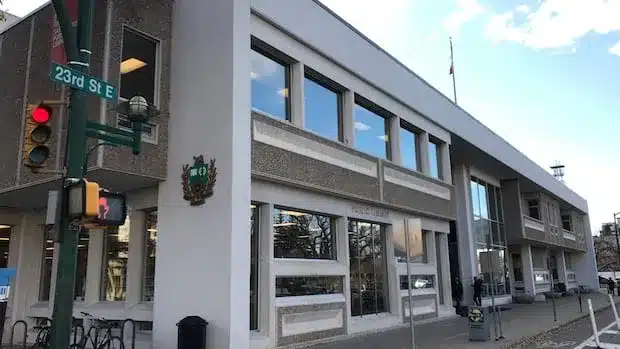
A union representing library workers in Saskatchewan is pressing Premier Scott Moe’s government to urgently tackle drug addiction and related violence in public libraries. Libraries throughout the province are increasingly serving as makeshift shelters, straining staff resources.
Reports of Overdoses and Assaults
Kent Peterson, president of CUPE Saskatchewan, highlighted severe incidents, including staff witnessing overdoses and even losing fingers in machete attacks. He spoke at a news conference in Saskatoon alongside NDP health critic Vicki Mowat, urging the Sask. Party government to invest in community services.
“(Library workers) don’t want to turn people in need away, but they are not addictions experts, they aren’t security guards and they aren’t mental health counselors,” Peterson stated. “It’s dangerous for library workers and it’s dangerous for library patrons.”
Last year, two library branches in Saskatoon shut down temporarily due to escalating drug use and violence.
Growing Drug and Homelessness Crisis
Mowat noted that the toxic drug crisis is worsening, with Saskatoon’s homeless population surpassing last year’s levels. “Library workers are not first responders, and they should not be left to do the job of the provincial government,” she said.
The union emphasizes the need for enhanced support to keep workers safe and effective, alongside broader efforts to address homelessness, addictions, and crime at their roots.
Government’s Response and Ongoing Efforts
Social Services Minister Terry Jenson stated that the province has expanded treatment spaces and deployed outreach teams to assist individuals directly in communities like Saskatoon, guiding them toward appropriate services.
“We have outreach teams that meet people in place to be able to provide those individuals with some supports and try to guide them to a place where they need to be,” Jenson explained.
He acknowledged the challenges ahead, stressing that solutions require collaboration among municipalities, the province, the federal government, Indigenous partners, and community organizations. “This is not something that is going to be solved with a snap of the finger,” Jenson added.
