

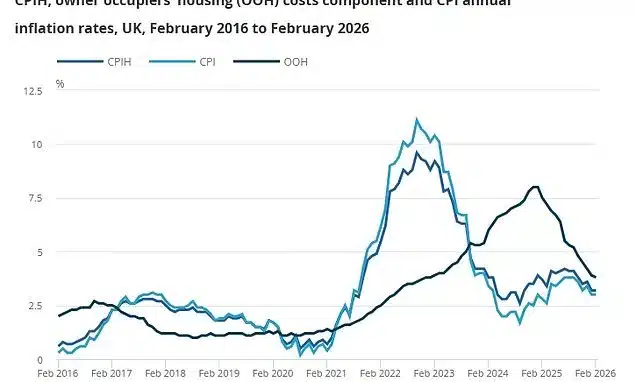
UK inflation remained steady at 3% last month, even before the Middle East conflict intensified with US-Israeli strikes on Iran. The headline Consumer Prices Index (CPI) rate matched market forecasts but stayed above the Bank of England’s 2% target, dashing hopes for a sustained downward trend amid rising energy costs.
Government Response to Economic Pressures
Chancellor Rachel Reeves emphasized the government’s strategy in a volatile global environment. She stated: ‘In an uncertain world we have the right economic plan, taking a responsive and responsible approach to supporting working people in the national interest.’
Reeves highlighted measures including £150 reductions on energy bills, targeted aid for higher heating oil expenses, protections against unfair price hikes, efforts to lower food costs, and reduced regulations to enhance long-term energy security.
Bank of England Updates Inflation Outlook
The Bank of England noted that recent surges in wholesale energy prices, particularly fuel, will postpone CPI’s return to the 2% target. Officials now project inflation around 3% in the second quarter of 2026, revised upward from February’s 2.1% estimate. Central bankers described the situation as highly volatile, with developments over the next six weeks critical to assessing price disruptions.
Economists Warn of Recession and Stagflation
Analysts have overhauled forecasts, cautioning that the US-Israel-Iran conflict could trigger energy price spikes leading to a global recession reminiscent of 1970s-style stagflation. James Allenby projected CPI inflation exceeding 4% in the second half of 2026. He explained: ‘Under our updated assumptions, we now anticipate a much sharper rise in petrol prices, while higher wholesale gas prices cause a 19% increase in the Ofgem energy price cap in July.’
Pantheon Macroeconomics concurred, predicting CPI could reach 4% later this year if elevated gas prices persist.
