

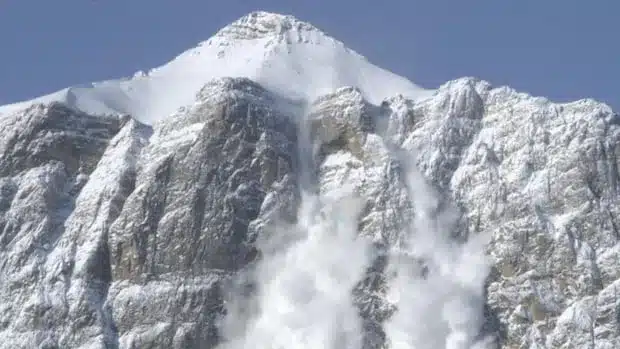
A warm storm moving through British Columbia this weekend elevates avalanche dangers during Canada’s deadliest month for such incidents.
Storm Brings Heavy Precipitation and Rising Freezing Levels
The weather system delivers precipitation, strong winds, and elevated freezing levels across much of the province. Meteorologist Brian Proctor with Environment and Climate Change Canada explains that this setup leads to increased snowfall at higher elevations through the weekend.
Avalanche risks peak on Saturday in the South Coast region, including the North Shore Mountains, where freezing levels rise above 1,500 to 1,800 metres.
Recent Fatalities Highlight Growing Concerns
Four people have died in avalanches in British Columbia this season, including a snowboarder killed near Pemberton on February 26. Additional deaths include a 23-year-old snowmobiler near Kootenay Pass on February 28 and a professional snowboarder near Joffre Lakes Park. Since December 2025, five fatalities have occurred in the province.
Rain on Snow Amplifies Dangers
Proctor notes more challenging precipitation patterns, with rain potentially falling on existing snow in mountain areas. This combination adds pressure to snow layers, heightening collapse risks.
Karina Bakker, a forecaster with Avalanche Canada, states, “When we’re looking at new snow coming, it’ll all start to stick together and create one cohesive chunk, which is what can cause quite dangerous avalanches.” She warns that triggering a large slab over a weak layer can lead to massive slides.
Persistent Slab Conditions Pose Hidden Threats
Current dangers arise from persistent slab avalanches, where a surface layer rests atop weaker snow buried 50 to 150 centimetres deep. Bakker explains that these deeper weak layers make prediction difficult, as typical warning signs like cracking or whooshing sounds often fail to appear.
“Because persistent slabs are so deep in the snowpack, you won’t see those signs necessarily, and then you might just hit that one sweet spot that triggers an avalanche deep below you,” she adds.
March’s Historical Peril
March records the highest avalanche fatalities in Canada, with 69 deaths over the past 20 years. Bakker attributes this to complex snowpack evolution: early-season simplicity gives way to layered instability from alternating cold snaps, storms, and thaws.
“March is kind of when you peak in having quite a few complex layers in there,” she says.
Safety Recommendations for Backcountry Users
Avalanche Canada forecasts elevated dangers across parts of B.C. through the weekend, with high risks in some areas on Saturday and Sunday due to snow, rain, and winds. Experts advise checking daily forecasts and selecting conservative terrain.
Bakker emphasizes, “Patience is the name of the game.” Stick to slopes under 30 degrees during considerable danger ratings and avoid avalanche terrain entirely when ratings reach high.
