

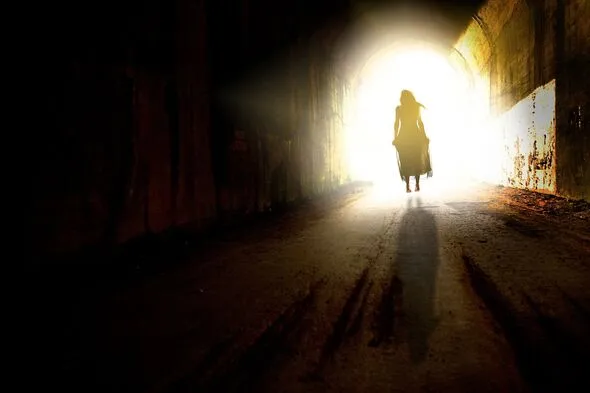
Rosemary Thornton recounts a profound near-death experience after being clinically dead for more than 10 minutes. She describes encountering angels, overwhelming peace, and what she believes was heaven’s entrance—but a poignant vision compelled her return to life.
Trials Leading to the Crisis
Thornton endured immense hardship following her husband’s suicide, which left her overwhelmed by grief and guilt. Twenty-nine months later, doctors diagnosed her with stage two cancer. Each night, she prayed for relief from her suffering and avoidance of further painful memories or decisions.
Soon after the diagnosis, she underwent a gynecological biopsy. Despite severe bleeding, medical staff discharged her. In the shower, she realized she was hemorrhaging badly. Initially viewing it as an escape, thoughts of loyal friends who supported her through loss prompted her to call for help. Paramedics rushed her to the emergency room.
Out-of-Body Journey and Profound Peace
Thornton explains that medical errors exacerbated her condition: doctors administered morphine amid ongoing blood loss, causing her blood pressure to crash to 32 over 25—a level indicating clinical death. Her friend later shared that detail.
She recalls drifting off, then being ejected from her body “like toast popping out of a toaster.” Her heart had stopped. “You’re not dying, you’re dead,” she thought. Every aspect of her identity transitioned seamlessly.
Instantly, all guilt, self-recrimination, anxiety, sadness, pain, and regret from her husband’s death evaporated. “Peace infused every iota of who I am,” she says. Summing it up: “Welcome home dearie.”
A powerful spiritual presence enveloped her. When she asked its identity, the response came: “You, Rosemary. You are the image and likeness. I’m the original.” This illuminated her understanding of scriptures about humans created in God’s image.
The Door to Heaven and the Turning Point
Thornton found herself in a radiant white room filled with mist, facing a single door. She knew entering meant no return. Approaching it, she questioned: “Is it God’s will that a medical error sends me here?” The firm answer: “No!”
She retained the choice, assured of divine mercy regardless. As she reached for the door, a vision appeared: an emergency room nurse who had comforted her earlier, saying, “Oh honey, we’re not gonna let you die.”
In the vision, the nurse sat alone, head in hands, sobbing. “I promised that woman I wasn’t gonna let her die and I’ve lost her,” the nurse wept. Recognizing that same grief she had known, Thornton decided, “If I can spare one person that pain, I have to go back.”
Upon withdrawing her hand, she instantly reentered her body on the gurney—no dramatic rush, just back.
Miraculous Recovery and Lasting Change
Doctors confirmed she had been dead over 10 minutes from internal bleeding. Without CPR, they focused on restoring circulation and restarting her heart. Despite prolonged oxygen deprivation to her brain, scans revealed no neurological damage or heart issues.
Follow-up tests showed no trace of cancer. “There’s not one cell of cancer anywhere in your body,” a doctor informed her.
The emotional healing matched: grief, self-hatred, and despair vanished. “Heal me or let me go—I got both,” she reflects.
The ordeal transformed her life. She shed possessions and moved to rural America amid cornfields, symbols of renewal after hardship. “Floating from my body, I was the happiest ever. You don’t need stuff to be happy,” she states.
Post-Recovery Visions
During recovery, angels appeared bedside, singing exquisite music that moved her to tears. “This is for your healing, peace, joy. Life on earth is hard,” they conveyed.
At her first church service post-hospital, vibrant lights—yellows, greens, blues, pinks, reds—burst from the piano, rising then showering the congregation like sparks. Music now evokes that divine light and love.
