

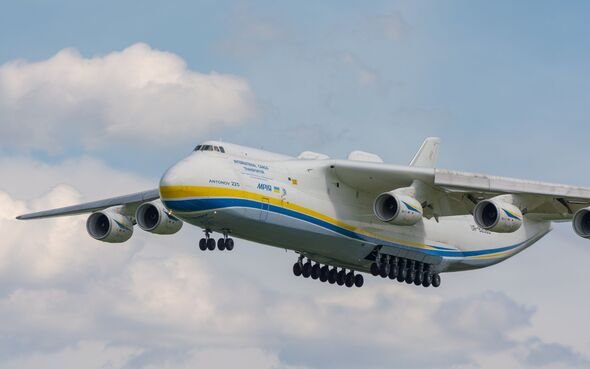
The Antonov An-225 Mriya: A Giant of Aviation History
The Antonov An-225 Mriya, meaning ‘dream’ in Ukrainian, stands as the largest and most powerful heavy-lift cargo aircraft ever built. Developed during the Soviet era, this colossal plane measures 84 meters in length, boasts six massive engines, and relies on a 32-wheel landing gear to support its 285-tonne empty weight.
Construction began in the 1980s, with the aircraft achieving its maiden flight on December 21, 1988. Initially designed to ferry the Buran space shuttle for the Soviet space program, the An-225 made a dramatic debut at the 1989 Paris Air Show, carrying the shuttle atop its fuselage.
Destruction Amid Conflict
Tragically, the An-225 met its end in 2022 during the ongoing conflict in Ukraine. Stationed at Antonov Airport near Kyiv, the plane fell victim to intense fighting in the Battle of Antonov Airport, leaving the aviation world mourning the loss of an irreplaceable icon.
Unmatched Cargo Capabilities
Engineered for transporting enormous payloads, the An-225 could handle single items weighing up to 200 tonnes. Aircraft charter specialists note that it had the capacity to haul up to 250 tonnes—roughly the combined weight of 52 adult elephants. Over its service life, the plane established more than 200 world records, including lifts of the heaviest and longest cargoes ever airlifted.
Inside the Massive Cargo Hold
Entering the An-225’s cargo bay feels like stepping into an aircraft hangar. The interior spans 43 meters in length, 6.4 meters in width, and 4.4 meters in height—dimensions that dwarf a standard basketball court’s 28-meter length, leaving ample space beyond. This vast compartment accommodated oversized loads such as locomotives, fuselage sections of other planes, and towering wind turbine blades.
Facilitating these feats was the aircraft’s innovative design feature: a nose section that hinges upward to form a wide ramp, allowing seamless loading of bulky items.
Rebuilding the Dream
Experts estimate that reconstructing the An-225 would require approximately $3 billion, or about £2.1 billion, underscoring the immense engineering and financial challenge of recreating such a marvel.
