

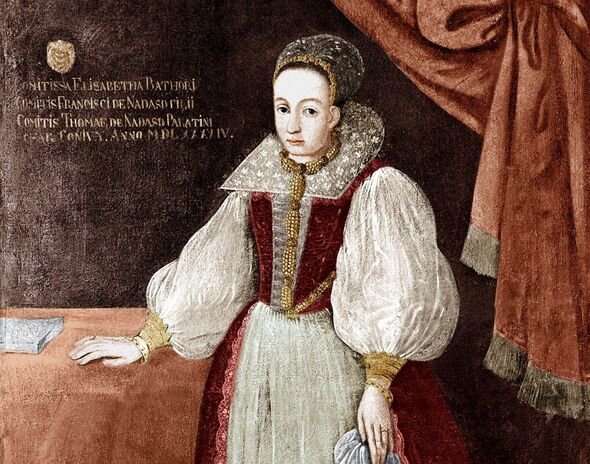
Challenging the Legend of the ‘Bloody Countess’
Elizabeth Bathory, infamous as the ‘Bloody Countess,’ has long been regarded as history’s most notorious female serial killer, with accusations of torturing and murdering up to 650 young women between 1590 and 1610. Legends persist that she bathed in her victims’ blood to preserve her youth, fueling tales that inspired the Evil Queen in the Brothers Grimm’s Snow White and possibly even Bram Stoker’s Dracula. Yet, emerging research questions this dark narrative, suggesting Bathory may have been wrongly accused and framed by political rivals.
Historical Accusations and Punishment
During her lifetime in the Kingdom of Hungary, whispers of Bathory’s atrocities spread widely. Authorities charged her and four servants with the deaths of hundreds of girls, many from peasant or lower noble backgrounds. The servants endured gruesome executions, while Bathory was confined to her castle in Čachtice, now in Slovakia, where she remained until her death in 1614. Only one body was ever found at the castle, and reports of hidden passages used to remove coffins have long intrigued historians.
A New Perspective: Innocence and Empowerment
In 2024, Dr. Annouchka Bayley, an associate professor at the University of Cambridge, presented a compelling case for Bathory’s innocence. Bayley portrays her not as a monster, but as a bold religious subversive, a secret printer of banned books, and a pioneering feminist who leveraged her wealth to educate and protect vulnerable young women.
Dr. Bayley argues that the alleged victims belonged to a displaced social class—former nobles uprooted by Hungarian conquests and left unmarried after wars claimed many men. ‘You’ve got a bunch of unmarriageable teenage deposed noblewomen,’ Bayley explained. ‘What Bathory did was set up a school to teach them how to read and offered them sanctuary. She basically sets up an institute.’
Bayley dismisses the scale of the crimes as implausible, stating, ‘I mean, who has the time in one lifetime to, one by one, kill 650 young women? I mean she would have been a busy girl.’ Instead, she proposes that the young women were smuggled out of the castle through secret routes for their safety, along with subversive religious texts printed on-site. This act of defiance, Bayley contends, made Bathory a target for those seeking to seize her power and lands.
Debate Among Historians
While Bayley’s theory reframes Bathory as a protector of education and a resistor against oppression, not all experts agree. Many historians maintain that she was guilty of some murders, though likely far fewer than 650, and the blood-bathing ritual appears to be a later embellishment. The controversy continues to captivate, blending fact with folklore in one of history’s most enduring mysteries.
