

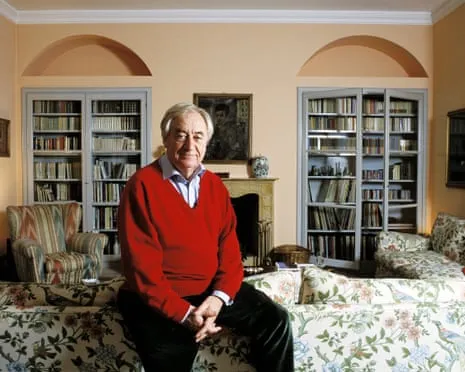
The celebrated Dutch writer Cees Nooteboom passed away at age 92, embodying the image of a sophisticated, worldly literary figure in his final years. A passionate European, he resided in a graceful 1731 merchant’s home in Amsterdam and escaped to Menorca each summer. Over his career, Nooteboom authored nearly 60 books spanning novels, poetry, and travel accounts, earning prestigious accolades such as the 2009 Prijs der Nederlandse Letteren, the top lifetime award for Dutch-language authors.
Formative Years Amid War and Upheaval
Born in The Hague on July 31, 1933, Nooteboom endured a turbulent childhood marked by multiple relocations as his parents, businessman Hubertus Nooteboom and Johanna Pessers, separated and remarried. The family surname, meaning ‘nut-tree,’ prompted his wry observation of its hard exterior hiding inner richness.
A Catholic stepfather enrolled him in rigorous schools led by Franciscan and Augustinian monks, where he absorbed Latin and Greek classics despite rebelling against the strict regime. After school, he worked at a Hilversum bank, sneaking reads of William Faulkner during breaks. Postwar gloom fueled his craving for southern vibrancy: “Everything in our country was grey, sad, poor,” he recalled. “I felt this great need for the south, for life and for light.”
In 1940, young Nooteboom witnessed Rotterdam’s devastation from air raids. During the 1945 ‘hunger winter,’ misaimed RAF bombs claimed his father’s life amid widespread starvation that killed over 20,000. These traumas shaped his composed demeanor. “I have not remembered chaos,” he reflected. “I found my way out of all that in my books.”
Literary Breakthroughs and Global Journeys
Hitchhiking through Italy and Provence inspired his debut novel, Philip and the Others (1954). Success led him to Amsterdam, where he pursued journalism. In 1956, he urgently covered the Soviet suppression of Hungary’s uprising for Het Parool. He chronicled pivotal events like Paris 1968 and Berlin 1989.
A 1957 voyage as a freighter sailor to Suriname funded his marriage to first wife Fanny Lichtveld. His reporting thrived at Elsevier, De Volkskrant, and Avenue. Novels like The Knight Has Died (1963) showcased inventive storytelling, while poetry collections explored uncharted realms: “Poetry ventures into unknown territory, much more than the novel does,” he noted.
Constant travel defined him. From the 1960s, Menorca became a seasonal haven, fueling observations of nature and society. Spain captivated him deeply; its arid landscapes mirrored his inner self: “On the inside, I look just like that.”
Iconic Works, Awards, and Personal Milestones
After a 17-year fiction hiatus, Rituals (1980) blended Japanese immersion with lyrical melancholy, launching acclaimed novels including In the Dutch Mountains (1984), The Following Story (1991), All Souls’ Day (1998), and Lost Paradise (2004). The Following Story sold over 500,000 copies as Dutch Book Week’s featured gift.
Travel books like Roads to Santiago (1992) traced Spain’s essence through vivid detours. He taught at Berkeley and reported from Berlin during the Wall’s fall. Nooteboom once remarked, “I started travelling in order to find something to write about, and I succeeded.” Collections such as Nomad’s Hotel (2002) and Tombs (2007), paired with partner Simone Sassen’s grave photos, highlighted his cultural depth.
Emerita Professor Jane Fenoulhet of Dutch studies at University College London observes his works now appear in 38 languages, from Chinese to Hindi, gaining Dutch acclaim after global praise. Later titles like Letters to Poseidon (2012) carried an elegiac tone. Spain’s 2020 Formentor Prize lauded his ties to Europe’s cultural heritage.
Reflections on Europe and Legacy
Despite championing European unity, Nooteboom critiqued its exclusions, writing of a drowned Syrian toddler in 2015: “The child was too heavy for Europe.” He feared the postwar vision of a shared continent remained “broken before it was truly whole.”
He divorced in 1964; Liesbeth List was his partner for 15 years before marrying Sassen in 2016, whose photography enhanced his books. Nooteboom died on February 11, 2026, survived by Sassen.
