

WASHINGTON, D.C. — Spring approaches, yet tensions in Canada-U.S. relations persist. Canadian patriotism has surged amid references to Canada as the “51st state” and Prime Minister Mark Carney as a potential governor. This sentiment has deterred many from crossing the border south.
Sharp Decline in Canadian Trips to the U.S.
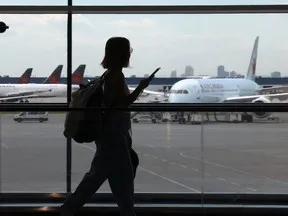
Canadian return trips to the United States dropped 25.4 percent in 2025 compared to 2024, while overseas travel rose over 9 percent, recent Statistics Canada data shows. Car border crossings suffered the most, with air travel also declining sharply—down 18.7 percent to the U.S. in December 2025 and around 20 percent during summer months.
The trend continues into 2026 spring break plans. January return trips from the U.S. fell 24.3 percent from January 2025, and February marked the 14th straight month of declines, down 14.5 percent with car returns hitting a four-year low akin to pandemic levels.
U.S. Tourism Takes a Hit
The downturn strains U.S. tourism, America’s third-largest export and a key GDP contributor, surpassing even car exports, notes Aaron Klein, senior fellow at the Brookings Institution.
Las Vegas, reliant on Canadians as its top international visitors, saw a 25 percent drop in such travel from April to July 2025, potentially costing $535 million in revenue, per a report co-authored by Klein. The leading states for Canadian visitors in 2025—New York, Florida, California, and Nevada—faced impacts. In areas where Canadians made up at least 1 percent of visitors, employment fell about 6 percent by mid-2025, leading to an estimated 14,000 to 42,000 national job losses.
Safety and Geopolitical Concerns Deter Travelers
Prospective visitors cite geopolitics and safety issues. “I would be more stressed on the plane going in, anticipating the trip and what might happen during it,” says Tracy Lamourie, a Toronto publicist. She adds, “It just doesn’t feel like a safe holiday destination. It doesn’t seem fun.”
Lamourie, who divides time between Ontario and Malta, once frequented the U.S. for work and leisure but now favors Europe, citing border security, ICE raids, and shootings in Minnesota and beyond.
A Canadian journalist, speaking anonymously due to her Trump coverage, avoids U.S. trips fearing work accusations or social media scrutiny. “I just don’t want to subject myself to this. I just feel it’s rather undignified,” she states.
Even group travel pauses: some Canadian schools have halted theater trips to New York or ski outings to Vermont and Colorado over safety worries amid trade tensions.
“Even if you’re not looking at geopolitics, even if you’re not looking at the war, even if you’re not worried about being questioned at the border, … it’s just objectively not a place we’d be choosing to go to,” Lamourie concludes.
Japan, Mexico, and Others Gain from Shift
Airalo eSIM activation data reveals surging Canadian interest in France, Japan, and Mexico in 2025. For 2026 so far, top non-U.S. spots include Mexico, Japan, and Thailand.
“Our data confirms a significant shift in Canadian travel patterns, with a 26 percent year-over-year decrease in U.S.-bound travel,” says Emma Brooks, Airalo’s North America growth director. “While the U.S. has historically been a cornerstone for Canadian travelers, we’re seeing a clear pivot toward high-value international destinations. Canadians are trading short-haul U.S. trips for bucket-list destinations like Japan and France.”
