

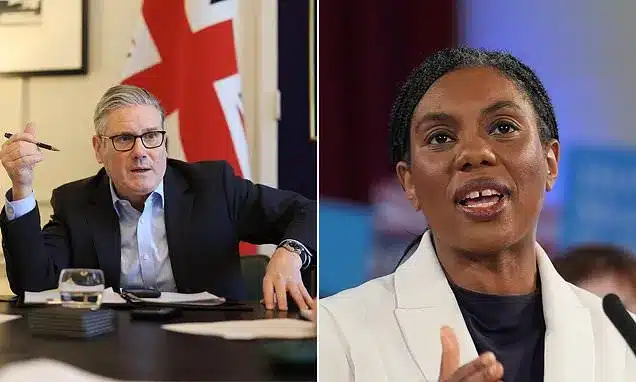
Prime Minister Keir Starmer authorizes the United States to launch strikes on Iranian targets from British airbases to reopen the Strait of Hormuz, marking a significant escalation in UK involvement.
Shift from Defensive to Offensive Operations
RAF Fairford in Gloucestershire and Diego Garcia in the Indian Ocean now support US missions targeting threats blocking the vital shipping lane. Previously, these bases hosted only defensive operations against Iranian missile sites endangering British lives or interests.
The Ministry of Defence confirms RAF defensive air patrols over Jordan, Qatar, the United Arab Emirates, and Bahrain protect regional allies. A Number 10 spokesman states that Iran’s strikes on Red Ensign vessels and those of Gulf partners risk broader regional crisis and global economic fallout, including higher UK energy costs.
UK principles remain unchanged, with Britain avoiding direct participation in strikes.
Opposition Slams Decision as Major Reversal
Conservative leader Kemi Badenoch labels the move the ‘mother of all U-turns.’ Shadow Defence Secretary James Cartlidge criticizes weeks of indecision, noting the Prime Minister’s repeated changes in stance.
MPs across parties warn of deeper UK entanglement without parliamentary approval. Former Labour leader Jeremy Corbyn calls it a ‘reckless act of escalation that endangers us all,’ decrying the lack of debate.
Veteran Labour MP Jon Trickett highlights the contradiction with de-escalation goals, while Plaid Cymru’s Liz Saville Roberts demands a parliamentary vote.
Trump Brands NATO Allies ‘Cowards’
President Donald Trump denounces NATO as a ‘paper tiger’ without US support in a Truth Social post. He vows to remember Western nations’ refusal to aid in reopening the Strait, calling them ‘COWARDS’ for avoiding a simple military task amid low risk.
Outside the White House, Trump expresses surprise at the UK’s delay in granting base access, urging faster action from its key ally. He notes unprecedented reluctance over Diego Garcia.
Escalating Military Buildup
NATO withdraws its advisory mission from Iraq, pulling all personnel from the Middle East. Around 2,500 US Marines deploy to the region soon, with two more units following. Reports suggest considerations for seizing Kharg Island, a key Iranian oil hub twice Heathrow’s size, processing 90% of Tehran’s crude exports.
Such an operation aims to force negotiations with Iran’s new Supreme Leader after initial strikes weaken defenses. However, it risks halting most Iranian oil, sparking Gulf-wide attacks, soaring prices, and tensions with China, which sources 13% of its oil from Iran.
US intelligence assesses Iran could sustain Strait closure for up to six months.
Iran’s Defiance and Regional Tensions
Tehran vows continued denial of enemy security in the Strait. The Islamic Revolutionary Guard Corps (IRGC) states its soldiers await US Marines to deliver a ‘hard slap’ and maritime surprises. IRGC spokesman General Ali Mohammad Naeini declares the war persists until enemy exhaustion, though he later dies in a strike.
Saudi Arabia signals potential retaliation against Iranian strikes on Gulf infrastructure. Iranian drones recently target a Kuwaiti oil refinery despite ceasefire calls on energy sites.
Israeli Prime Minister Benjamin Netanyahu insists a ‘ground component’ proves essential to topple Iran, as air operations alone fail. The US leaves open the possibility of ground troops.
UK military planners collaborate with US Central Command on tanker escort options through the Strait. Defence sources note few nations risk warships amid intense threats. Cartlidge points to prior decisions, like withdrawing the Navy’s sole active minesweeper before hostilities and hesitating on Cyprus base defense.
