

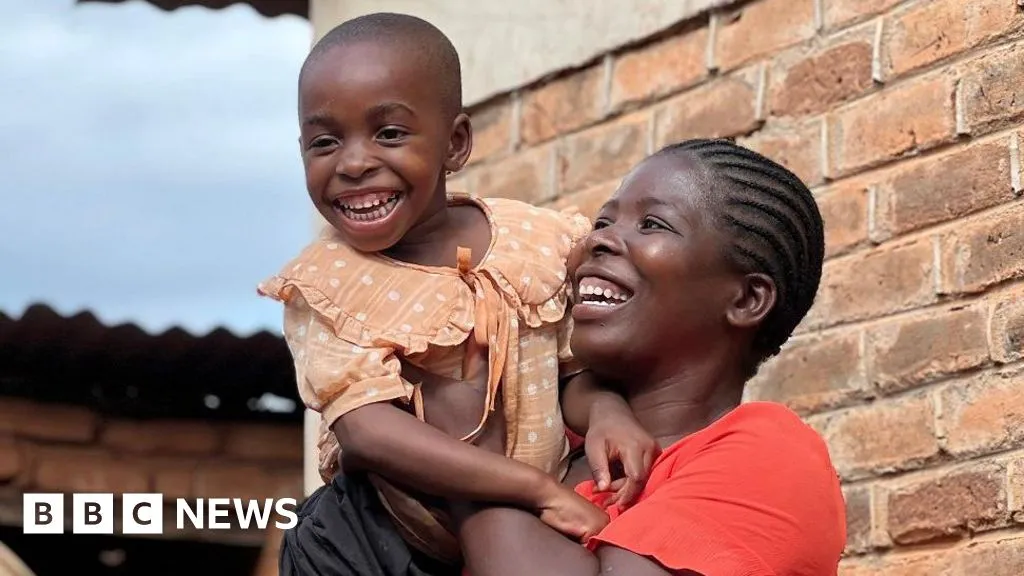
Martha Ongwane gazes lovingly at her energetic, giggling four-year-old daughter Rachael, a far cry from the despair she felt two years ago when she contemplated ending her life. Non-verbal, prone to biting, and unable to sit still, Rachael’s autism diagnosis had pushed Martha to the brink of desperation and depression.
Neighbors in northern Malawi shunned her, urging her to lock Rachael away indoors. With scant sympathy or knowledge of autism management, Martha once poured poison into a cup for her daughter. “I told myself it would be better if she died because that would mean she would rest and that would be the end of our problems,” she recalls softly. “But my heart didn’t let me. I changed my mind and cried so much.”
A Lifeline Through Specialized Care
Today, mother and daughter share tender moments on the floor of their Mzuzu home. Rachael climbs into Martha’s lap, laughing and hugging her face as the 33-year-old prepares vegetables alongside nsima, Malawi’s staple maize porridge. This turnaround stems from expert intervention after a visit to Mzuzu Central Hospital led them to Saint John of God, a Catholic Church-funded organization offering mental health services and a school for children with special needs.
Martha and her husband underwent counseling, gaining a support network and educators equipped to handle Rachael’s behaviors. The facility aids over 600 children annually, fostering skills like speech and social interaction.
Autism’s Hidden Burden in Malawi
World Health Organization data reveals over 60 million people globally live on the autism spectrum, a neurodevelopmental condition affecting communication, social interaction, and sensory processing. While many exhibit strengths like intense focus and innovative thinking, low-resource nations like Malawi prioritize few cases, often the most severe, fueling stigma.
Malawi, home to more than 22 million people, boasts just two developmental pediatricians and three consultant psychiatrists. Autism lacks a term in Chichewa, the primary language, often mistranslated as “ozelezeka” (mentally challenged) or “ofuntha” (troublesome).
Shifting Perceptions in Communities
Saint John of God hosts awareness sessions for religious leaders, including Christian and Muslim elders, to dispel myths like witchcraft causing autism. Christopher Mhone, from the organization, guides discussions toward practical interventions. Reflecting on cases like Martha’s, he states, “For a woman to come to a point where she feels like she should kill her child—as a nation we have failed her. Her burden has become so impossible to bear that she does not have the emotional and psychological capacity to cope.”
Support relies heavily on NGOs and charities. Basic assessments exist at district levels, but only Zomba Central Hospital offers government psychiatric care. “Autism is not even mentioned in the Disability Act,” Mhone notes. “For me, that tells you about the issue of visibility of the problem. If you don’t know you have this problem, there’s no way you can begin to sort it out.”
The Pull of Traditional Healers
With limited healthcare, many seek traditional healers. Natasha Lusinje, mother to five-year-old non-verbal son Shalom, who struggles to self-feed, turned to one after hearing witchcraft claims. Nearly three-quarters of Malawians believe in sorcery, providing explanation and hope.
In a Lilongwe-area compound, healers like Maness Sanjelekani chant rituals, claiming autism stems from Satan in some cases. “We give praise to you God this evening, as you have sent your lamb seeking for healing here. Because he doesn’t have a soul, because evil people from the dark did this to him,” she intones during a three-week regimen of herbs, baths, and skin incisions costing Natasha 26,500 kwacha ($15). Despite no change, Sanjelekani insists, “I can only say I am trying to save his life. I am trying my best to save him.”
Embracing Ability and Future Hope
At Saint John of God, Rachael dons her school uniform, responds to her name in class, and joins friends in song. Young adults with Down’s syndrome, cerebral palsy, and autism tend gardens, embodying Mhone’s vision: “I want us to conceptualize disability in a positive way. Disability is ability, in a different way. And if society begins to understand that, then there will be less stigmatization, and they will be looking at the positive things that can come out of those with disabilities.”
Martha cherishes the transformation, sharing her story to aid others. “When I look at her, I feel so guilty. Every day I think about the fact that my daughter could have been dead. I adore her now.”
