

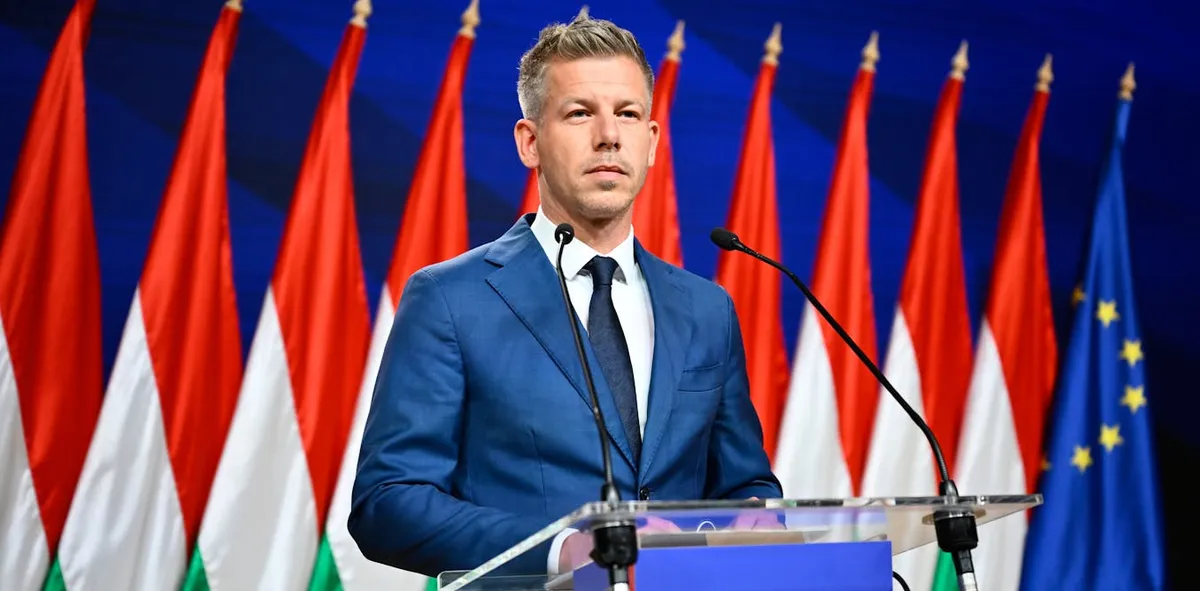
Péter Magyar’s Tisza Party secured a landslide victory in Hungary’s parliamentary election, signaling the collapse of an electoral autocracy built to sustain Viktor Orbán and his Fidesz party in power indefinitely.
Pillars of the Orbán Regime
The system rested on three key foundations. First, Orbán centralized authority by dismantling constitutional checks and capturing essential institutions. Rising to power in 2010 amid public outrage over corruption and economic woes, he placed Fidesz loyalists in control of the judiciary, tax authority, prosecutor’s office, and election commission, turning them into tools of governance.
Second, widespread corruption funneled state resources to a network of loyal oligarchs and Orbán allies. Rigged public tenders directed huge contracts to figures like Lőrinc Mészáros, a childhood friend and former gas fitter. Starting as a small-time entrepreneur in 2010, Mészáros saw his fortune double annually under Orbán, becoming Hungary’s wealthiest individual by 2018.
Third, the regime dominated the media through regulatory pressure and ownership grabs. A 2011 law established a Fidesz-led Media Council with powers to fine outlets for biased coverage, deterring independent journalism. Pro-government media received generous subsidies and ads, while oligarchs snapped up remaining independent voices. In 2016, influential daily Népszabadság fell to a Mészáros-linked firm and closed immediately. This effort peaked with the Central European Press and Media Foundation, which amassed hundreds of outlets from regime supporters, commanding about 80% of the market.
Orbán framed this control as protection of national sovereignty and values against perceived dangers like George Soros, the European Union, refugees, and Ukraine, enabling tighter grips on civil society and opposition.
Who is Péter Magyar?
A moderate conservative and ex-Fidesz insider, Magyar possessed intimate knowledge of the system’s operations, shielding him from typical regime smears. In early 2024, he split from Fidesz amid a scandal involving a presidential pardon for someone convicted of concealing child abuse at a home.
Magyar emerged as an anti-corruption advocate. On Facebook, he shared that he once supported Fidesz’s vision of a “national, sovereign, civic Hungary,” but later recognized it as “a political product, a sugar coating that serves only two purposes: to conceal the operation of the power factory and to amass immense wealth.”
Soon after, he released audio of his ex-wife, former Justice Minister Judit Varga, describing how Orbán’s chief of staff arranged to purge files from a corruption probe.
Magyar revitalized the center-right Tisza Party, propelling it to 30% in European Parliament elections—a shock to Fidesz—and positioning him as the opposition frontrunner.
Strategies That Dismantled the System
Magyar eroded Orbán’s hold by spotlighting corruption over populism. He highlighted the lavish Hatvanpuszta estate, a 19th-century property redeveloped post-2018 and linked to Orbán’s family, dubbing it “the heart of the system” and comparing it to a Russian leader’s palace.
To capture Fidesz’s rural base, Magyar trekked hundreds of kilometers through villages and towns in 2025 marches. Tisza surged ahead in polls, though a smooth handover seemed unlikely amid rising repression.
The regime deployed security forces to hack Tisza servers, charged journalist Szabolcs Panyi with espionage for revealing foreign minister-Kremlin ties, and spread disinformation hinting at post-election chaos and threats to Orbán.
Yet, massive public backing for Magyar prevailed. Whistleblowers and security leaks exposed abuses, fracturing the elite. Election night results left no doubt: Orbán’s era ended decisively.
