

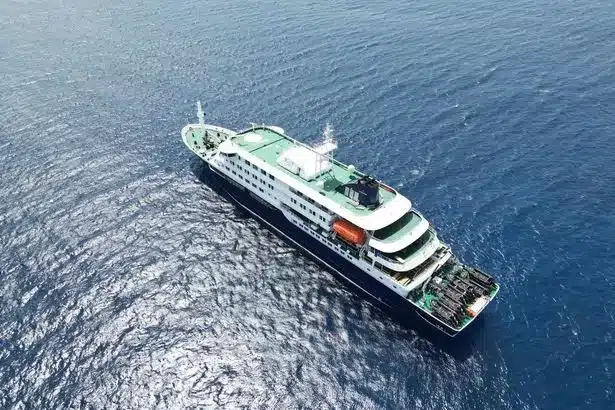
Experts have pinpointed a suspected hantavirus outbreak on the MV Hondius cruise ship to a rare person-to-person transmission strain, raising alarms aboard the stranded vessel. The outbreak has claimed three lives, including one confirmed hantavirus case, and sickened at least seven others, with one passenger fighting for survival.
Outbreak Details and Transmission Concerns
The virus typically spreads through contact with the feces, urine, or saliva of infected rodents. However, recent inspections revealed no rodents on the 353-foot, 80-cabin luxury ship. This points to an ultra-rare subtype capable of human-to-human spread.
“The Andes virus—that one specific subtype of the hantavirus—in Argentina, where they were, is the one that’s transmitted person-to-person,” explained physician Zaid Fadul, a former Air Force flight surgeon and leader of Bespoke Concierge. “And that’s where a lot of anxiety in this case is coming from.”
The Andes strain carries a mortality rate of nearly 40%, posing a severe risk in the ship’s confined environment with around 150 passengers. “If it is the Andes virus… you’ve got 150 people stuck on a cruise ship in close contact,” Fadul cautioned. “And that’s why everyone is so scared.”
WHO Update and Evacuation Efforts
World Health Organization officials recently boarded the ship to evacuate two critically ill passengers. In a recent update, Maria Van Kerkhove, WHO director of epidemic and pandemic preparedness and prevention, stated: “We do believe that there may be some human-to-human transmission that is happening among the really close contacts.”
Officials suggest passengers may have contracted the virus before boarding, confirming this as the leading theory.
Ship’s Voyage and Stranding
The Dutch liner departed Ushuaia, Argentina, on March 20 for its multi-week Atlantic Odyssey expedition. The outbreak turned deadly, leaving the ship marooned off West Africa as of Monday, with ongoing efforts to evacuate additional patients.
