

Since January 2025, the United States has established bilateral agreements with 27 nations to deport migrants to third countries with no connections to them. This approach, called third-country deportation, deters migration and shifts responsibility for migrants to nations in the Global South.
First Major Flight to Costa Rica
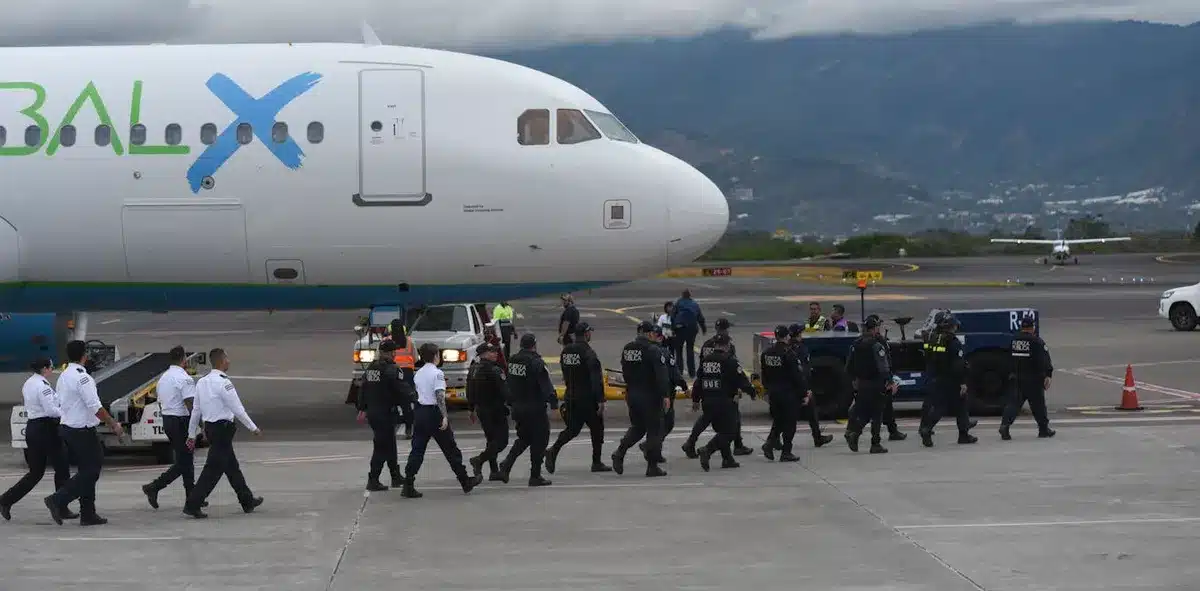
In February 2025, authorities dispatched two chartered flights carrying 200 individuals from nations including Iran, Afghanistan, Russia, Azerbaijan, Uzbekistan, and China to San José, Costa Rica. Fieldwork conducted in Costa Rica that year included interviews with two families aboard one flight; deportees reported being shackled throughout the journey.
Costa Rican officials drew the plane window blinds before removing restraints. Journalists and activists monitored the arrival. Interviews with deportees, along with documentation from Human Rights Watch, reveal that none spoke Spanish. Officials provided no details on destinations or post-arrival plans. The first flight lacked translators entirely, while the second had only a few.
US officials expelled these individuals without asylum application opportunities. Though smaller-scale third-country deportations occurred earlier, the Costa Rica operation paved the way for the 27 agreements spanning Latin America, Africa, and Central Asia. What began as an outlier evolved into a core migration control method within a year.
The Border Spectacle Effect
The US deported about 675,000 people in 2025, with roughly 15,000—or 2%—sent to third countries. These limited numbers prioritize spectacle over mass removal, as migration scholar Nicholas De Genova describes it: a “border spectacle of migrant victimization.”
Such actions instill fear, prompting some asylum-seekers in the US to self-deport and discouraging others from attempting entry. US Secretary of State Marco Rubio articulated this in July 2025: “The further away, the better, so they can’t come back across the border.”
Uncertainty over destinations—ranging from Eswatini and South Sudan to Rwanda, Costa Rica, or Cameroon—amplifies deterrence for potential migrants and pressures those in the US.
Pressures on Global South Nations
The US secures cooperation through direct payments, visa limits, tariff threats, and foreign aid conditions. Ghana lifted consular restrictions in August 2025 after agreeing to accept deportees. Costa Rica signed its deal in March 2026; President Rodrigo Chaves noted he was “helping the economically powerful brother of the North” to evade tariffs on free-trade zones.
Eswatini accepted deportees for financial aid and stronger ties. Rwanda integrated the practice into its regional diplomacy.
Unseen Costs for Host Countries
These deals impose unbalanced burdens. Of the roughly 200 deportees to Costa Rica in February 2025, 85 remained, unable to return home due to risks like persecution, imprisonment, or conscription. Some later reached the US and secured asylum; others needed medical care, work permits, and support.
Costa Rica issues limited temporary residency but struggles with resources for safety and needs amid US cuts to humanitarian aid. Deportees endure legal limbo, leading to panic attacks, depression, and insomnia, as multiple interviewees reported.
Global Policy Shifts
This regime extends beyond the US. In March 2026, the European Parliament approved return hubs for offshored asylum processing; Italy operates detention centers in Albania. Canada renewed its Safe Third Country Agreement with the US, passed Bills C-2 and C-12 to curb asylum access, and cut refugee resettlement targets by 30% for 2026–28.
These measures erode asylum rights worldwide through converging tactics.
Growing Resistance
Over 30 human rights groups demanded an end to chain deportations to Costa Rica in March 2026, holding the government accountable for US asylum violations and breaches of the 1951 Refugee Convention. Protests erupted in the Democratic Republic of the Congo against planned US transfers of 1,100 Afghans.
UN experts warn of torture, disappearances, or deaths in some destinations. Scholars, advocates, and allies must coordinate resistance to prevent this border regime from solidifying.
