

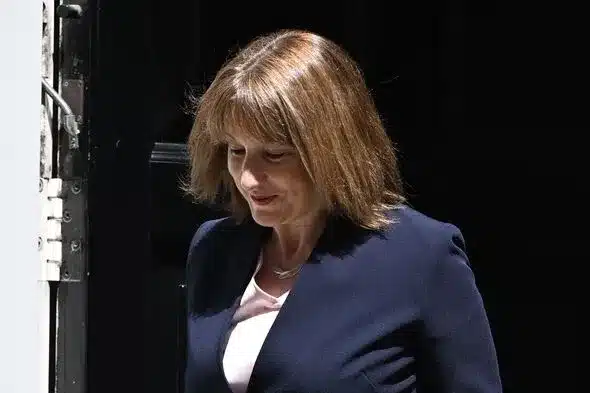
Audience es Frustration Over ‘Car Crash’ Interview Segment
Viewers of a prominent morning news program have voiced significant dissatisfaction following an interview with Chancellor Rachel Reeves, describing the exchange as a “car crash” and “toe-curling.” Critics contend that the segment failed to adequately challenge the Labour minister on critical issues.
Key Questions Met With Evasion
During the interview, business reporter Peter Ruddick questioned Chancellor Reeves about her whereabouts during a significant political event. Specifically, he asked about her absence from the Prime Minister’s resignation statement, noting her presence in Westminster Hall for a photograph with Andy Burnham shortly thereafter.
“A few raised eyebrows in Westminster this week, when you weren’t in Downing Street to see the prime minister’s resignation statement, but you were in Westminster a few hours later, in Westminster Hall, to have a selfie with Andy Burnham then. Where were you watching the statement, the prime minister’s statement?” Ruddick inquired.
Chancellor Reeves did not directly address the question. Instead, she responded by emphasizing her dedication to the Prime Minister and her role in economic policy. “I don’t think anyone can doubt my commitment to the prime minister. I’ve been by his side for six years now as shadow Chancellor and then as Chancellor of the Exchequer. I’ve been there every step of the way and making the decisions to turn around our economy,” she stated.
Public Reaction to Interview Tactics
The interview’s handling has drawn sharp criticism from the public. On social media platform X, formerly Twitter, one viewer described the situation as Reeves “squirming” and being put “on the spot for abandoning Starmer and jumping straight into bed with Burnham.” The user characterized the moment as “toe-curling” and noted that the Chancellor “visibly uncomfortable, completely ignored the question.”
Further commentary highlighted the perceived lack of accountability. “Oh Rachel, that’s exactly why people are questioning your ‘commitment’. In his worst moment as PM you abandoned him and you know it. It’s not just that you didn’t show up but the fact you jumped straight onto team Burnham!” one post read, adding a critical assessment of her political maneuvering.
Another viewer lamented the perceived evasiveness, stating, “Simple question and she still avoids answering. When will they realise that this is part of the problem – just answer a direct question!”
Calls for More Robust Questioning
Concerns were also raised about the interviewers’ approach. “Surprised you didn’t press her on why she wasn’t there or where was she instead,” one viewer commented. Another echoed this sentiment, questioning, “How can the interviewers let her get away with that?” The public’s reaction suggests a desire for more direct and challenging questioning of political figures during televised interviews.
